Scientists test tights’ strength and durability by performing standardized lab methods like tensile, tear, abrasion, and pilling tests. They use machines to stretch fabrics, measure how much force it takes to break or rip them, and simulate wear and tear conditions. These tests reveal how fabrics behave in real life, including resistance in different directions. If you want to understand how these tests help improve quality, keep exploring how each method contributes to durable tights.

Get your wardrobe favorites delivered free — and shop member deals
- Fast, free delivery on millions of items
- Access to Prime Big Deal Days deals on October 6–7
- Prime Video, Amazon Music and more included
Key Takeaways
- Scientists perform tensile tests using standardized methods like ASTM D5034 and D5035 to measure fabric strength and elongation until breakage.
- Specialized machines, such as Instron testers, apply controlled pulling forces to fabric samples, recording maximum force and deformation.
- Tearing resistance is assessed with Elmendorf tear tests in both warp and weft directions to evaluate how fabrics resist tear propagation.
- Additional tests simulate wear, abrasion, and pilling to determine how fabrics withstand daily friction and surface damage over time.
- Test results identify weaknesses, guide material improvements, and ensure tights meet durability standards for long-lasting performance.
durable tights with high tensile strength
As an affiliate, we earn on qualifying purchases.
As an affiliate, we earn on qualifying purchases.
Understanding Tensile Strength Testing Methods

Understanding tensile strength testing methods is essential to evaluating the durability of tights under tension. When you test fabric, you apply force until it breaks, measuring how much pulling it takes. Common methods include ASTM D5034 (grab test) and ASTM D5035 (strip test). These tests simulate real-world stretching by using machines like Instron tensile testers that pull on fabric samples at controlled speeds. They record the maximum force the fabric can handle and how much it elongates before breaking. Material properties play a critical role in determining the results of these tests, as different fibers and weaves respond uniquely to stress. Sheertex tights, for example, require over 180 kgf to break, showing exceptional strength. These tests help you understand how tights will perform during wear, ensuring they withstand stretching and tension without damage. Proper testing provides the data needed for quality assurance, and product improvement. Environmental considerations also influence material choices and durability testing to promote sustainability. Additionally, advancements in testing technology now allow for more precise measurements, further improving the reliability of durability assessments. Incorporating knowledge of headphone types can inspire innovations in textile testing equipment, making procedures more efficient and accurate.
lab tested tights for durability
As an affiliate, we earn on qualifying purchases.
As an affiliate, we earn on qualifying purchases.
The Role of Sheertex’s Superior Fiber Technology
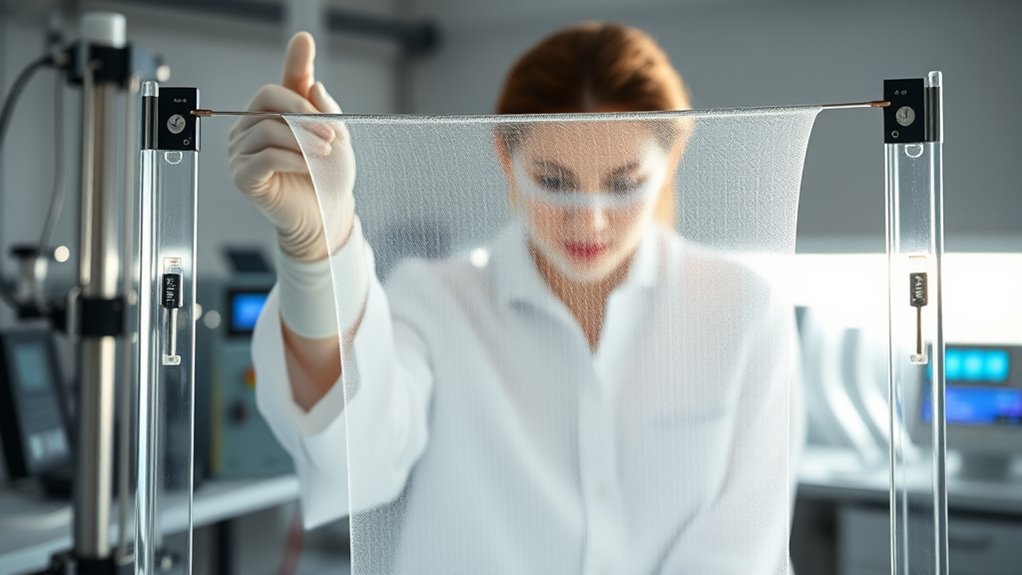
Sheertex’s innovation in fiber technology sets it apart from traditional hosiery materials. Their fibers are crafted from a unique, reinforced polymer that combines exceptional tensile strength with flexibility. Unlike conventional nylon or spandex, Sheertex fibers are engineered at a microscopic level to resist tearing, puncturing, and stretching beyond typical limits. This advanced technology results in tights that are not only sheer and lightweight but also remarkably durable. The fibers maintain their integrity even after repeated wear and minor damage, ensuring longer-lasting performance. By leveraging cutting-edge polymer science, Sheertex delivers tights that outperform standard products in strength tests. Durability is achieved through meticulous material design, making the hosiery suitable for daily use. Additionally, the fiber structure plays a crucial role in enhancing overall resilience, allowing the tights to withstand daily stressors without compromising their appearance. This superior fiber technology enables the creation of hosiery that balances delicate appearance with formidable resilience, redefining durability in everyday wear. Natural materials like these are essential for achieving both comfort and longevity in hosiery.
As an affiliate, we earn on qualifying purchases.
How Tear Resistance Is Measured and Why It Matters

Understanding how tear resistance is measured helps you see how durable your tights are against rips and tears. Tearing force measurement tests the amount of force needed to propagate a tear, while directional resistance checks strength in different fabric directions. Knowing these factors reveals why material choice and fabric structure are vital for tights that last. Maximizing durability through proper material selection is essential for ensuring your tights withstand everyday wear and tear. Additionally, industry-standard testing methods provide consistent benchmarks for evaluating fabric performance. Incorporating fabric structure analysis techniques can further improve the accuracy of durability assessments. Recognizing the role of fabric composition helps in selecting materials that enhance tear resistance and longevity.
Tearing Force Measurement
Tearing force measurement is essential for evaluating how well a fabric resists ripping and maintains its integrity under sudden stresses. You’ll use specialized machines, like the Elmendorf tear tester, to apply a controlled force to a pre-cut slit in the fabric. The machine swings a pendulum to propagate the tear, recording the force needed to continue ripping. This test measures the fabric’s tear resistance in both warp and weft directions, giving insight into how it performs under real-world impacts. Understanding tear strength helps manufacturers identify weak spots and improve material selection. It’s especially important for tights, which face quick, localized rips during wear. Accurate tear force measurement ensures the product’s durability, preventing unexpected failures and extending its lifespan. Additionally, knowing the material’s tear resistance can inform better risk management strategies to improve overall product performance. Incorporating scientific testing methods ensures that the fabrics meet the necessary durability standards. Recognizing the influence of material composition can further optimize fabric design for enhanced tear resistance. Moreover, advances in testing technology have made it possible to obtain more precise and reproducible results, leading to better quality control.
Directional Resistance Testing
Because fabrics can behave differently depending on the direction of stress, measuring tear resistance in both warp and weft directions is essential. You’ll see tests that evaluate how easily a tear propagates when stress is applied along these two axes. This involves pre-cut slits in the fabric, then applying force until the tear spreads. Testing in both directions reveals anisotropic behavior, showing whether the fabric resists ripping equally from different angles. Understanding these differences helps manufacturers identify weak points and improve durability. It’s especially important for tights, which experience tension and strain from multiple directions during wear. By analyzing tear resistance in both warp and weft, you gain a thorough view of how the fabric will perform in real-world conditions, ensuring better product reliability and longevity. Additionally, fiber orientation plays a critical role in how the fabric responds to stress, impacting its overall strength and durability. A comprehensive understanding of fabric construction can further enhance predictions of tear propagation and resilience. Moreover, material properties influence how fabrics behave under different types of stress, which is crucial for developing highly durable tights.
Fabric Material Factors
Fabric material factors play a crucial role in determining tear resistance, as the composition and structure of the fibers directly influence how well a fabric withstands ripping forces. Different fibers, such as nylon, polyester, or specialized polymers, have distinct strengths and elongation properties. The weave or knit pattern also impacts tear resistance: tighter weaves generally resist tearing better, while looser constructions may tear more easily. Fabric finishing treatments, like coatings or anti-pilling finishes, can either strengthen or weaken the material. Additionally, how fibers are processed—like whether they’re heat-set or chemically treated—affects durability. Understanding these factors helps you choose tights that resist tears, maintain their appearance, and last longer, especially under everyday stress and accidental rips. Fiber properties also influence how fabrics respond to stress, further impacting their overall durability.
As an affiliate, we earn on qualifying purchases.
Comparing Material Strength: From Polymer Fibers to Steel
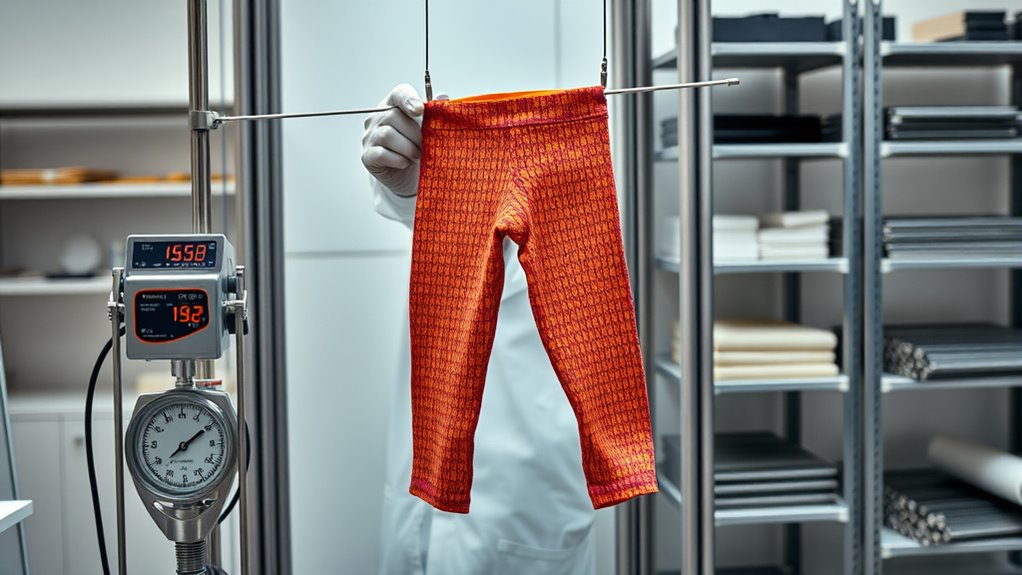
When you compare the tensile strength of polymer fibers to steel, you’ll see that advanced tights use fibers with strength levels at least ten times greater than steel on a per-density basis. Analyzing fiber density helps explain how lightweight materials achieve such durability, often surpassing traditional metals. Understanding these benchmarks shows how modern fabrics blend strength with flexibility to outperform many structural materials. Sound recording techniques play a crucial role in ensuring the quality and durability of the final product. Additionally, material testing methods are essential for verifying these properties before mass production.
Tensile Strength Comparison
Tensile strength comparisons reveal just how remarkable polymer fibers used in tights are when stacked against traditional materials like steel. These fibers can withstand forces that would snap steel wires of similar cross-sectional area. When normalized for density, polymer fibers often show tensile strengths at least ten times greater than steel, making them incredibly durable despite their lightweight nature. This strength allows tights to resist tearing and stretching under stress, prolonging their lifespan.
- Polymer fibers achieve high tensile strength with less weight
- They outperform steel in strength-to-weight ratios
- Material innovation combines flexibility with durability
- Precise measurements ensure accurate comparisons
Understanding these differences helps explain why tights made from advanced polymers are both strong and comfortable, outperforming many traditional materials in everyday wear.
Fiber Density Analysis
To accurately compare the strength of different materials, analyzing fiber density is essential because it directly influences a material’s overall strength-to-weight ratio. Higher fiber density means more fibers are packed into a given volume, increasing the potential load a fabric can bear without failure. When you measure fiber density, you determine how tightly fibers are woven or aligned, which impacts tensile and tear resistance. For instance, densely packed polymer fibers in tights contribute to their exceptional strength, sometimes rivaling steel on a per-weight basis. By calculating the mass per unit volume or cross-sectional area, you normalize strength data across different materials. This analysis helps you understand why some fabrics outperform others and guides the development of more durable, high-performance tights that maintain strength without sacrificing flexibility or comfort.
Structural Material Benchmark
Comparing the strength of different materials reveals striking differences, especially when evaluating polymer fibers used in high-performance tights against traditional structural steel. You’ll find that some polymer fibers boast tensile strengths at least ten times greater than steel when normalized for density. This means tights made from advanced polymers can resist tearing and stretching far better than steel can handle tension. To understand this better, consider:
- Polymer fibers achieve high tensile strength with lightweight profiles.
- Steel’s strength is measured in yield and tensile points, but density limits its flexibility.
- Material benchmarks help manufacturers select ideal fibers for durability.
- Advances in polymers combine shear resistance with tensile robustness, unlike steel.
These comparisons highlight why modern tights can outperform steel in tensile performance while remaining lightweight and flexible.
The Significance of Abrasion and Pilling Resistance
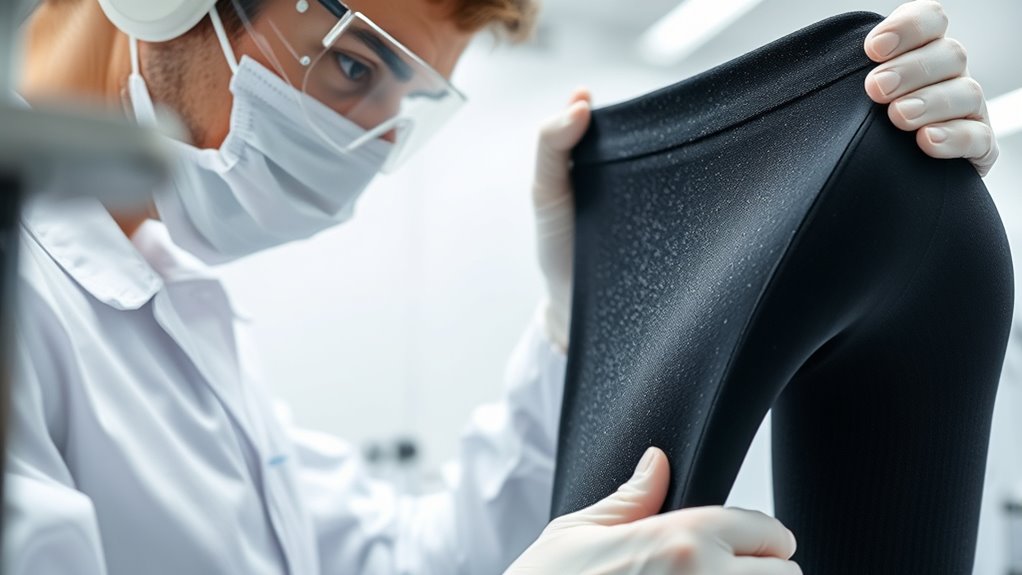
Abrasion and pilling resistance are critical factors in determining how long your tights will look and perform their best. During everyday wear, fabrics face friction from shoes, furniture, and other surfaces, which can cause wear and visible damage. Abrasion testing simulates this rubbing by repeatedly rubbing fabric samples against abrasive surfaces, measuring how many cycles it takes for the fabric to break down. Pilling resistance assesses how fibers loosen and form fuzzy balls, called pills, through tumbling tests like the Pilling Box. Fabrics with high resistance to both abrasion and pilling maintain their appearance longer, ensuring your tights stay smooth and intact despite regular use. These qualities are essential for preserving the tight’s aesthetic appeal and extending its lifespan.
Standardized Testing Conditions for Accurate Results

Standardized testing conditions are essential to guarantee that results are accurate, reliable, and comparable across different fabric samples and products. Consistent protocols ensure that each test replicates real-world stresses while minimizing variability. You should always control factors like temperature, humidity, and specimen preparation to avoid skewed data. Using standardized test methods such as ASTM D5034 or D2256 helps maintain uniformity across tests. Proper specimen handling—like gripping with pneumatic clamps and aligning samples precisely—reduces slippage and measurement errors. Regular calibration of testing machines guarantees precision. Additionally, testing both warp and weft directions reveals fabric anisotropy, giving a clearer picture of overall durability. Adhering to these conditions ensures that your results truly reflect the fabric’s performance and quality.
Simulating Real-World Wear and Tear in the Lab

To accurately assess how tights perform during everyday wear, labs replicate real-world conditions by applying strain patterns that mimic typical movements and stresses. You’ll see researchers use mechanical devices that stretch tights along multiple axes, simulating walking, bending, and sitting. They may also incorporate shaped templates, like 3D leg forms, to mimic how tights stretch and flex during actual use. After applying these strains, they allow the fabric to relax, checking for recovery or residual stress. Sometimes, they introduce controlled damage, such as perforations, to test durability under flawed conditions. This process guarantees the tights can withstand the rigors of daily life, revealing how they hold up under typical wear and tear, not just in ideal lab conditions.
Analyzing Fabric Behavior in Multiple Directions
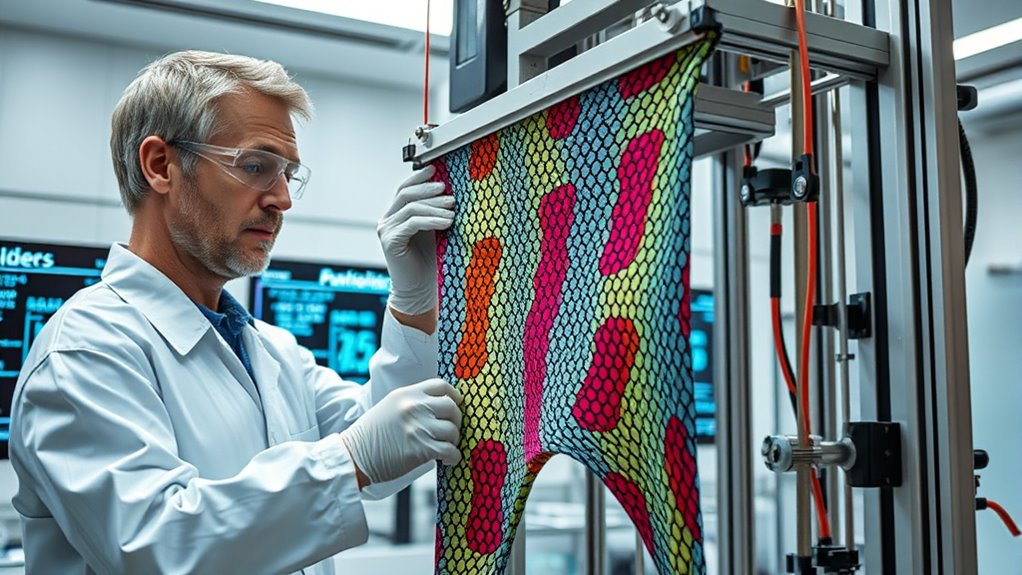
Fabric behavior in tights varies markedly depending on the direction of applied forces, making it essential to analyze both warp (lengthwise) and weft (crosswise) tension. You need to test both orientations because strength and tear resistance often differ between them. This helps identify weak points that could cause failure during wear. Accurate testing involves applying force in each direction independently, often using standardized methods like ASTM D5034 or D5035. These tests reveal how the fabric responds under real-world conditions, such as stretching during movement.
- Recognize the anisotropic nature of fabric strength.
- Understand that tensile and tear properties can vary by direction.
- Use standardized protocols for consistent results.
- Guarantee fabric durability under multi-directional stress.
Interpreting Test Results to Improve Tights Durability
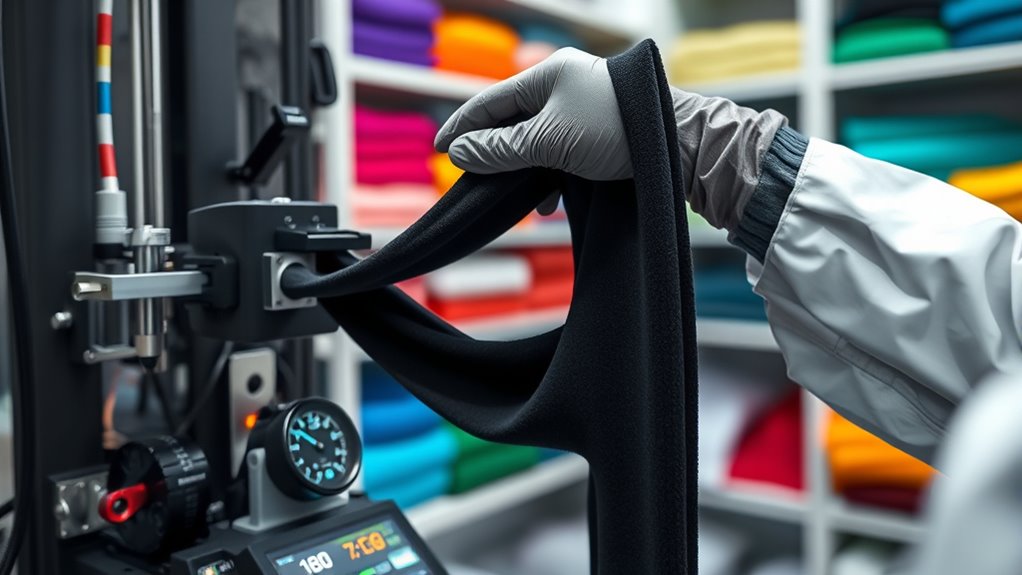
Interpreting test results accurately helps identify specific weaknesses in tights that can be addressed to boost durability. For instance, if tensile tests show low strength in the warp direction, you might reinforce that area or choose stronger fibers. Tear resistance data reveals where the fabric is most prone to ripping, guiding improvements in weave or fiber type. If abrasion or pilling tests indicate quick wear, manufacturers can adjust finishing treatments or fabric construction to enhance lifespan. Comparing results across different conditions—wet versus dry—helps determine how tights perform in real-world scenarios. By analyzing these metrics collectively, you can pinpoint failure points and tailor material selection, weaving techniques, or finishing processes. This targeted approach ensures your tights are not only stylish but also long-lasting and resistant to everyday stresses.
Frequently Asked Questions
How Do Environmental Factors Like Humidity Affect Fabric Strength During Testing?
You might notice humidity impacts fabric strength during testing by weakening fibers or causing swelling. When testing in humid conditions, moisture can reduce tensile and tear strength, making fabrics more prone to damage. To get accurate results, scientists often control environmental factors like humidity, ensuring consistent testing environments. This helps determine how tights perform in real-world conditions, where humidity varies and can influence durability and longevity.
Can Testing Predict How Tights Perform After Extended Wear and Washing Cycles?
Testing can predict how tights perform after extended wear and washing cycles by simulating real-life conditions in the lab. You’ll see how fabrics hold up under repeated stretching, washing, and friction. Manufacturers use standardized tests, like abrasion and pilling resistance, along with repeated tensile and tear tests, to evaluate durability. These results help estimate how long your tights will last before showing signs of wear or damage.
What Influence Does Fabric Thickness Have on Tensile and Tear Strength?
Fabric thickness directly impacts tensile and tear strength, making your tights more resistant to breaking and ripping. Thicker fabrics usually handle pulling forces better, requiring more force to snap or tear. However, don’t assume more thickness means better performance in all cases, as weave and fiber quality also matter. Thicker tights tend to last longer, especially under stress, but balance is key to maintaining stretchiness and comfort you enjoy.
Are Different Colors or Finishes of Tights Tested Differently for Durability?
Different colors or finishes of tights aren’t usually tested differently for durability, but manufacturers might assess how dyes or coatings affect strength. Imagine vibrant hues or glossy finishes as a shield that could weaken fibers or alter fabric behavior. During quality checks, labs may test samples with various colors or finishes to ensure they meet durability standards, verifying that added dyes or surface treatments don’t compromise tensile, tear, or abrasion resistance.
How Does Fabric Elasticity Impact Results in Tensile and Tear Strength Assessments?
Fabric elasticity considerably influences tensile and tear strength results because more elastic tights can stretch further before breaking, which may increase measured elongation but lower the force needed to tear or snap. You’ll notice that highly elastic fabrics often show higher elongation percentages, but their resistance to tearing under sudden stress might decrease. Understanding this balance helps you select tights that are both stretchy and durable, ensuring longevity during wear.
Conclusion
By understanding how scientists carefully assess tights’ strength and durability, you gain insight into the quiet craftsmanship behind every pair. While tests reveal their resilience, it’s the small details and thoughtful innovations that truly make your tights feel like a gentle embrace, even after countless wears. So, next time you slip into your favorite pair, remember the subtle artistry and science working behind the scenes to keep you confidently moving forward.
Fall Picks
fall essentials
As an affiliate, we earn on qualifying purchases.