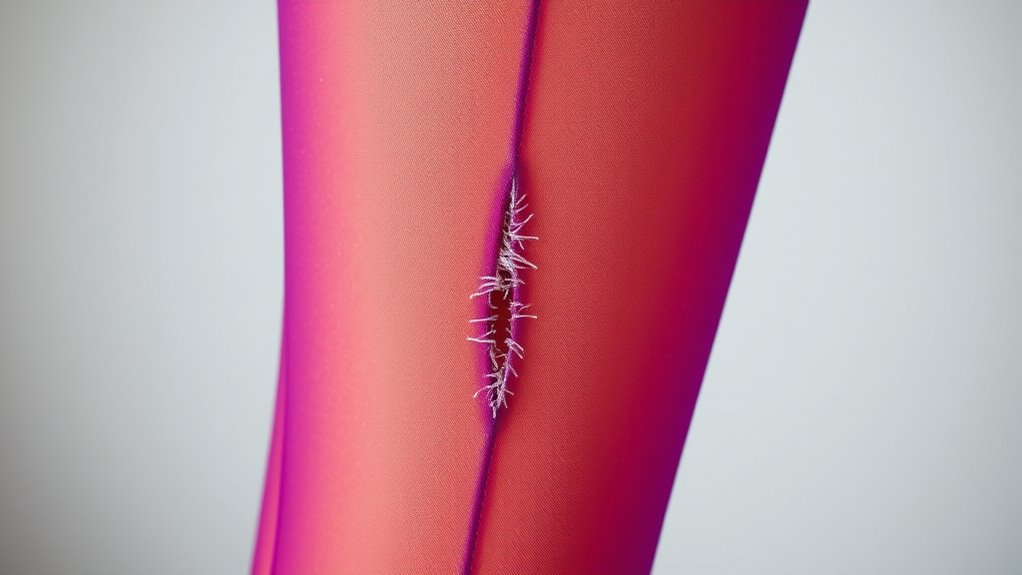

Ladders in tights happen when stress focuses on weak fibers, causing yarns to break and damage to form. These stress concentrators, like snags or tight spots, weaken the fabric, making it more prone to runs. Over time, repeated stretching or friction worsens these areas, leading to bigger tears. If you want to understand how to prevent these issues and keep your tights looking their best, there’s more to explore below.

Get your wardrobe favorites delivered free — and shop member deals
- Fast, free delivery on millions of items
- Access to Prime Big Deal Days deals on October 6–7
- Prime Video, Amazon Music and more included
Key Takeaways
- Ladders indicate fiber damage where stress concentrates, weakening yarns and making them prone to breakage.
- Excessive stretching or snagging creates stress points that develop into ladders, signaling compromised fabric.
- Stress concentrators like ladders accelerate fiber weakening, increasing the risk of yarn snapping at weak spots.
- Early detection of ladders helps prevent larger tears by addressing underlying stress before yarn failure occurs.
- Proper handling and care reduce stress buildup, maintaining fabric integrity and preventing yarn breakage.
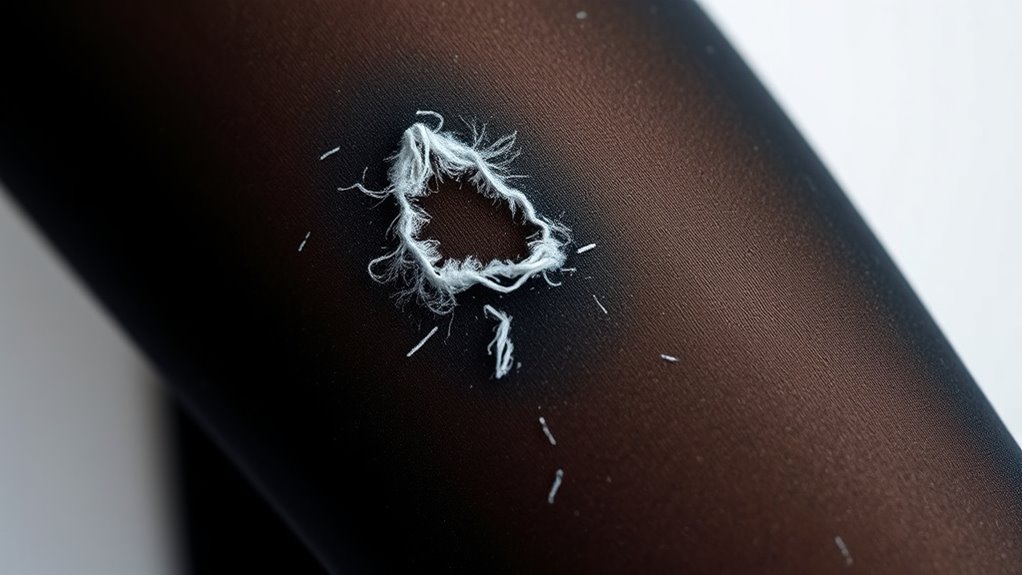
Tights ladders often appear as small, frustrating runs, but they reveal more than just cosmetic damage—they highlight underlying stress points that can lead to yarn breakage. When you notice a ladder forming, it’s a sign that the fabric is experiencing localized tension or strain. This tension might be caused by stretching, snagging, or even regular wear. The ladder itself is a visible clue that the fibers in that area are weakening, making them more susceptible to snapping under continued stress. Instead of dismissing it as just an annoying rip, recognize it as a warning sign that the tights are approaching a critical point of failure.
A ladder signals stressed, weakened fibers likely to break—address early to prevent complete tearing.
As you continue to wear tights with ladders, you might notice that the damage worsens over time, especially if you don’t address it early. The ladder acts as a stress concentrator, meaning that the fibers around it endure increased tension. Think of it like a small crack in a windshield—what starts as a tiny flaw can quickly expand if left untreated. The same principle applies here; the tension around the ladder causes the fibers to weaken further, leading to larger runs or even complete tearing. This process is accelerated when fabrics are stretched repeatedly or exposed to friction, such as rubbing against shoes or rough surfaces. Additionally, the type of yarn and fabric construction can influence how quickly these stress points develop and worsen.
Understanding why ladders form can help you prevent further damage. Tights are made from delicate yarns that are designed to stretch and conform to your body, but they have limits. When you pull them too tight or catch them on something sharp, you create stress points where the yarns are more likely to break. Over time, these weak spots become apparent as ladders. If you notice a ladder forming, it’s a sign you should be gentler with your tights, avoiding excessive stretching or rough handling. Proper care, like hand washing and avoiding rough surfaces, can markedly prolong their lifespan. Recognizing the importance of stress concentration and addressing it early can help maintain the integrity of the fabric and prevent complete failure.
Moreover, ladders aren’t just cosmetic issues—they’re warning signs of impending yarn failure. The stress concentration at these points means the fibers are already compromised, and continued wear will likely cause the yarns to snap. Once a ladder begins, it can quickly multiply, as each broken fiber weakens the surrounding yarns. To prevent this, it’s best to address small ladders early, either by mending them or replacing the tights before a small problem becomes a complete tear. Recognizing these stress points and treating them with care helps you avoid sudden failures and keeps your tights looking their best longer.
Frequently Asked Questions
How Can Tights Laddering Be Prevented During Wear?
To prevent tights laddering during wear, handle them gently and avoid excessive stretching or snagging. Always put them on carefully, preferably sitting down, and smooth out wrinkles or twists. Wash them by hand or on a delicate cycle, avoiding rough fabrics or harsh detergents. Store your tights properly, folded or hung, to prevent snags. Regularly inspect for signs of wear and replace them before ladders form.
What Types of Yarn Are Most Prone to Laddering?
You should watch out for fine, delicate yarns like nylon or silk, as they’re more prone to laddering. These materials tend to be less durable and can break easily under stress. Thicker or blended yarns with added elasticity, such as those containing spandex or lycra, resist laddering better. When choosing tights, opt for sturdier yarns and avoid overly delicate fibers to reduce the risk of laddering during wear.
Do Different Tights Materials Have Varying Laddering Risks?
Different tights materials carry varying laddering risks, much like fragile threads woven into a stronger fabric. Nylon tights, for example, are more prone to laddering due to their smooth, slippery surface, which allows yarns to slip apart easily. In contrast, wool blends tend to resist laddering because of their textured fibers that grip better. So, choosing a durable material can help you avoid those pesky ladders and keep your tights intact longer.
Can Laddering Be Repaired Without Damaging the Tights Further?
Yes, you can repair laddering without damaging your tights further. Start by gathering a fine needle and matching thread. Carefully weave the yarn through the laddered area, tightly securing it to prevent further unraveling. Take your time and work gently to avoid pulling or tearing more fibers. With patience, your tights will look better and last longer, saving you from replacing them prematurely.
How Does Laundering Affect the Longevity of Tights and Ladder Formation?
You might notice that laundering can either extend or shorten your tights’ lifespan. Using gentle cycles and cold water helps preserve the fibers, reducing stress that leads to ladder formation. Avoid harsh detergents and high heat, which weaken yarns and make laddering more likely. When you take care, your tights stay smoother and last longer, giving you more wear out of every pair and saving you from pesky ladders too soon.
Conclusion
Understanding why tights ladder is essential because those tiny snags can lead to larger tears and ruined hosiery. Imagine you’re rushing out the door, only to notice a small ladder forming, which quickly worsens. By recognizing stress points and handling tights carefully, you prevent yarn breakage and extend their lifespan. Next time, avoid sharp jewelry or rough surfaces—your tights will thank you, and you’ll save money in the long run.
Fall Picks
fall essentials
As an affiliate, we earn on qualifying purchases.