The transparency test shows that some tights shine while others stay matte because of their fabric composition, weave, thickness, and surface finishes. Shiny tights usually have synthetic fibers like nylon or polyester, with glossy coatings or tight weaves that reflect more light. Matte tights, on the other hand, often use natural fibers or have textured, dense fabrics that absorb light. To learn exactly how these factors influence shine and matte effects, keep exploring the details behind tights’ materials and finishes.
Key Takeaways
- Fabric composition and surface finish determine how light reflects, creating shiny or matte appearances in tights.
- Sheerness and transparency depend on fabric density, weave tightness, and thickness, affecting skin visibility.
- Synthetic fibers like nylon tend to have shinier finishes, while natural fibers like cotton appear more matte.
- Manufacturing techniques such as coating or glossing increase shine; dyeing and texturing also influence surface finish.
- Proper lighting, background, and handling during the transparency test ensure accurate assessment of tights’ shine or matte effect.
Understanding the Material Composition of Tights

Understanding the material composition of tights is essential because it directly affects how they look and feel on your skin. The type of fabric influences their shine, opacity, and comfort. For example, nylon and spandex blends are common and provide stretch and durability, but their dyeing process impacts the final appearance. Fabric dyeing techniques can enhance or diminish shine, depending on whether dyes penetrate deeply or sit on the surface. Seam placement also matters; well-placed seams reduce visibility and prevent puckering, maintaining a smooth, matte finish or desired sheen. Fabric dyeing techniques play a crucial role in achieving the desired look and shine of tights. Knowing how these factors interact helps you choose tights that match your style and comfort needs, whether you prefer a shiny or matte appearance. Ultimately, understanding material composition ensures you pick the right tights for any occasion.
How Light Interacts With Different Finishes

The way light interacts with the finish of your tights determines whether they appear shiny or matte. Shiny finishes reflect more light, creating a sleek, eye-catching look perfect for bold fashion styling. Matte finishes, on the other hand, absorb light, giving a more subdued, sophisticated appearance. When choosing tights, consider color coordination; shiny tights can enhance metallic or vibrant tones, making your outfit stand out, while matte tights work well with muted or neutral colors for a subtle effect. Understanding this interaction helps you select the right finish for your desired look, whether you want to make a statement or keep it understated. Recognizing how light plays on different finishes empowers you to craft outfits that align perfectly with your style goals. Additionally, awareness of how light interacts with surface textures can help you select tights that complement your overall look and mood.
The Role of Sheerness in Tights Transparency

Sheerness plays an essential role in how transparent your tights appear, influencing how much skin shows through. This perception of sheerness directly affects visual transparency, making your legs look either subtly concealed or boldly exposed. When tights have a higher sheerness perception, they appear more see-through, allowing your natural skin tone to shine through clearly. Conversely, lower sheerness levels create a more opaque look, offering coverage and a matte finish. Understanding this balance helps you choose the right tights for your desired style and occasion. The degree of sheerness can dramatically change your overall appearance, highlighting or hiding details based on how much light passes through the fabric. Additionally, the type of fabric and its weave influence the sheerness perception, further affecting transparency. Ultimately, sheerness is key in achieving the perfect blend of coverage and transparency.
The Impact of Fabric Thickness and Density
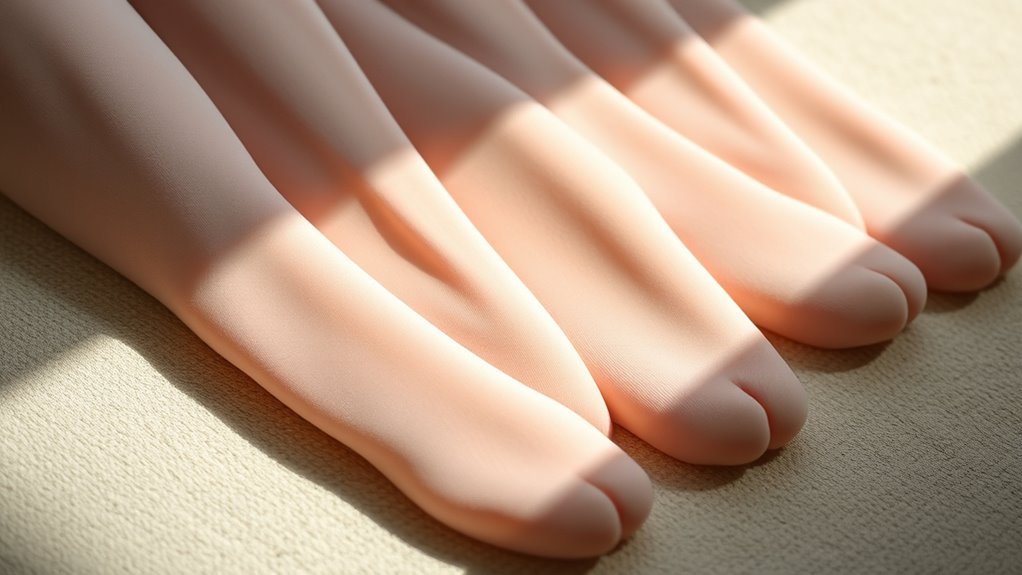
The thickness and density of your tights play a vital role in how much they shine or stay matte. Tighter weaves and higher density typically increase opacity, reducing any shine through. Understanding these fabric properties helps you pick tights that match your desired look and performance.
Fabric Weave Tightness
Fabric weave tightness plays a crucial role in how tights perform regarding shine and matte finish. When the weave is tight, the fabric pattern becomes more uniform, reducing gaps that can reflect light and cause shine. Conversely, a looser weave may allow light to pass through, creating a shinier appearance. The tightness influences how color variations appear; a dense weave minimizes the visibility of uneven dyeing or transparency, helping tights stay matte. If the weave isn’t consistent, uneven color patches can emerge, affecting the overall look. You’ll notice that tightly woven tights tend to hide imperfections better and maintain a subdued, matte finish. Additionally, the fabric structure impacts how light interacts with the material, further influencing the shine or matte effect. Consequently, understanding fabric pattern and weave tightness helps you select tights that achieve your desired level of shine or matte appearance.
Density and Opacity
When tights are thicker and denser, they naturally appear more opaque, effectively blocking light and concealing skin or imperfections beneath. This increased density enhances fabric durability, ensuring the tights hold up better over time and resist thinning or tearing. The thickness also helps preserve color vibrancy, preventing fading after multiple wears or washes. Heavier, denser fabrics provide a more consistent matte finish, reducing the chance of shine or gloss. Keep in mind, however, that denser tights may feel less breathable and slightly warmer. Choosing the right density depends on your needs—whether you prioritize opacity, longevity, or comfort. Ultimately, thicker and denser tights deliver a more reliable, long-lasting opaque look that stays true to color and maintains a matte appearance. Additionally, selecting fabrics with optimal fabric density can improve overall comfort and appearance.
How to Properly Conduct the Transparency Test

To accurately assess your tights’ transparency, start by choosing the right lighting that highlights their qualities without distortion. Next, place them against a neutral background to avoid color interference and guarantee true visibility. Finally, evaluate how light passes through the fabric to determine if they stay matte or shine. Being aware of the color accuracy in your lighting setup can further improve the precision of your assessment.
Choose Appropriate Lighting
Have you ever wondered if your lighting setup is revealing the true finish of your tights? Proper lighting is vital for accurate transparency testing because it highlights fabric durability and shows if the tights tend to shine or stay matte. Use natural, diffused light or soft white bulbs to avoid harsh shadows that can distort the appearance. Bright, direct light can emphasize shininess or highlight areas with color fading, misleading your assessment. Consistent, even lighting ensures you see the tights’ true finish without interference. Adjust your light source to avoid glare, which can mask the fabric’s actual texture. Remember, the right lighting helps you accurately evaluate whether your tights maintain their matte look or develop unwanted shine. Additionally, selecting lighting that minimizes glare aligns with creating an optimal work environment for precise evaluation.
Use a Neutral Background
Using a neutral background is essential for an accurate transparency test because it eliminates visual distractions that can skew your perception. A plain, solid color like white or gray helps you clearly see how light passes through your tights without interference from colorful or busy patterns. This focus is especially important for gauging transparency in relation to current fashion trends and color coordination. If your background clashes with the tights or is overly vibrant, it can create false impressions of shine or matte finish. Keep the background simple and consistent across tests to make reliable comparisons. Additionally, a neutral backdrop aids in accurate light reflection assessment, ensuring your evaluation of shine versus matte is precise. By doing so, you’ll accurately evaluate whether your tights are truly matte or have a subtle shine, ensuring your choice aligns with your style and the latest fashion trends.
Assess Light Transmission
Wondering how to accurately assess light transmission through your tights? Here’s how to do it effectively:
- Hold your tights against a neutral background, like a white wall, to clearly see the fabric’s transparency.
- Shine a bright, consistent light source directly onto the tights, ensuring even illumination.
- Observe how much light passes through, noting if the fabric’s dyeing allows for a sheer look or if it stays matte.
- Keep the stretch elasticity in mind—tightening the fabric can sometimes increase transparency, revealing the true nature of the fabric dyeing process.
- Incorporating Natural Language Processing (NLP) techniques can also help analyze customer feedback on tights to better understand how fabric transparency affects satisfaction.
This method helps you gauge whether your tights are designed to shine or stay matte, especially when considering fabric dyeing and stretch elasticity’s influence on light transmission.
Factors That Influence Shine and Matte Effects
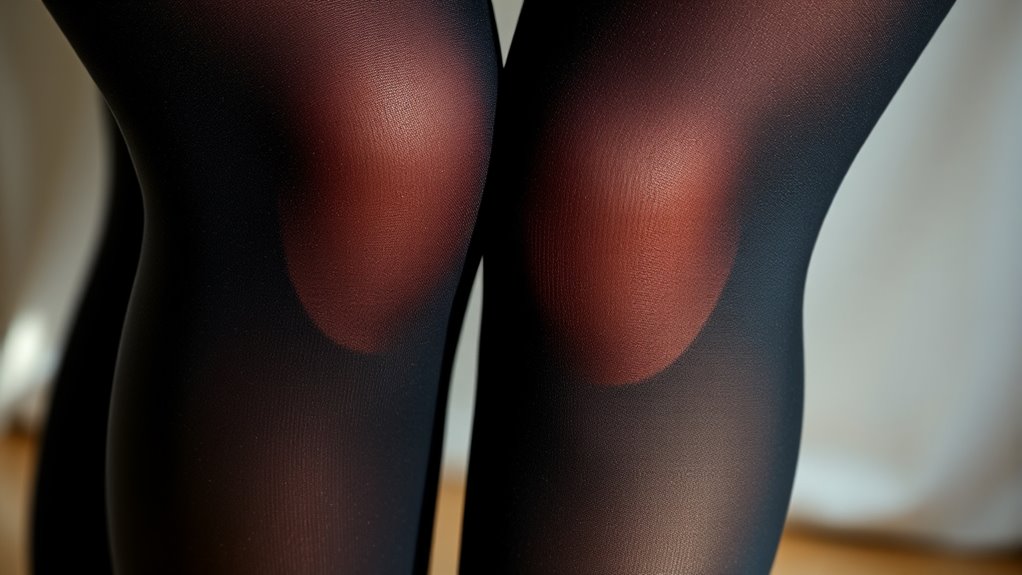
Several key factors determine whether tights appear shiny or matte, and understanding these can help you choose the right pair for your look. One major factor is fiber blends; tights made from synthetic fibers like nylon or polyester often have a shinier finish, while natural fibers like cotton tend to be matte. Manufacturing processes also play a critical role—techniques such as coating or glossing can enhance shine, while matte finishes result from specific dyeing or texturing methods. The tightness of the weave impacts how light interacts with the fabric, influencing the shine. Additionally, the density and thickness of the tights contribute to their reflective qualities. Dog names can also influence the perception of your style, as choosing a name that reflects your fashion sense can reinforce your overall look. By considering these factors, you can better select tights that match your desired appearance, whether you want a radiant glow or a subdued matte look.
Choosing Tights Based on Your Desired Look
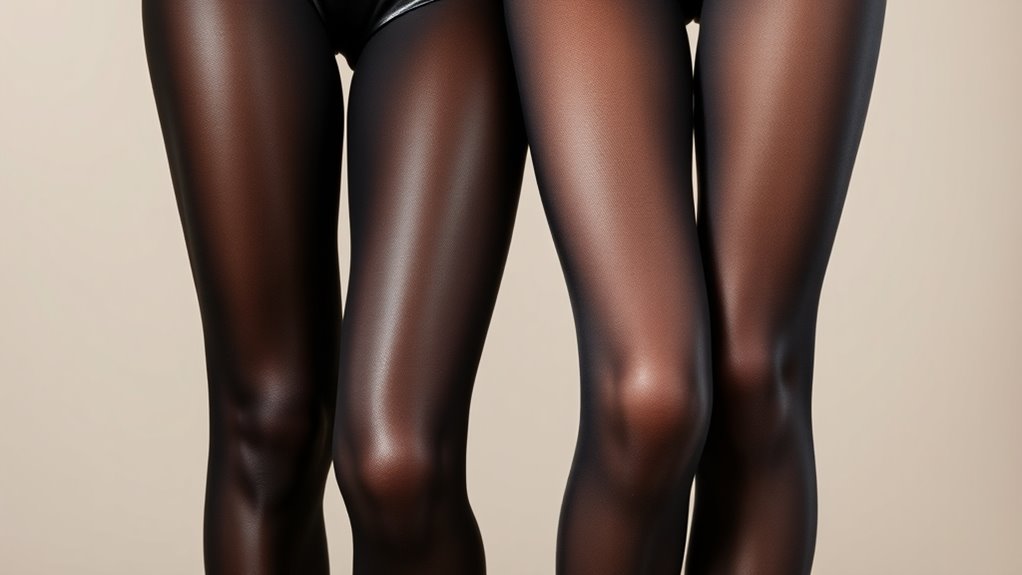
Choosing tights that match your desired look starts with understanding how different finishes will complement your style. For example, if you want a sleek, professional appearance, opt for matte tights that provide a smooth, understated finish. If you’re aiming for a bold, eye-catching vibe, shiny tights can add a touch of glamour. Consider color coordination to enhance your overall outfit: neutral shades for versatility and easy pairing, or vibrant hues to make a statement. Here are four options to picture:
- Classic nude matte tights for everyday elegance
- Black shiny tights for evening glamor
- Bright colored tights for playful, fun style
- Patterned or textured tights for added fashion versatility
Matching your tights to your look assures your outfit radiates confidence and coherence.
Tips for Maintaining the Finish of Your Tights
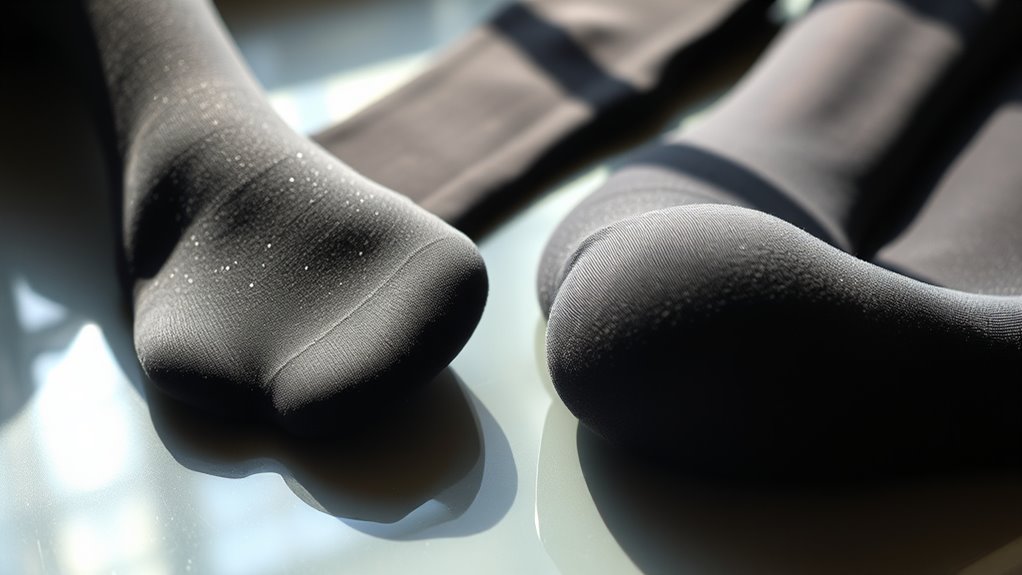
To keep your tights looking their best and maintain their intended finish, proper care and handling are key. Understanding color chemistry helps you select tights that stay matte or shine as desired, preventing unwanted gloss or dullness. Always wash tights inside out in cold water to preserve their finish and avoid harsh detergents that can damage fibers. Follow current fashion trends by choosing tights made from quality materials designed for longevity, which also helps retain their appearance over time. Avoid excessive stretching or rough handling, as this can cause pilling or loss of sheen. Store tights flat or rolled to prevent creases that may affect their finish. Regular gentle care keeps your tights aligned with the latest styles while maintaining their original shine or matte look.
Common Mistakes When Testing Tights Transparency

Testing tights transparency can be tricky if you don’t avoid common mistakes that can lead to inaccurate results. One mistake is testing in poor lighting, which can make tights appear more transparent than they are, affecting tights longevity assessments. Second, using a busy background can distract and distort your view, leading to false conclusions about transparency. Third, stretching the tights during testing can alter their appearance, skewing results related to fashion trends. Lastly, rushing the test without patience might cause you to overlook subtle transparency issues. To get reliable results, ensure good lighting, use neutral backgrounds, handle the tights gently, and take your time. Avoiding these mistakes helps you accurately evaluate tights and make smarter choices for your wardrobe.
Frequently Asked Questions
Can Tights Change Their Finish Over Time With Wear?
Yes, tights can change their finish over time with wear. Your fabric composition and routine maintenance play a big role—stretching and friction can cause tights to develop a shine, especially if they contain fibers like nylon or spandex. Proper washing and avoiding excessive pulling help preserve their matte look. Over time, even high-quality tights may become shinier as fibers break down, so take care to extend their matte appearance.
Do Different Lighting Conditions Affect the Shine or Matte Appearance?
Yes, different lighting conditions can affect the appearance of your tights’ finish. Under bright or direct light, the fabric composition, especially if it includes shiny fibers like nylon or spandex, makes them appear more lustrous. Environmental factors such as humidity or indoor lighting can enhance shine or deepen the matte look. So, your tights’ appearance shifts based on lighting and environmental conditions, highlighting the importance of fabric choice and setting.
Are Some Tights More Prone to Shine Due to Manufacturing Processes?
Some tights are definitely more prone to shine because of their manufacturing processes. You can imagine the fabric composition and dyeing techniques as the secret ingredients in a recipe; if they’re not carefully controlled, the tights might reflect light like a mirror. Fabrics with a high percentage of shiny fibers or unique dyeing methods can create a glossy finish, making them more likely to shine rather than stay matte.
How Does Body Temperature Influence the Tights’ Finish?
Your body heat causes sweat impact, which can influence your tights’ finish. As your temperature rises, sweat can make tights appear shinier because moisture interacts with the fabric’s fibers, creating a reflective surface. Conversely, cooler temperatures reduce sweat and help maintain a matte appearance. To keep your tights looking matte, stay cool and dry, as excessive body heat and sweat are key factors in causing shine.
Can Layering Tights Alter Their Transparency and Shine?
Layering tights is like building a fortress; it can reduce transparency and shine, giving you a more matte finish. Use strategic layering strategies—wearing thicker or multiple pairs—to enhance tights durability and achieve a seamless, opaque look. Keep in mind, though, that too much layering might make your tights feel bulky. Balance is key to maintaining comfort while achieving the desired matte appearance and durability.
Conclusion
Ultimately, understanding how tights reflect or absorb light is like tuning into a secret language your legs reveal. When you master the transparency test, you’re revealing a world where fabric becomes your silent storyteller—shining with confidence or staying matte like a quiet whisper. So, embrace the dance of material and light, and choose your tights not just for their look, but for how they let your true style shine through, softly or boldly, as you desire.