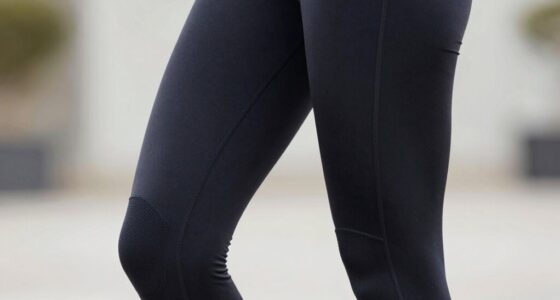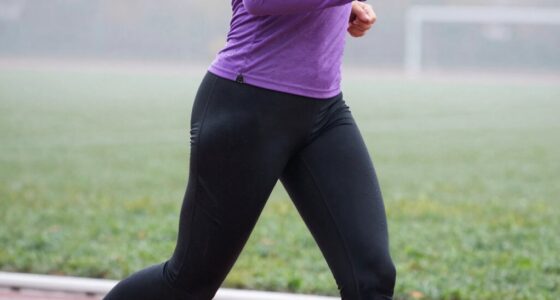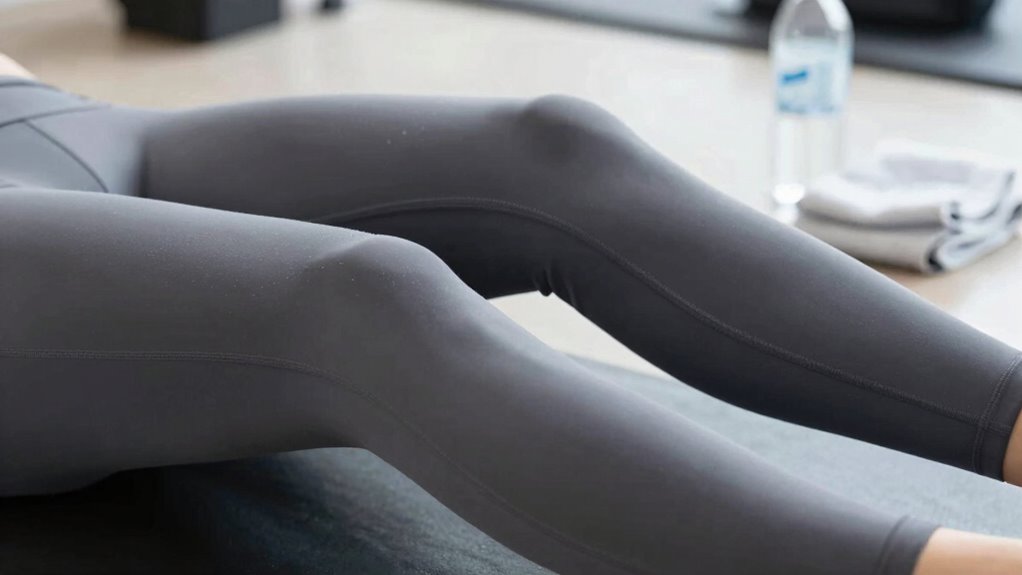

In your recovery routine, wearing compression legwear helps support better blood circulation, which speeds up muscle repair and reduces soreness after intense workouts. It encourages blood flow from your ankles up, preventing pooling and flushing out waste products like lactic acid. Wearing it during post-exercise cool-down or overnight can decrease swelling and promote quicker recovery, allowing you to train harder again sooner. Stay with us to discover more ways to maximize its benefits for your recovery.

Get your wardrobe favorites delivered free with Prime
- Fast, free delivery on millions of items
- Prime Video, Amazon Music and more included
- Member-only deals all year
Key Takeaways
- Compression legwear promotes improved blood circulation, accelerating nutrient delivery and waste removal during recovery.
- Wearing compression gear post-exercise reduces soreness and swelling, supporting faster muscle repair.
- It can be integrated into cool-down and rest periods to optimize recovery efficiency.
- Proper fit and compression level ensure effective support without circulation issues.
- Regular use enhances overall recovery times, allowing for higher training loads and improved performance.

Recovery routines are essential for athletes and active individuals looking to maximize performance and prevent injury, and compression legwear plays a key role in this process. When you wear compression sleeves or tights after intense activity, you support your body’s natural recovery mechanisms by promoting better blood circulation. Improved blood flow delivers oxygen and nutrients more efficiently to your muscles, helping to reduce soreness and speed up the repair process. This enhancement in circulation isn’t just about recovery; it also influences your athletic performance over time. As your muscles receive more oxygen and nutrients during recovery, they become stronger and more resilient, preparing you better for your next workout or competition.
Supporting recovery with compression wear boosts circulation, reduces soreness, and enhances long-term athletic resilience.
You might notice that after wearing compression legwear, your legs feel less tired and swollen. That’s because the graduated compression design applies pressure from your ankles upward, encouraging blood to flow back toward your heart. This prevents blood from pooling in your lower limbs, which can cause discomfort and slow down recovery. By actively supporting your blood circulation, compression legwear helps flush out metabolic waste products like lactic acid that accumulate during exercise. Clearing these substances from your muscles minimizes stiffness and soreness, so you can return to training sooner and with less discomfort. Additionally, using compression gear aligns with principles of improved circulation, a key factor in effective recovery. Consistent use of compression gear can also contribute to muscle stabilization, which is crucial for preventing injuries during intense training periods.
Incorporating compression legwear into your recovery routine is straightforward. After your workout, you simply put on the compression gear and keep it on for several hours or overnight, depending on your needs. Some athletes prefer to wear it during their post-exercise stretching or cool-down phase to maximize benefits. When used consistently, compression legwear can also help maintain muscle stability, which further supports injury prevention and recovery. Regular use can also aid in reducing swelling, making it easier to recover quickly from strenuous activities. Over time, you may notice an overall improvement in muscle recovery times and an increase in your ability to train harder without feeling overly fatigued. The consistent use of compression legwear helps your body adapt to higher training loads, ultimately boosting your athletic performance.
Choosing the appropriate compression level is also vital, as it ensures the gear provides the right amount of support and effectiveness based on your activity level and recovery needs. It’s important to select the correct fit to avoid issues such as excessive constriction, which can impede circulation. When used correctly, compression legwear becomes a valuable addition to your recovery toolbox, enhancing blood circulation and supporting your body’s ability to bounce back faster. This, in turn, helps you stay consistent, prevent injuries, and achieve your athletic goals more effectively.
compression leg sleeves for recovery
As an affiliate, we earn on qualifying purchases.
As an affiliate, we earn on qualifying purchases.
Frequently Asked Questions
Can Compression Legwear Prevent Future Injuries?
Yes, compression legwear can help prevent future injuries by providing circulatory benefits and muscle support. When you wear it, blood flow improves, reducing muscle fatigue and the risk of strains. It also stabilizes muscles during activity, decreasing the chance of sprains or tears. Regular use, especially during intense workouts or long periods of standing, can strengthen your muscles’ resilience and promote overall injury prevention.
How Long Should I Wear Compression Legwear Daily?
For ideal results, wear compression legwear daily for about 6 to 8 hours, aligning with your activity schedule. As fashion trends favor functional yet fashionable pieces, integrate compression wear into your daily style tips effortlessly. Wearing compression legwear during workouts or throughout the day supports circulation and recovery. Consistency is key, so adapt your routine to suit your lifestyle, ensuring you reap the benefits without feeling confined or uncomfortable.
Is Compression Legwear Suitable for All Sports?
Yes, compression legwear is suitable for many sports, but it’s essential to take into account your sport’s specific needs. As fashion trends embrace athletic wear, compression gear has become more accessible and stylish, making it easy to incorporate into your routine. Whether you’re running, cycling, or playing team sports, compression legwear offers support and recovery benefits, aligning with current fashion accessibility and helping you perform confidently.
What Materials Are Best for Compression Legwear?
The best materials for compression legwear balance fabric durability with material breathability. Look for high-quality nylon or polyester blends, as they’re durable and resist wear and tear. These fabrics also offer excellent breathability, keeping your skin cool and dry during workouts or recovery. Avoid materials that trap moisture or lack stretch, as they can reduce effectiveness and comfort. Selecting the right fabric guarantees your compression legwear performs well and lasts longer.
Are There Any Side Effects From Wearing Compression Gear?
Wearing compression gear might seem harmless, but beware of potential side effects. You could experience skin irritation or discomfort if the fit is too tight or if you have sensitive skin. Circulation concerns might arise if you wear compression wear improperly or for too long. Always choose the right size and material, and listen to your body to prevent these issues from turning into bigger problems.
graduated compression tights for athletes
As an affiliate, we earn on qualifying purchases.
As an affiliate, we earn on qualifying purchases.
Conclusion
So, are you ready to open the full potential of your recovery routine? Incorporating compression legwear might just be the game-changer you’ve been searching for. But the real question is—how much faster could your recovery be? As you experiment with different strategies, one thing’s certain: the next breakthrough could be just a wear away. Don’t wait—your best recovery yet might be closer than you think.
post-exercise compression stockings
As an affiliate, we earn on qualifying purchases.
As an affiliate, we earn on qualifying purchases.
As an affiliate, we earn on qualifying purchases.
Halloween Picks
halloween
As an affiliate, we earn on qualifying purchases.