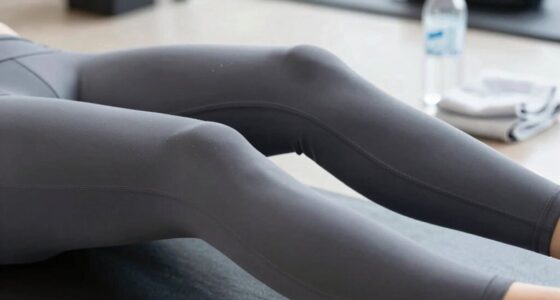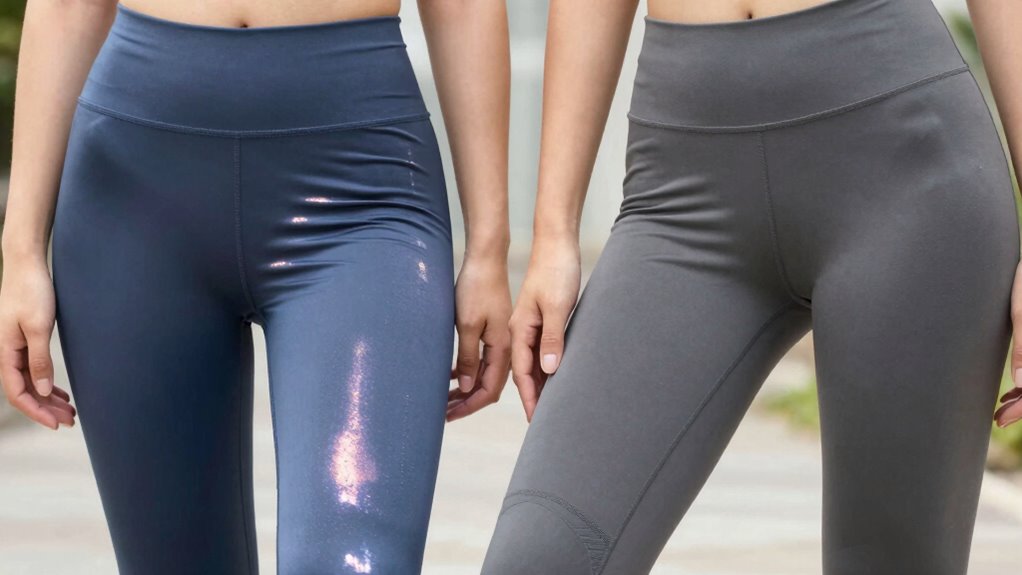

Running tights are lightweight, breathable, and designed to wick moisture away, helping you stay cool and dry during runs. They offer moderate compression and a snug fit for unrestricted movement with less support. Training tights, on the other hand, are thicker, more supportive, and often feature higher compression to stabilize muscles during weightlifting or high-impact exercises. Knowing these differences can help you choose the right gear for your workout goals—there’s more to discover if you keep exploring.

Get your wardrobe favorites delivered free with Prime
- Fast, free delivery on millions of items
- Prime Video, Amazon Music and more included
- Member-only deals all year
Key Takeaways
- Running tights are lightweight, breathable, and designed for moderate compression during cardio in warm conditions.
- Training tights feature thicker, more supportive fabrics with higher compression for strength and high-impact workouts.
- Running tights prioritize breathability and airflow, while training tights emphasize durability and muscle support.
- Running tights have a snug, streamlined fit for unrestricted movement; training tights offer a more compressive, supportive fit.
- The fabric choice varies: running tights use moisture-wicking materials, whereas training tights focus on durability and anti-chafing features.
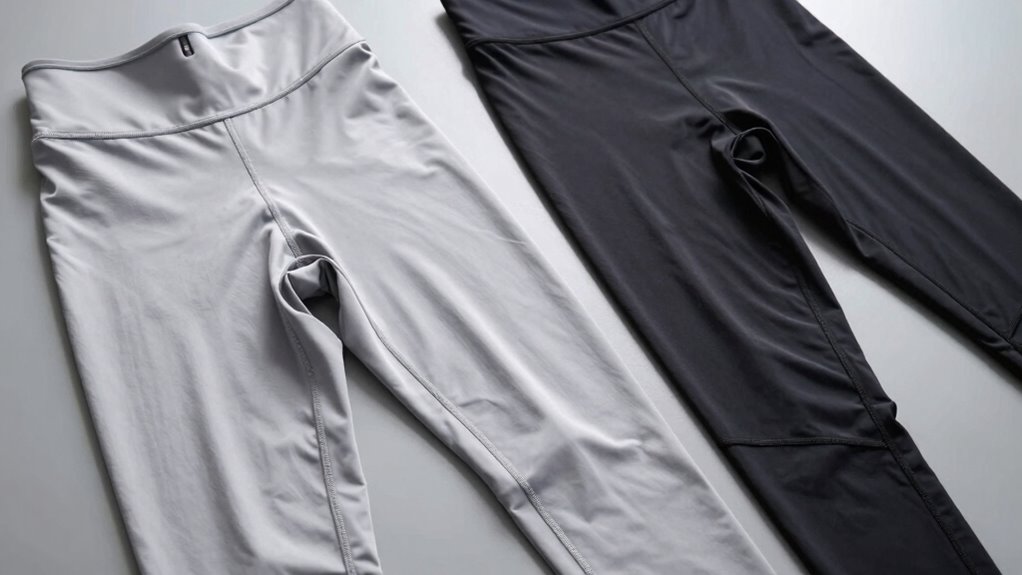
When choosing between running tights and training tights, understanding their key differences can help you pick the right gear for your workouts. One of the most important factors to weigh is fabric breathability. Running tights are designed with lightweight, breathable materials that wick away sweat quickly, keeping you cool and dry during your runs. They often incorporate mesh panels or moisture-wicking fabrics that promote airflow, which is essential when you’re pushing your pace or running in warmer conditions. Training tights, on the other hand, may prioritize durability and support over breathability. They tend to be made from thicker, more compressive fabrics that help stabilize muscles and reduce fatigue during strength training or cross-training sessions. These fabrics might not breathe as well as running-specific tights, but they provide a snug fit that enhances your performance and comfort during intense workouts.
Running tights are lightweight, breathable, and wick away sweat, ideal for staying cool during runs.
Additionally, some training tights incorporate compression benefits, which can aid in muscle recovery and improve circulation during and after exercise. Another key difference lies in the compression benefits each type offers. Running tights typically provide moderate compression that encourages blood flow and muscle recovery without restricting movement. This level of compression helps reduce muscle vibration, which can lead to less fatigue and soreness after long runs. Training tights, particularly those designed for strength training or high-intensity workouts, often feature higher compression levels. The added compression supports muscle stabilization, improves proprioception, and can even enhance power during lifts or jumps. If you’re engaged in high-impact or strength-focused routines, you’ll find that training tights with greater compression can help you perform better and recover faster. Furthermore, some training tights are designed with anti-chafing features to ensure comfort during extended sessions, especially in high-friction areas.
Fit and flexibility are also critical considerations. Running tights tend to have a streamlined, snug fit that minimizes chafing and allows for unrestricted leg movement. They’re usually designed with a slightly lighter fabric that moves with your body effortlessly. Training tights, however, might have a more compressive fit that feels tight but supportive, helping you stay stable during complex movements and lifts. They often include reinforced panels or thicker fabric in high-friction areas to withstand wear and tear from weightlifting or bodyweight exercises. Moreover, the durability of training tights is especially important for high-impact workouts, where the fabric is subject to frequent stretching and friction. Choosing the right tights can also depend on the climate, as some materials are better suited for hot or cold conditions, impacting your comfort and performance.
Ultimately, your choice depends on your workout goals. If you’re primarily running or doing cardio, go for lightweight, breathable running tights that offer moderate compression. If your workouts involve strength training, lifting, or high-intensity intervals, training tights with added compression and durability will serve you better. Knowing these differences helps you select gear that optimizes your performance and comfort, ensuring each workout is effective and enjoyable.
men's running tights moisture-wicking
As an affiliate, we earn on qualifying purchases.
As an affiliate, we earn on qualifying purchases.
Frequently Asked Questions
Are Training Tights Suitable for Outdoor Running in Cold Weather?
Yes, training tights are suitable for outdoor running in cold weather. They often feature thermal insulation to keep your muscles warm and wind resistance to block chilly gusts. This combination helps you stay comfortable and maintain your performance during winter runs. Make sure to choose tights with these features, and consider layering if temperatures are extremely low. Properly insulated training tights can make cold-weather running much more enjoyable.
Do Running Tights Offer Better Moisture-Wicking Than Training Tights?
Running tights typically offer better moisture-wicking due to advanced fabric technology designed specifically for high-intensity movement. They excel at moisture management, pulling sweat away from your skin quickly, keeping you dry and comfortable during runs. Training tights may not have the same specialized features, so if sweat management is a priority, choose running tights with advanced fabric technology for superior moisture-wicking performance.
Can Training Tights Be Used for High-Intensity Workouts?
Yes, training tights can be used for high-intensity workouts. They typically feature fabric breathability that helps keep you cool and comfortable during intense activity. Plus, the waistband comfort guarantees you stay focused without distractions. While they may not be specialized like running tights, quality training tights provide enough support, moisture management, and flexibility for high-energy exercises. Just choose a pair with good fabric breathability and a snug, comfortable waistband.
Are There Differences in Durability Between Running and Training Tights?
A stitch in time saves nine, and the same applies to your workout gear. You’ll find that training tights often have better fabric durability due to thicker, more robust materials designed for intense movements. Material differences play a key role; training tights typically use stronger fabrics like nylon or polyester blends, making them more resistant to wear and tear. Running tights, while lighter, may not endure as long under rigorous training conditions.
Which Type of Tights Provides More Compression Support?
Training tights generally provide more compression support than running tights, thanks to their higher compression level. This extra support helps stabilize your muscles during intense workouts, reducing fatigue and enhancing recovery. Running tights focus more on breathability and flexibility for longer runs, so their compression level is usually lower. If muscle support is your priority, opt for training tights with targeted compression zones to keep your muscles secure and reduce soreness.
high compression training tights
As an affiliate, we earn on qualifying purchases.
As an affiliate, we earn on qualifying purchases.
Conclusion
Ultimately, choosing between running tights and training tights comes down to knowing what suits your workout best. While running tights offer lightweight breathability, training tights provide versatile support for various activities. Don’t put all your eggs in one basket—consider your routine and preferences before making a pick. When you find the right pair, you’ll be able to hit the ground running or lifting, knowing you’re dressed for success every step of the way.
breathable workout tights for women
As an affiliate, we earn on qualifying purchases.
As an affiliate, we earn on qualifying purchases.
anti-chafing compression leggings
As an affiliate, we earn on qualifying purchases.
As an affiliate, we earn on qualifying purchases.
Fall Picks
fall essentials
As an affiliate, we earn on qualifying purchases.