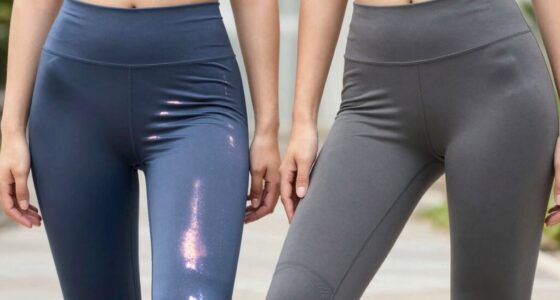
When comparing sprint and endurance compression profiles, remember that sprint gear provides targeted, high pressure around key muscles to offer stability and reduce vibrations during intense bursts. Endurance gear, on the other hand, offers a more uniform, gentle compression to support blood flow over long periods. Understanding these differences helps you choose the right gear for your activity. Keep exploring to see how these profiles can improve your performance and recovery even further.

Get your wardrobe favorites delivered free with Prime
- Fast, free delivery on millions of items
- Prime Video, Amazon Music and more included
- Member-only deals all year
Key Takeaways
- Sprint compression gear provides targeted, tighter support around key muscles to stabilize muscles during explosive movements.
- Endurance compression offers uniform, moderate support to maintain steady blood flow during prolonged activity.
- Sprint gear reduces muscle vibrations and oscillations for quick recovery and injury prevention after high-intensity efforts.
- Endurance gear prioritizes comfort and consistent support to prevent fatigue over extended periods.
- The compression profile varies from high, graduated support in sprints to gentler, graduated support in endurance running.
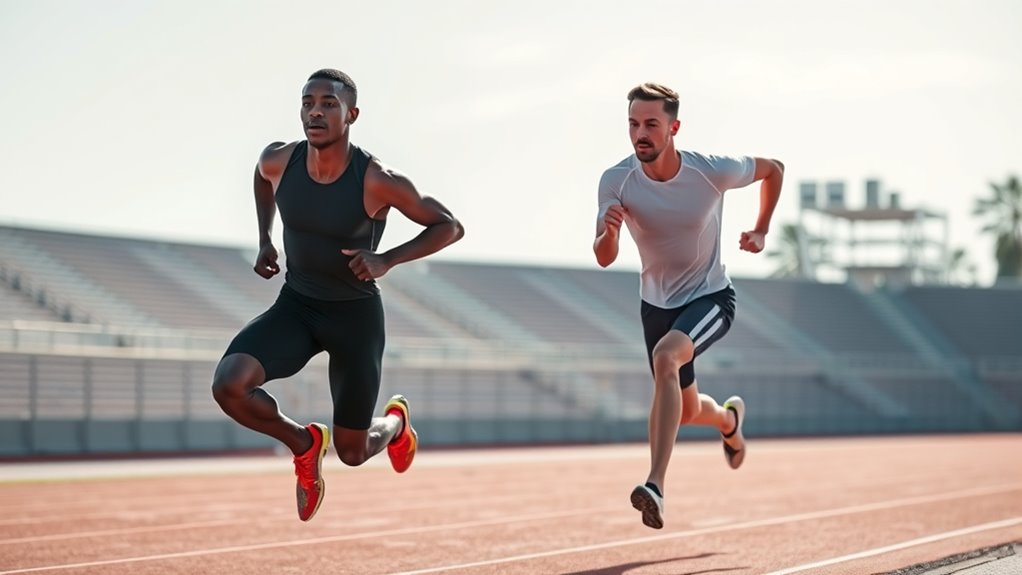
When it comes to athletic performance, understanding the differences between sprinting and endurance running can help you maximize your training and achieve your goals. One key factor that varies considerably between these two types of running is the compression profile of your gear, especially your compression wear. Compression garments are designed to support muscles, improve circulation, and reduce fatigue, but their effectiveness depends largely on their specific compression patterns tailored to your activity.
For sprinting, your muscles generate explosive power over short distances, often less than 400 meters. To maximize this, your compression gear should provide high, targeted compression around your thighs, calves, and hips. This helps stabilize your muscles during rapid, intense movements, minimizing vibrations and reducing the risk of injury. The compression profile in sprint gear tends to be more graduated—tighter around the muscles that need extra support and slightly less at the extremities—to promote ideal blood flow and reduce muscle oscillation. This profile ensures that your muscles receive the support they need for quick bursts of speed, while still allowing for a full range of motion and quick recovery between sprints.
High, targeted compression supports muscles during explosive sprints, reducing vibrations and injury risk for optimal performance.
In contrast, endurance running involves sustained effort over longer distances, sometimes hours. Your gear needs a different compression profile to support prolonged muscle activity. Typically, endurance compression garments have a more uniform and moderate level of compression. This helps maintain steady blood flow and reduces muscle fatigue over time. The key here is comfort and consistent support rather than intense, localized compression. These garments often feature graduated compression that is gentler, promoting better circulation without constricting your muscles too tightly. This allows you to maintain a steady pace, conserve energy, and reduce the onset of fatigue during long runs.
The different compression profiles also influence recovery. Sprinting gear, with its high and targeted compression, is especially beneficial immediately after short, intense efforts to promote rapid muscle recovery. Endurance gear, on the other hand, helps sustain your performance during long runs and can aid in recovery afterward by preventing excessive muscle soreness and promoting circulation over extended periods.
Additionally, understanding compression technology can help you choose the most suitable gear for your specific needs. Ultimately, choosing the right compression profile depends on your specific training focus. Sprint athletes benefit from highly targeted, high-pressure compression to support quick, powerful movements. Endurance runners need a more balanced, moderate profile that supports sustained activity and long-term muscle health. By understanding these differences, you can select gear that complements your running style, enhances your performance, and helps you reach your athletic potential.
compression running gear for endurance
As an affiliate, we earn on qualifying purchases.
As an affiliate, we earn on qualifying purchases.
Frequently Asked Questions
How Do Compression Profiles Affect Recovery Times?
Compression profiles directly impact your recovery times by improving blood circulation and reducing muscle soreness. A well-suited profile increases oxygen delivery and waste removal, helping your muscles recover faster. If you choose the right compression level, you’ll experience less swelling and fatigue after workouts. Pay attention to the profile’s fit and compression strength to optimize recovery, so you can get back to training sooner and perform at your best.
Can Switchable Compression Gear Benefit Both Sprint and Endurance Training?
Switchable compression gear can benefit both sprint and endurance training by adapting to your needs. For example, imagine a runner switching to higher compression during sprints for better muscle support and switching to lower compression for endurance runs to reduce fatigue. This versatility helps optimize performance and recovery across different workouts. By customizing compression levels, you guarantee your muscles stay supported without sacrificing comfort or flexibility.
Are There Specific Brands Recommended for Different Profiles?
Yes, specific brands cater to different profiles. For sprint training, you might prefer brands like SKINS or 2XU, which offer high-compression gear for power and speed. For endurance, look into CEP or Zensah, known for lightweight, breathable options that support long-distance comfort. Try different brands to find the fit and compression level that works best for your training needs. Always check reviews and product specs before purchasing.
What Role Does Material Composition Play in Compression Effectiveness?
Material composition directly impacts how well compression works for you. Look for fabrics like nylon, spandex, and polyester, which offer stretch, durability, and moisture-wicking properties. These materials provide consistent compression, enhance blood flow, and keep you comfortable during activity. When choosing gear, consider how the fabric feels against your skin and whether it maintains its compression over time, ensuring you get the best support for your specific needs.
How Do Personal Preferences Influence Compression Profile Choices?
Your personal preferences greatly influence your compression profile choices because comfort, fit, and style matter. You might prefer a tighter fit for support or a looser feel for mobility. Consider how the fabric feels against your skin and whether the compression level boosts your confidence. Listening to your body helps you select profiles that enhance performance without causing discomfort, ensuring you stay motivated and comfortable during activities.
high compression sprinting leggings
As an affiliate, we earn on qualifying purchases.
As an affiliate, we earn on qualifying purchases.
Conclusion
When choosing between sprint and endurance compression profiles, consider your specific goals. For example, if you’re preparing for a 100-meter dash, a sprint compression profile helps optimize muscle recovery and power. Conversely, for a marathon, an endurance profile enhances circulation and reduces fatigue. Understanding these differences allows you to tailor your gear for better performance and recovery, much like elite athletes who select their compression wear based on their training focus. Ultimately, matching the profile to your activity boosts your results.
athletic compression sleeves for recovery
As an affiliate, we earn on qualifying purchases.
As an affiliate, we earn on qualifying purchases.
targeted muscle support compression wear
As an affiliate, we earn on qualifying purchases.
As an affiliate, we earn on qualifying purchases.
Halloween Picks
halloween
As an affiliate, we earn on qualifying purchases.