
The carbon footprint of a pair of tights starts with energy-intensive fiber production, especially if made from synthetic materials like polyester or nylon, which require lots of fossil fuels and water. Manufacturing, transportation, and long supply chains add more emissions. Daily use, washing, and drying also contribute, especially if you use hot water or tumble dry. Disposal often ends in landfills, where synthetic fibers persist. To discover simple ways to reduce your impact, continue exploring how your choices matter.
Key Takeaways
- Material choices like recycled polyester and organic cotton reduce the environmental impact during production.
- Transportation of raw materials and finished tights significantly contributes to the overall carbon footprint.
- Manufacturing processes and energy sources, especially reliance on fossil fuels, influence emissions levels.
- Frequent washing, drying, and improper disposal accelerate fabric degradation and microfiber pollution.
- Recycling challenges and landfill disposal of synthetic tights result in long-term environmental waste.
The Origins: Fiber Production and Material Choices
Fiber production is a major contributor to the overall carbon footprint of tights, as it involves energy-intensive processes that consume substantial resources. Your choice of fiber affects not only the quality but also the environmental impact. Selecting fibers like organic cotton or recycled polyester can reduce the carbon footprint, supporting material sustainability. Conventional fibers such as nylon and polyester require intensive resource use, including water and fossil fuels, increasing greenhouse gas emissions. By prioritizing sustainable fiber options, you help lower the environmental impact. Material sustainability depends on how fibers are sourced and processed, influencing the lifecycle emissions of your tights. Additionally, the production methods used can significantly influence the overall carbon emissions associated with fiber manufacturing. Making informed fiber selections can considerably cut down the carbon footprint from the very beginning, encouraging more eco-conscious production and consumption.
Manufacturing Processes and Energy Consumption
Your choice of materials directly influences the environmental impact of manufacturing, especially regarding sourcing. Factory energy use varies depending on the processes and energy sources involved, affecting the overall carbon footprint. Understanding these factors helps you see how manufacturing choices shape sustainability. Incorporating organic and natural ingredients into production can further reduce environmental impacts by minimizing chemical usage and promoting eco-friendly practices.
Material Sourcing Impact
The environmental impact of sourcing materials for tights hinges heavily on manufacturing processes and energy use. When you choose tights made from synthetic fibers, such as polyester or nylon, you’re supporting a process that relies heavily on fossil fuels, resulting in a higher carbon footprint. Conversely, organic materials like organic cotton or plant-based fibers often require less intensive processing and fewer chemicals, reducing environmental harm. However, their cultivation can still demand significant water and land resources. The extraction and processing of synthetic fibers often involve energy-intensive steps, contributing to greenhouse gas emissions. Your choices influence the overall footprint—opting for organic or sustainably sourced fibers can help lower the environmental impact associated with material sourcing.
Factory Energy Use
Manufacturing processes for tights consume significant energy, often resulting in a sizable carbon footprint. Factory emissions from energy use depend on the energy source and efficiency of equipment. Improving energy efficiency can reduce emissions and lower environmental impact. Many factories rely on fossil fuels, increasing their carbon footprint, but some have adopted renewable energy sources to cut emissions. Upgrading machinery and optimizing manufacturing steps can further decrease energy consumption. Implementing sustainable manufacturing practices can significantly reduce overall environmental impact. The table below highlights key ideas:
| Aspect | Impact | Improvement Strategies |
|---|---|---|
| Factory emissions | Contribute to overall carbon footprint | Switch to renewable energy sources |
| Energy consumption | Varies with process efficiency | Upgrade to energy-efficient machinery |
| Manufacturing steps | Can be optimized for less energy use | Streamline processes, reduce waste |
| Overall footprint | Depends on energy sources & efficiency | Invest in sustainable practices |
Transportation and Global Supply Chains

Transportation and global supply chains play a substantial role in determining the carbon footprint of tights, as moving raw materials and finished products across long distances consumes considerable energy. The transport network connects manufacturers, suppliers, and consumers, but it also generates notable shipping emissions. The longer the supply chain, the higher the energy use and emissions involved. Shipping modes like container ships and trucks emit greenhouse gases, adding to environmental impact. Additionally, optimizing logistics efficiency can help lower overall transportation emissions and reduce environmental impact. Raw materials often travel from distant countries before manufacturing begins. Shipping emissions contribute considerably to the overall carbon footprint. Efficient logistics can reduce unnecessary transportation steps. Localized production minimizes long-distance shipping and emissions.
Daily Use and Wear: The Environmental Toll
Every day, your tights undergo wear and tear that impacts the environment. As they stretch and fade, fabric breaks down, releasing microfibers into the water system. Plus, the energy you use during wearing adds to their overall carbon footprint. Incorporating proper disposal methods can further minimize environmental harm.
Fabric Degradation Over Time
As tights are worn daily, their fabric gradually weakens and degrades due to repeated stretching, friction, and washing. Over time, this affects fabric longevity, making them more prone to tears and thinning. The main degradation factors include constant abrasion from movement, exposure to detergent chemicals, and frequent laundering. These factors cause fibers to break down, reducing elasticity and strength. Additionally, bias in AI outputs can influence the quality and accuracy of the information provided, underscoring the importance of proper care. You might notice small snags, thinning areas, or holes appearing sooner than expected. To prolong their life, avoid harsh detergents and excessive washing. Proper handling can slow down degradation, but eventually, the fabric’s integrity diminishes. Understanding these degradation factors helps you better care for your tights and minimize their environmental impact by extending their usability.
Energy Consumption During Wear
While fabric degradation affects how long your tights last, their energy footprint doesn’t stop once they’re made. During wear, your tights consume energy indirectly through the electricity used for laundering and drying. Choosing energy-efficient appliances reduces overall consumption, minimizing their environmental impact. Opting for renewable energy sources, like solar or wind power, further cuts down the carbon emissions associated with daily use. Washing tights in cold water and air drying whenever possible substantially lowers energy needs. These small choices add up over time, reducing your tights’ overall environmental toll. Additionally, understanding city dynamics and making conscious lifestyle choices can further enhance your efforts to promote sustainable clothing habits. By prioritizing energy efficiency and renewable energy, you help lessen the carbon footprint during wear and promote more sustainable clothing habits.
Washing, Drying, and Maintenance Impacts
Washing, drying, and maintaining tights considerably influence their overall carbon footprint. Your choices here can make a big difference. Using eco-friendly detergent choices reduces harmful emissions and water pollution. Opting for air drying instead of tumble drying cuts energy use markedly. When washing, avoid hot water; cold or warm cycles save energy while still cleaning effectively. Proper maintenance, like repairing small tears promptly, extends your tights’ lifespan, reducing waste. Additionally, washing tights less frequently or in full loads minimizes water and energy consumption. Incorporating energy-efficient washing practices can further decrease environmental impact during routine care.
Disposal Methods and End-of-Life Environmental Effects

Choosing how you dispose of tights considerably impacts their environmental footprint at the end of their life. If you toss them in the trash, they often end up in landfills, contributing to landfill overflow and taking years to decompose. Tights made from synthetic fibers pose recycling challenges because they are difficult to separate from other waste streams, and many recycling facilities lack the technology to process these materials effectively. As a result, most tights are discarded rather than recycled, increasing environmental waste. Proper disposal methods, like specialized textile recycling programs, can help reduce these impacts, but they are not widely accessible. Your choices directly influence how long synthetic materials persist in the environment and how much waste accumulates at disposal sites. recycling challenges further complicate efforts to manage synthetic textile waste sustainably.
How Consumers Can Reduce the Carbon Footprint of Tights
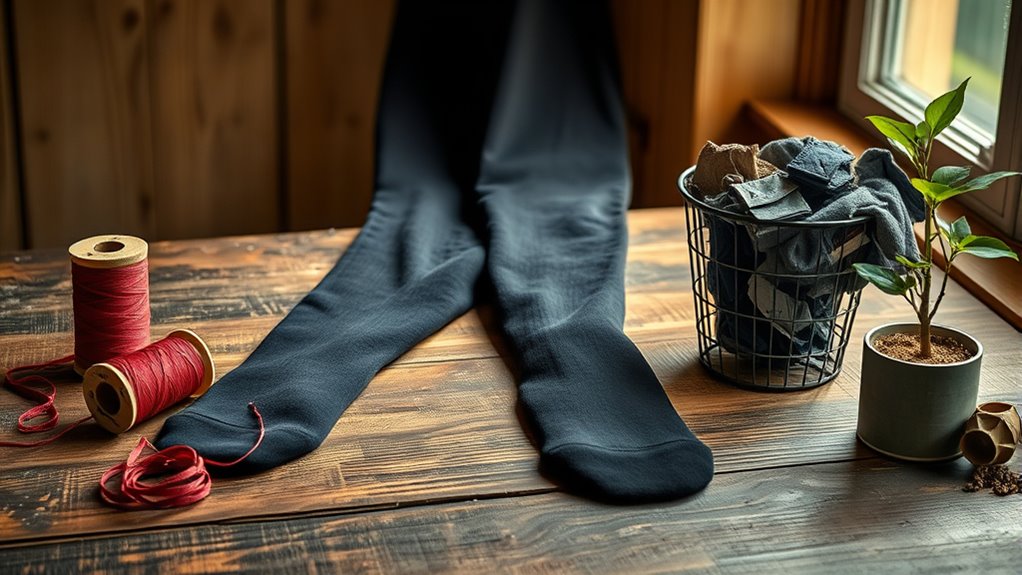
Consumers can considerably reduce the carbon footprint of tights by making mindful purchasing decisions and extending their lifespan. Start by choosing tights made from sustainable fabrics and supporting brands committed to eco-friendly practices. Embrace sustainable shopping by buying fewer, higher-quality pairs that last longer. Participate in recycling initiatives by properly disposing of tights through programs that recycle or repurpose old hosiery. Repair or repurpose tights whenever possible instead of discarding them. Additionally, wash tights in cold water and avoid tumble drying to reduce energy usage and prolong their life. Using sustainable fabrics can significantly lessen environmental impact. By making these small but impactful changes, you help lower the environmental impact of your tights, contribute to circular economy efforts, and support brands prioritizing sustainability.
Frequently Asked Questions
How Do Dyes and Chemical Treatments Affect Tights’ Environmental Impact?
Dyes and chemical treatments substantially increase tights’ environmental impact by generating dye wastewater and chemical runoff. When these substances aren’t properly managed, they pollute water sources, harm ecosystems, and require extra energy for treatment. As you wear tights, consider choosing brands that use eco-friendly dyes and minimize chemical use, reducing overall pollution and your carbon footprint. Better practices help protect the environment from the harmful effects of dyeing and chemical processes.
Are There Eco-Friendly Alternatives to Traditional Synthetic Fibers Used in Tights?
Imagine swapping your tights for a pair made from natural fibers—like organic cotton, hemp, or bamboo—just as you’d choose eco-friendly options in other parts of your life. These alternatives often have a lower environmental impact than synthetic fibers. Recycling initiatives also help, turning old tights into new products. By choosing these options, you actively reduce waste and carbon emissions, making your wardrobe more sustainable and eco-conscious.
What Role Do Retailers Play in Promoting Sustainable Tights?
Retailers play a vital role in promoting sustainable tights by embracing their responsibility to prioritize eco-friendly options. You can support brands that adopt sustainable marketing strategies and highlight the environmental benefits of their products. By offering a wider range of sustainable tights, retailers encourage consumers to make eco-conscious choices. Your influence helps shift industry standards toward greener practices, ultimately reducing the overall carbon footprint of tights and fostering a more sustainable fashion industry.
How Does the Lifespan of Tights Influence Their Overall Carbon Footprint?
Your tights’ wear life substantially impacts their overall carbon footprint. When you choose durable tights with better durability factors, they last longer, reducing the need for frequent replacements. This extended wear life decreases the environmental impact associated with production and disposal. So, investing in high-quality tights not only saves you money but also helps lower your carbon footprint by minimizing the environmental costs of manufacturing and waste.
Can Innovations in Biodegradable Materials Significantly Reduce Tights’ Environmental Impact?
You might think biodegradable materials can’t make a difference, but they can dramatically cut tights’ environmental impact. Innovations using biodegradable polymers enable sustainable manufacturing, breaking down more easily after disposal. Imagine tossing tights into the trash, knowing they’ll decompose naturally, reducing landfill waste and emissions. This shift not only minimizes pollution but also encourages eco-friendly choices, making your wardrobe more sustainable without sacrificing style or comfort.
Conclusion
By choosing eco-friendly tights and caring for them wisely, you can help lighten their footprint. Imagine your tights gliding smoothly through your day, then gently returning to the earth without harm. Every small action, from washing to disposal, shapes a greener future. When you make mindful choices, you’re not just wearing tights—you’re weaving a more sustainable world, one step at a time, with each mindful decision adding a gentle stroke to our planet’s canvas.