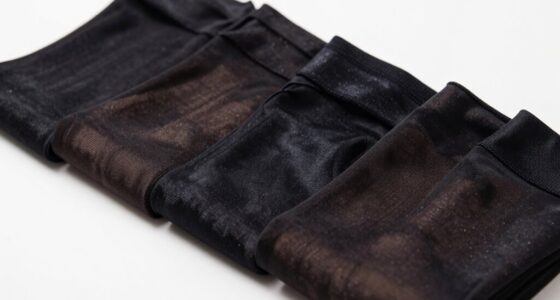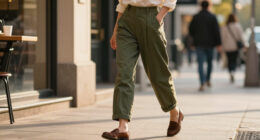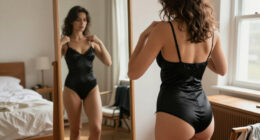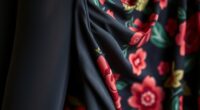
The numbers on tights, called denier, show how thick, dense, and opaque the fibers are. A lower denier, like 6–20, makes tights feel sheer and lightweight, perfect for a delicate, elegant look. Higher denier, over 60, means thicker, more durable, and warmer tights. Understanding these numbers helps you pick the right style for any season or occasion. If you want to learn more about what denier can do for your outfits, keep exploring.

Get your wardrobe favorites delivered free — and shop member deals
- Fast, free delivery on millions of items
- Access to Prime Big Deal Days deals on October 6–7
- Prime Video, Amazon Music and more included
Key Takeaways
- The denier number indicates the fiber’s weight in grams of 9,000 meters of yarn, reflecting thickness and density.
- Lower denier (6-20) produces sheer, lightweight tights, while higher denier (60+) results in opaque, durable coverage.
- Denier affects the tights’ appearance, with lower numbers offering a polished, barely-there look, and higher numbers providing warmth and opacity.
- Choosing the right denier depends on occasion, season, and desired comfort, with finer tights suited for formal or warm-weather wear.
- Proper care, like gentle hand washing and air drying, helps maintain the appearance and longevity of tights across various denier levels.
As an affiliate, we earn on qualifying purchases.
Understanding the Origin of Denier and Its Historical Roots
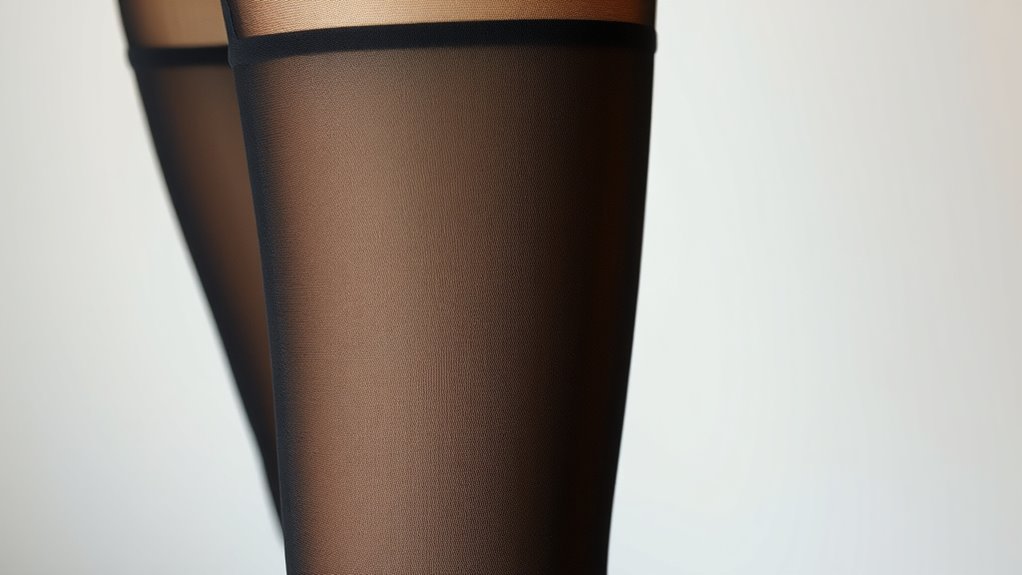
To understand the origin of the denier measurement, it helps to look back at its historical roots in the textile industry. The term “denier” comes from a French word linked to an old Roman coin, which was once used to measure silk yarn weight. Originally, it indicated the weight in grams of 9,000 meters of silk thread. Over time, this measurement expanded beyond silk to include other fibers used in textiles, such as nylon and polyester. The denier system allows manufacturers to specify fiber thickness and strength, giving consumers a standardized way to compare tights and fabrics. This historical background explains why denier now reflects fiber density and thickness, rather than just sheer appearance. Additionally, the fiber measurement system has evolved to accommodate modern textile manufacturing processes and material innovations, highlighting the importance of technological advancements in the industry. The development of standardized measurements has further refined how consumers interpret and select textiles based on quality and characteristics, with the denier system playing a crucial role in this evolution. Notably, understanding the currency-based origins of denier helps consumers better grasp its significance in textile quality assessment.
As an affiliate, we earn on qualifying purchases.
How Denier Measures the Thickness and Density of Fibers
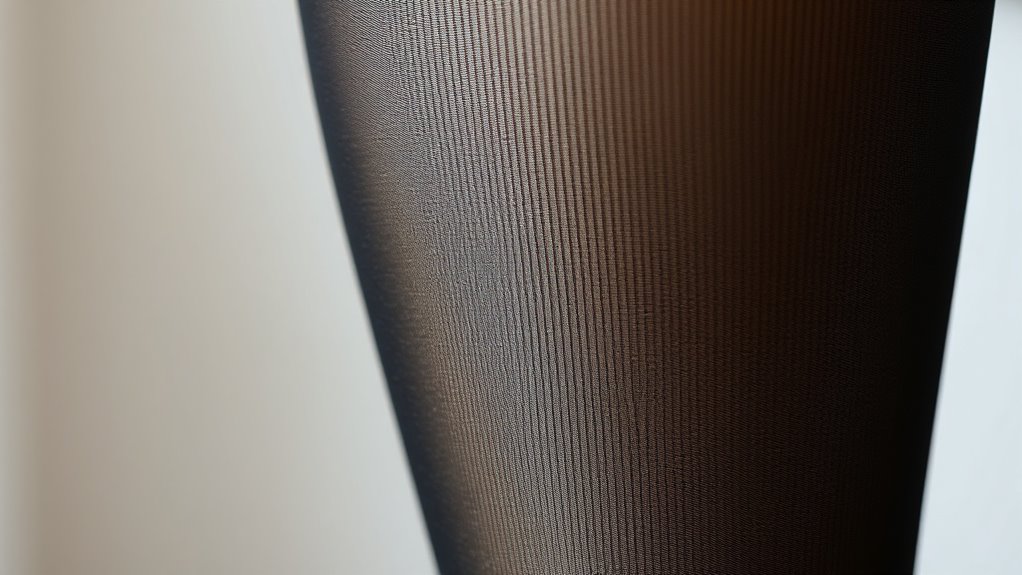
You can understand denier as a way to measure the yarn’s weight and density, which directly affects how thick or thin the fibers are. It calculates the grams of yarn in 9,000 meters, giving you a clear idea of the fiber’s thickness. This measurement helps you choose tights that match your desired balance of transparency and durability. Additionally, anti-aging effects from certain ingredients can enhance the appearance of the skin around the eyes. Knowing about fiber types can also help you understand how different textures and qualities are achieved in textile products. Being aware of relationship dynamics can influence your choice of materials based on durability and comfort preferences. Regular bulb maintenance ensures consistent performance and longevity of your tights’ appearance and feel.
Yarn Weight and Density
Ever wondered how the thickness of tights is precisely measured? It all comes down to yarn weight and density. When you see a denier number, it indicates how heavy 9,000 meters of fiber is in grams. The higher the denier, the thicker and denser the yarn. Thicker yarn means the fibers are packed more tightly, creating a more opaque and durable fabric. Conversely, lower denier fibers are finer and lighter, resulting in sheer, delicate tights. Yarn density, or how tightly the fibers are woven together, affects the overall feel and strength of the tights. So, denier isn’t just about appearance; it directly relates to the fabric’s weight, thickness, and how dense the fibers are woven, shaping both look and function. Kia Tuning techniques can also influence the durability and performance of textile fibers in specialized applications. Understanding fiber properties can help you choose tights that suit your needs for comfort and longevity, especially when considering fabric density for specific uses. Additionally, fiber composition impacts the elasticity and breathability of the tights, further tailoring them to your preferences.
Fiber Thickness Measurement
Fiber thickness measurement with denier focuses on how the fibers’ physical properties determine their perceived size and density. Essentially, denier quantifies the weight of a fiber, giving you a clear idea of its thickness. Here’s how it works:
- It measures the grams of yarn in 9,000 meters, linking weight to fiber size.
- Thicker fibers weigh more, resulting in higher denier numbers.
- Fine fibers, like those in sheer tights, have lower denier values, making them lighter and more transparent.
- Denier directly affects the fabric’s appearance and durability, with higher denier offering more strength and opacity.
- Understanding fiber properties helps you choose the right hosiery for your needs.
- Modern manufacturing techniques and advances in heat pump technology contribute to producing more durable and efficient fibers used in various textile applications.
- The choice of denier also impacts how the fibers respond to air quality and environmental factors, which is important for long-term wear and performance. Additionally, the physical properties of fibers influence their elasticity and how they stretch or recover over time.
This measurement helps you select tights based on how thick and dense you want your hosiery to be.
women's lightweight sheer tights
As an affiliate, we earn on qualifying purchases.
As an affiliate, we earn on qualifying purchases.
The Connection Between Denier and Sheerness in Tights
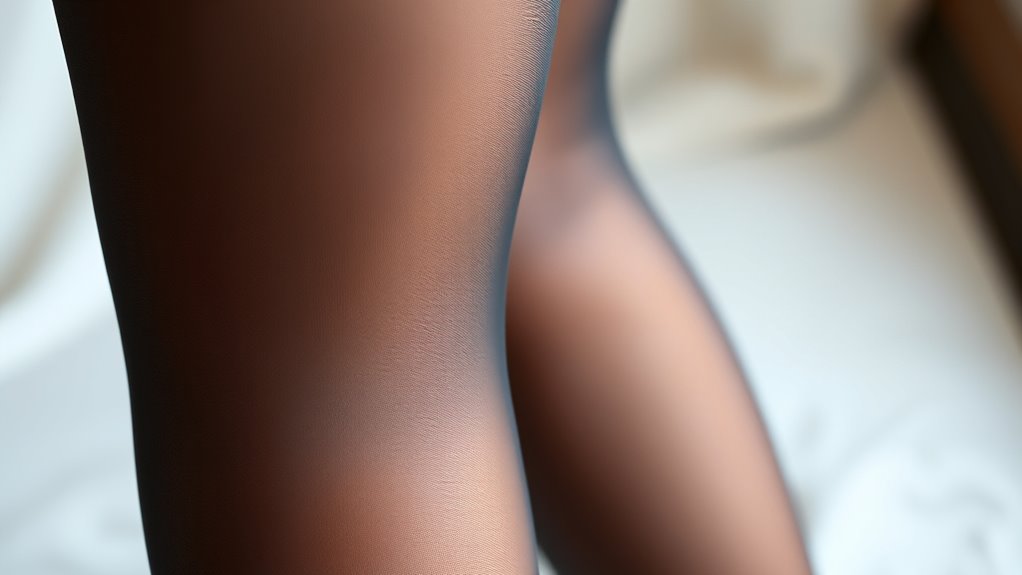
The denier of tights directly influences their sheerness, shaping how transparent or opaque the fabric appears. Lower denier tights, like 6 to 20, are very sheer, allowing your skin to show through and giving a delicate, barely-there look. As you increase the denier, the fabric becomes thicker and less transparent, offering more coverage. Tights in the 30 to 50 range balance transparency with durability, providing a subtle hint of skin while hiding imperfections. Once you reach above 60 denier, the tights are noticeably opaque, providing full coverage and a more substantial feel. This connection helps you choose tights suited to your style and needs, whether you want a barely-there shimmer or a solid, cozy layer. The denier number is your guide to achieving the perfect sheerness for any occasion. Additionally, just as couples work together to maintain a healthy relationship, selecting the right denier involves understanding how different levels serve your personal needs and preferences. Recognizing the sheerness level of tights ensures you pick the most appropriate option for comfort and style. Knowing how fabric thickness relates to denier can also help you better understand the durability and warmth of your tights. Moreover, understanding the impact on temperature regulation can assist in choosing tights that keep you comfortable in various climates.
thermal winter tights high denier
As an affiliate, we earn on qualifying purchases.
As an affiliate, we earn on qualifying purchases.
Low Denier Tights: Characteristics and Ideal Uses
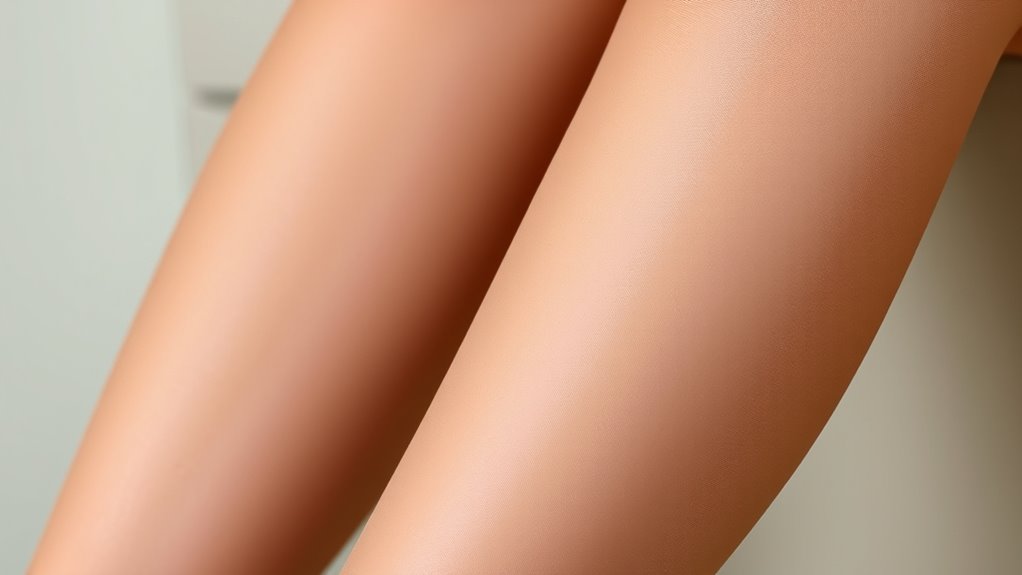
Low denier tights are known for their sheer and transparent appearance, making them perfect for subtle, elegant looks. They’re ideal for warm seasons or formal occasions when you want a delicate touch without heavy coverage. Just remember, their delicate nature requires careful handling and proper storage to avoid snags or tears.
Sheerness and Transparency
Ever wondered what makes low denier tights so sheer and delicate? It all comes down to their thin fibers and minimal opacity. Here’s what you should know:
- Transparency: Lower deniers, like 20, offer a nearly invisible look, showcasing your natural skin tone.
- Lightness: These tights feel almost weightless, giving a smooth, barely-there sensation.
- Sheerness: The sheer quality enhances the appearance of your legs, perfect for a polished, elegant finish.
- Vulnerability: Due to their delicacy, low denier tights are more prone to snags and runs, so handle with care.
This combination creates a look that’s refined, airy, and perfect for warm weather or formal events.
Ideal Occasions and Seasons
When choosing tights for specific occasions and seasons, low denier options excel because of their delicate appearance and lightweight feel. During summer or formal events, 20 to 30 denier tights offer a sheer, elegant look that enhances your outfit without adding bulk. They’re perfect for outdoor weddings, parties, or office wear where a polished appearance is essential. Low denier tights also work well with lightweight dresses and skirts, providing a smooth, subtle finish. Keep in mind, they’re more fragile, so handle them carefully to avoid snags or runs. In warmer months, their breathability keeps you comfortable while maintaining a refined, sophisticated style. Overall, low denier tights are ideal for occasions requiring a delicate, barely-there look combined with a touch of elegance.
Care and Handling Tips
To keep your low denier tights looking their best and lasting longer, proper care and handling are key.
- Always wash gently by hand in cool water to prevent snags and tears.
- Use a mild detergent and avoid harsh chemicals that weaken fibers.
- When drying, lay flat on a towel or hang to air dry; avoid wringing or using a dryer.
- Handle with care, especially when putting on or removing, to avoid runs and snags.
Mid-Range Denier Tights: Balancing Transparency and Durability
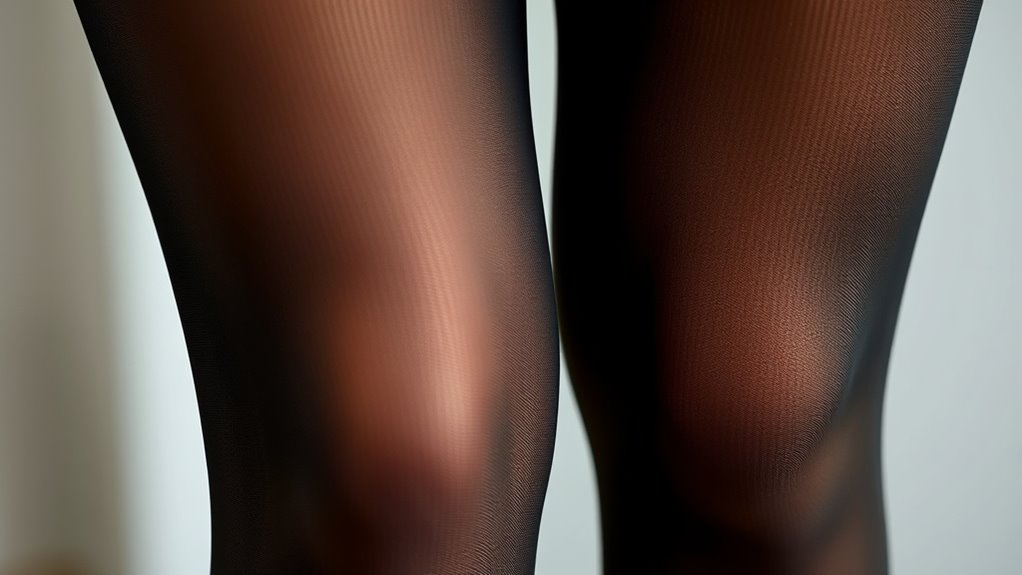
Mid-range denier tights, typically falling between 40 and 60 denier, strike a practical balance between transparency and durability. They’re thick enough to provide some opacity, hiding minor imperfections, but still light enough to offer a natural look. You’ll find 50 denier tights ideal for transitional weather, giving your legs a discreetly dark appearance while offering extra warmth. These tights resist snags and tears better than sheer options, making them suitable for daily wear. They’re versatile for both office and casual outfits, pairing well with dresses, skirts, or shorts. The mid-range denier provides a sturdy, long-lasting option without sacrificing too much transparency. Overall, they’re your go-to for a blend of style, comfort, and resilience in various settings.
High Denier Tights: Benefits for Warmth and Strength
High denier tights offer superior strength and durability, making them an excellent choice for those seeking reliable hosiery. They provide better protection against tears and snags, ensuring your outfit stays intact throughout the day. Here are four key benefits:
- Enhanced Warmth: Thick fibers trap heat, keeping you comfortable in cold weather.
- Increased Durability: They resist runs and tears, lasting longer with regular wear.
- Opaque Coverage: These tights conceal imperfections and provide a polished look.
- Better Support: The sturdy material offers slight compression, improving comfort and posture.
Whether you’re braving winter or need tights that last, high denier options deliver strength, warmth, and a sleek finish for any occasion.
Choosing the Right Denier for Different Seasons and Occasions
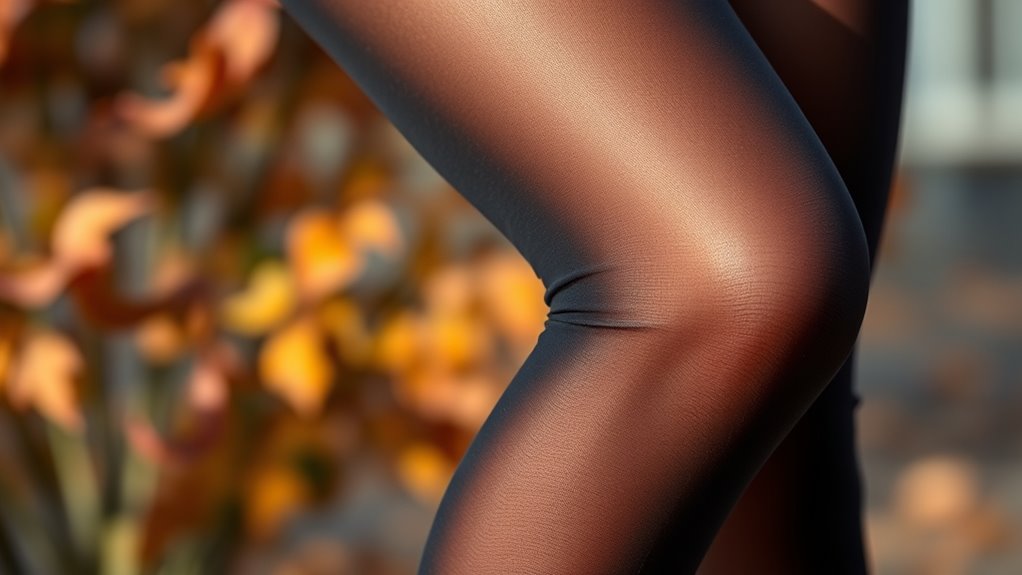
Choosing the right denier depends heavily on the season and occasion. For summer or formal events, go for low denier tights, like 20 or 30, which offer a sheer, lightweight look that keeps you cool and elegant. They’re perfect under dresses or skirts for a polished appearance. In transitional seasons like spring and fall, mid-range options like 40 or 50 denier provide a balance of transparency and warmth, making them versatile for everyday wear or office settings. During winter or outdoor activities, higher denier tights over 60 offer increased insulation, durability, and opacity, ideal for cold weather and added protection. Consider the occasion’s formality and your comfort needs—sheer for delicate looks, opaque for warmth and coverage—when selecting the most suitable denier.
Styling Tips: Matching Denier Levels to Your Outfits
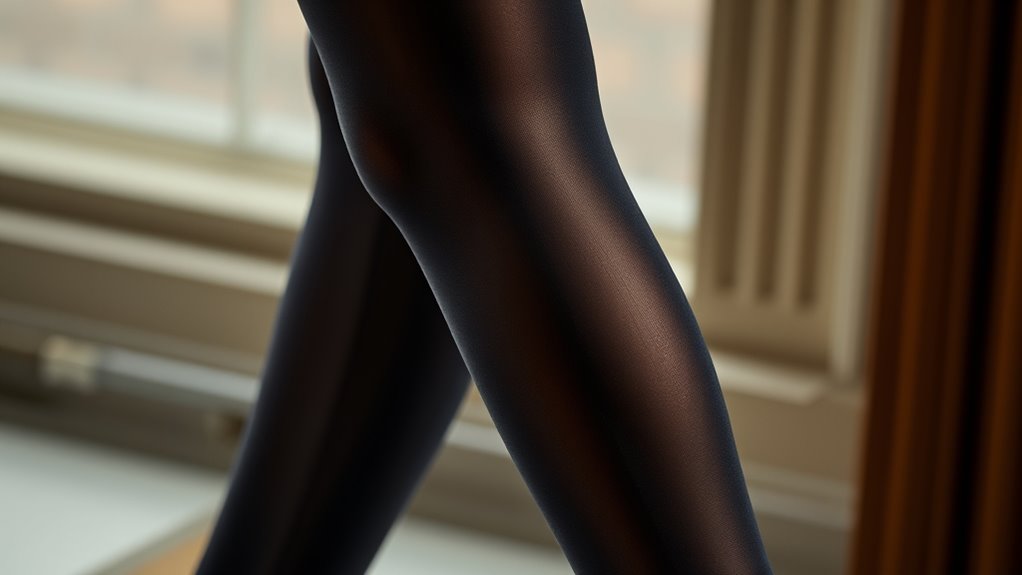
Matching the right denier level to your outfit can elevate your look and guarantee you’re appropriately styled for the occasion. Here’s how to do it:
- For formal events or summer outings, choose 20-30 denier tights. They add a delicate, sheer touch without overwhelming your look.
- When changing seasons or seeking a balance, opt for 40-50 denier tights. They provide subtle coverage while maintaining a polished appearance.
- For colder weather or a more opaque look, go for 60+ denier tights. They’re thicker, more durable, and perfect for layering or outdoor activities.
- Consider your outfit’s style: sheer tights complement elegant dresses, while opaque tights pair well with casual skirts or shorts for a bold statement.
Frequently Asked Questions
Can I Wear Different Denier Tights Together in One Outfit?
Yes, you can definitely wear different denier tights together in one outfit. Mixing textures and opacities creates visual interest and adds depth to your look. For example, pair sheer 20 denier tights with opaque 60 denier tights under a skirt or dress for contrast. Just make certain the colors complement each other, and consider layering for a stylish, coordinated appearance that plays with transparency and coverage.
How Do Higher Denier Tights Affect Mobility and Comfort?
Higher denier tights can feel less comfortable and restrict your mobility compared to lower denier options. They tend to be thicker and less stretchy, which might make walking or bending more cumbersome. If you wear them for extended periods or during active moments, you may notice some stiffness or discomfort. To stay comfortable, choose denier levels suited for your activity and consider options with added stretch or flexibility.
Are There Environmentally Friendly Options for Various Denier Tights?
Yes, you can find environmentally friendly tights in various denier levels. Look for brands that use sustainable materials like recycled nylon or organic cotton, which reduce environmental impact. Low denier tights made from recycled fibers help save resources while offering transparency and style. For higher denier options, seek out eco-conscious manufacturers committed to eco-friendly production processes. Choosing these options helps you stay fashionable while supporting sustainability.
How Can I Prevent Ladders in Low Denier Tights?
To prevent ladders in low denier tights, handle them carefully and avoid rough surfaces. Always put on tights gently, starting from your toes and rolling them up smoothly. Avoid sharp jewelry or nails that can snag the fabric. When removing tights, do so slowly and carefully. Washing them by hand and avoiding high heat also helps maintain their integrity. Store them properly to prevent unnecessary stretching or tears.
Do Higher Denier Tights Shrink After Washing?
Imagine pulling a thick, sturdy rope through your fingers—higher denier tights behave similarly, resisting shrinking after washing. They are less prone to stretching or shrinking because their thicker fibers hold their shape better. To keep them fitting well, wash in cold water, avoid high heat drying, and handle gently. This way, your tights maintain their shape, durability, and polished look, even after multiple washes.
Conclusion
Now that you know what those mysterious numbers mean, you’re practically a tights wizard! With this knowledge, you can conquer any outfit dilemma, from breezy summer styles to fierce winter looks. No more guessing games—you’re armed with the secret codes to perfect tights for every occasion. So go ahead, rock those legs with confidence, because understanding denier transforms you into the ultimate tights connoisseur—ready to slay the fashion universe!
Halloween Picks
halloween
As an affiliate, we earn on qualifying purchases.