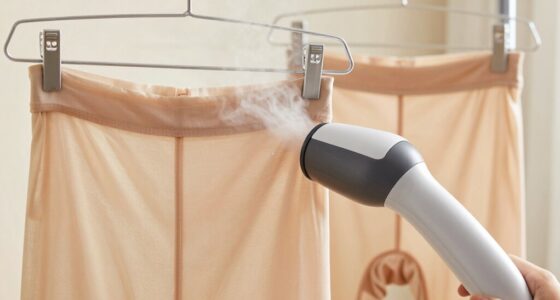

To keep tights from snagging on nails or jewelry, handle them carefully by gently slipping them over your toes and ankles, avoiding pulling from the waistband. Remove rings, bracelets, and jewelry before dressing, and consider using hosiery gloves or protective products like fabric spray or talcum powder to create a barrier. Keep nails smooth and trimmed to prevent catches, and store your tights properly to avoid snags. Learn more tips to protect your tights effectively.
Listen free for 30 days with Audible
Thousands of audiobooks and originals — cancel anytime.
As an affiliate, we earn on qualifying purchases.
Key Takeaways
- Wear hosiery gloves or smooth hands to prevent fingernails from catching on tights during dressing.
- Remove jewelry, rings, and bracelets before putting on tights to avoid snags.
- Keep nails trimmed, smooth, and free of rough edges to reduce fabric catching.
- Handle tights gently by gathering at toes and avoid pulling from the waistband.
- Apply fabric protectors or talcum powder to reduce friction and minimize snagging risks.
As an affiliate, we earn on qualifying purchases.
Choose Durable and Snag-Resistant Tights
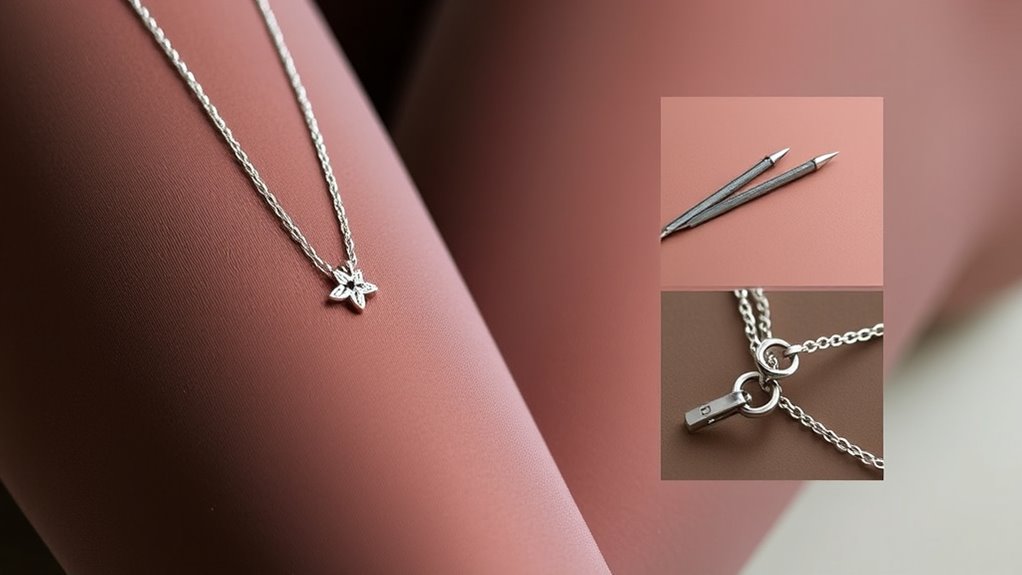
Choosing the right tights can substantially reduce the risk of snags and tears. Look for tights with a higher denier count, which means thicker, more durable fabric that resists runs. Tights with reinforced toes and waistbands also offer added strength where tears often start. Blended fabrics like nylon combined with spandex or elastane give you both durability and flexibility, making them less prone to snagging. Before wearing, gently pre-stretch new tights to relax the fibers or try a freeze-thaw method to enhance their resilience. Always wash new tights in cold water and use a laundry bag in the machine to prevent damage. Selecting quality, snag-resistant tights not only extends their lifespan but also helps prevent tears caused by everyday wear and tear. Incorporating proper handling techniques can further reduce the chance of snags during wear and laundry. Additionally, being mindful of fabric care can significantly prolong the life of your tights and maintain their snag resistance. Understanding fiber composition allows you to choose the most durable options for everyday use, especially those with high denier counts that offer superior strength against snags.
As an affiliate, we earn on qualifying purchases.
Prepare Your Skin and Jewelry Before Dressing
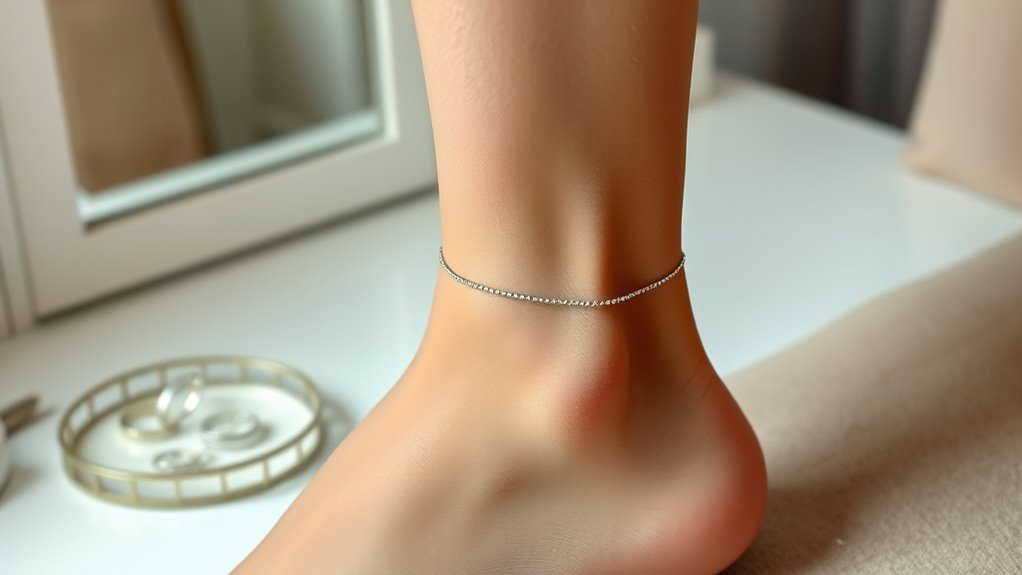
To prevent snags and tears, it’s essential to prepare your skin and jewelry before putting on your tights. First, keep your nails trimmed and smooth to avoid catching fibers. Second, moisturize your legs and hands to reduce rough, snag-prone skin that can tear tights. Third, remove rings, bracelets, and necklaces to prevent accidental pulls or snags. Using hosiery gloves can add extra protection by creating a barrier between your nails and fabric. Taking these steps minimizes the risk of damage during dressing. Ensuring smooth, moisturized skin and removing jewelry helps your tights glide on easily and stay intact longer. Additionally, being aware of somatic therapy techniques that promote relaxation can help reduce muscle tension that might lead to more difficult dressing experiences. Maintaining skin elasticity through proper care can further facilitate smooth application and prevent tearing. Proper fabric care also plays a vital role in preserving the integrity of your tights over time. Incorporating gentle skin exfoliation can help keep your skin smooth and less prone to snags. Moreover, understanding AI security vulnerabilities can inform the development of better protective measures for digital assets, which parallels the importance of safeguarding your wardrobe against damage.
As an affiliate, we earn on qualifying purchases.
Use Proper Techniques When Putting on Tights

Using proper techniques when putting on tights can considerably reduce the risk of snags and tears. Start by gently gathering the tights at the toes, avoiding pulling from the waistband, which can overstretch fabric. Slip them over your feet and calves slowly, then gradually pull them up over your knees, thighs, and hips evenly. Don’t yank or stretch harshly; this can cause immediate rips. Scrunch the tights up from the bottom to maintain control and prevent overstretching. Verify you wear the correct size—tight enough to stay in place but not so tight that it strains the fabric. Taking your time and handling the tights gently helps keep the fibers intact and reduces the chances of snags during dressing. Additionally, ensure your nails or jewelry are smooth or removed to avoid accidental snags or tears on the delicate fabric. Proper handling minimizes fabric overstretching, which is a common cause of tears in tights. Being aware of storage methods can also help prevent damage before you even put them on. To further protect your tights, consider using a lint roller to remove any rough fibers or debris from the fabric surface.
As an affiliate, we earn on qualifying purchases.
Apply Protective Products to Minimize Snags
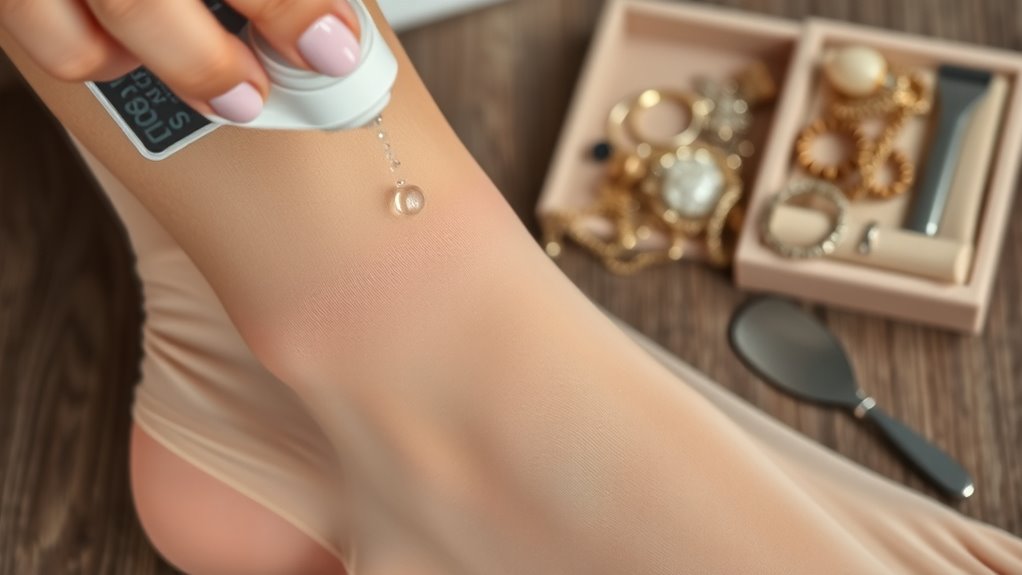
Applying protective products before wearing tights creates a barrier that reduces friction and helps prevent snags. You can use simple items to shield your tights from sharp nails, jewelry, or rough surfaces. Here are three effective options:
- Fabric protector spray – Apply an invisible layer that makes tights more resistant to snags and helps them glide smoothly over surfaces.
- Baby powder or talcum powder – Dust inside your tights to absorb moisture, reduce friction, and decrease the chance of holes forming at toes or heels.
- Clear nail polish or hairspray – Dab on small snags or potential weak spots to freeze fibers and stop runs from spreading.
Using these products creates a protective barrier, extending your tights’ lifespan and maintaining a polished look.
Maintain and Care for Your Tights Properly

Proper maintenance and care are essential to keep your tights in good condition and extend their lifespan. Always hand wash in cold water, or use a mesh laundry bag if machine washing, to prevent damage. Avoid harsh detergents and tumble drying; instead, air dry tights flat or hang them to maintain elasticity. Store your tights carefully, folded gently or rolled, to prevent creases and weak spots. Regularly inspect for small snags or tears, and address them immediately to prevent worsening. Keep your tights away from rough surfaces, zippers, and jewelry that could cause snags. Moisturize your skin to reduce friction, and handle tights gently when putting them on or taking them off. Proper care minimizes damage and keeps your tights looking their best longer.
Handle Snags and Runs Immediately to Prevent Damage
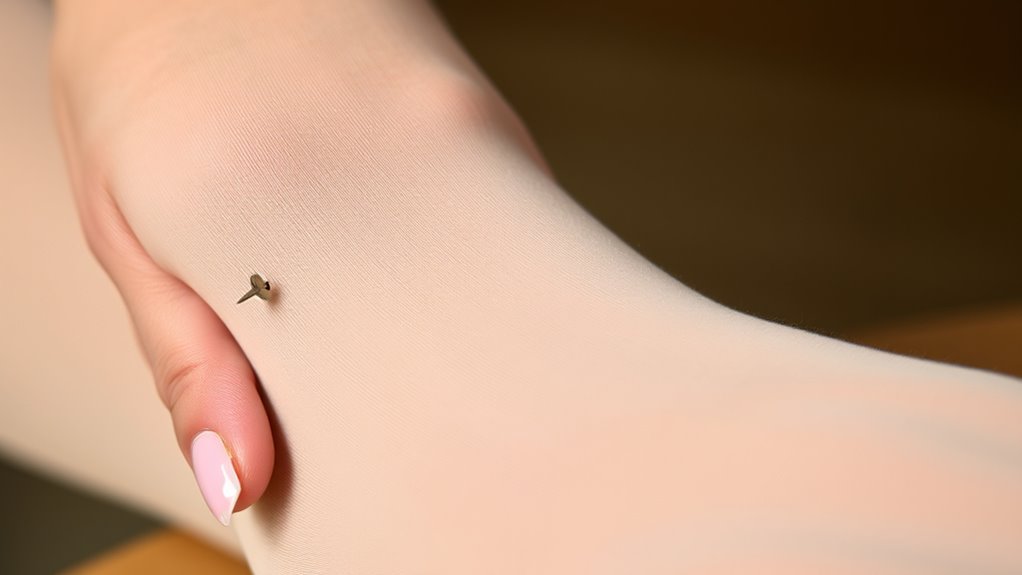
When you notice a snag or run, act quickly to prevent it from worsening. Gently assess the damage and try simple repair techniques like realigning fibers or applying clear nail polish. Addressing issues immediately helps keep your tights looking smooth and extends their lifespan. For stubborn snags, using a delicate fabric repair method can provide extra reinforcement and prevent further tearing. Additionally, practicing quick fixes for tears such as using a small amount of clear adhesive can sometimes help secure loose fibers before they worsen. Proper handling and storage techniques can also minimize the risk of damage in the first place. Being mindful of fabric care can further prolong the life of your tights and keep them looking their best.
Assess the Damage Quickly
Noticing a snag or run early can prevent further damage and save you from needing a full replacement. Quickly evaluating the damage helps you decide the best fix method. First, locate the exact spot of the snag or run. Next, check how extensive it is—small, isolated snags are easier to repair. Finally, appraise whether the fabric around the snag is stretched or compromised. To do this effectively: 1. Gently stretch the fabric around the damage to see if the fibers are loose or if the run is spreading. 2. Examine the edges to determine if fibers are frayed or intact. 3. Decide if the snag can be fixed with a quick patch or if it requires more extensive repair. Being aware of passive voice detection tools can help you improve your writing clarity. Recognizing fabric properties can also guide you in choosing the most suitable repair method. Additionally, understanding the different types of fabrics can help you select the best repair techniques for your tights. Timely assessment is key to preventing larger tears.
Use Quick Repair Techniques
Act quickly as soon as you spot a snag or run to prevent it from worsening. Gently realign the fabric edges around the tear using your fingers or a pair of tweezers to minimize visibility. Lightly rub the area to encourage fibers to settle back into place. For small snags, dab a tiny amount of clear nail polish on the edges to freeze the fibers and stop the run from spreading. If you’re in a pinch, hairspray can temporarily stabilize fibers—just spray lightly around the snag. Avoid pulling or stretching the fabric further. If the damage is too extensive, consider replacing the tights to maintain a polished look. Acting promptly helps preserve your tights and extends their wear.
Frequently Asked Questions
Can Certain Fabrics or Brands Better Resist Snags From Jewelry?
Certain fabrics and brands do better resist snags from jewelry. Look for tights made from blended fabrics like nylon with spandex or elastane, as they’re stronger and more flexible. Brands that reinforce toes and waistbands also last longer. Thicker denier tights provide extra durability. Always choose reputable brands known for quality, and consider wearing hosiery gloves or applying fabric protectors to add an extra layer of protection against jewelry snags.
Are There Specific Gloves Recommended for Putting on Tights Safely?
You should choose hosiery gloves made from soft, lint-free fabrics like nylon or cotton that provide a gentle grip without catching on tights. Look for gloves with smooth, seamless fingertips to prevent snags. Use these gloves whenever you’re putting on tights to protect delicate fibers from nails and jewelry, ensuring a smoother, snag-free application. Keep the gloves clean and store them properly to maintain their protective qualities.
How Often Should I Inspect Tights for Early Signs of Snags?
You should inspect your tights daily, especially after wearing or washing them. Check for small snags, pulls, or signs of wear before they worsen. Regularly examining your tights helps catch issues early, so you can address them with quick fixes like applying nail polish or smoothing fibers. This proactive approach extends their lifespan and keeps your look polished, preventing minor flaws from turning into noticeable tears or runs.
Can Using Moisturizers on Legs Help Prevent Tights From Snagging?
Using moisturizers on your legs can definitely help prevent tights from snagging because they soften your skin, reduce rough spots, and create a smoother surface. When your skin is well-moisturized, there’s less friction and fewer snags. Regularly applying moisturizer, keeping your skin hydrated, and avoiding dryness all work together to protect your tights from catching on rough patches or uneven areas, keeping both your skin and tights in better shape.
What Are the Best Methods to Remove Stubborn Snags Without Damage?
To remove stubborn snags without damage, gently realign the fibers by softly pulling around the snag. Rub the area to help the fabric settle, and if needed, apply a small dab of clear nail polish to freeze the fibers and prevent the run from spreading. Hairspray can be a quick temporary fix, but avoid harsh pulling or tearing. If the snag persists or worsens, consider replacing the tights for a polished look.
Conclusion
To keep your tights looking their best, always handle them with care and take preventative steps. Choosing durable tights, prepping your skin and jewelry, and using proper techniques can save you from frustrating snags. Remember, a stitch in time saves nine—address small issues before they become bigger problems. With mindful care and prompt action, you’ll enjoy smooth, snag-free tights that keep you looking polished and confident.
Labor Day sales Picks
labor day deals
As an affiliate, we earn on qualifying purchases.