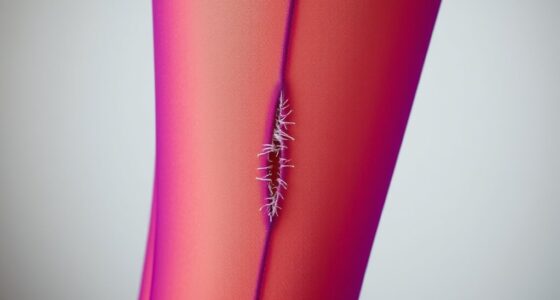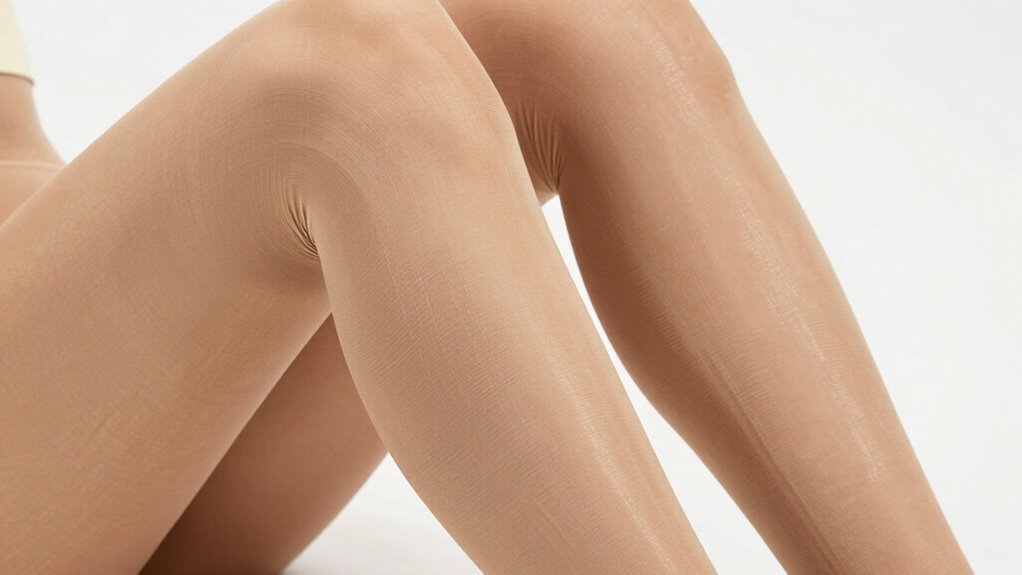

The main reasons some tights ladder more easily are due to lower fabric quality, weaker construction, and poor care. Cheaper tights often use thinner fibers and lack reinforcements, making them more prone to snags and runs. How you handle and wash them also matters—rough treatment and improper cleaning speed up damage. If you want to understand why some tights last longer and resist ladders better, keep exploring these factors more closely.
Key Takeaways
- Lower-quality fabrics with thinner fibers are more prone to snagging and laddering.
- Tights lacking reinforced areas or tight weaves have weaker points that easily ladder.
- Poor dye quality and improper treatment weaken fibers, increasing ladder risk.
- Aggressive handling or snagging during wear can cause initial damage leading to ladders.
- Manufacturing standards and finishing details influence overall durability and ladder resistance.
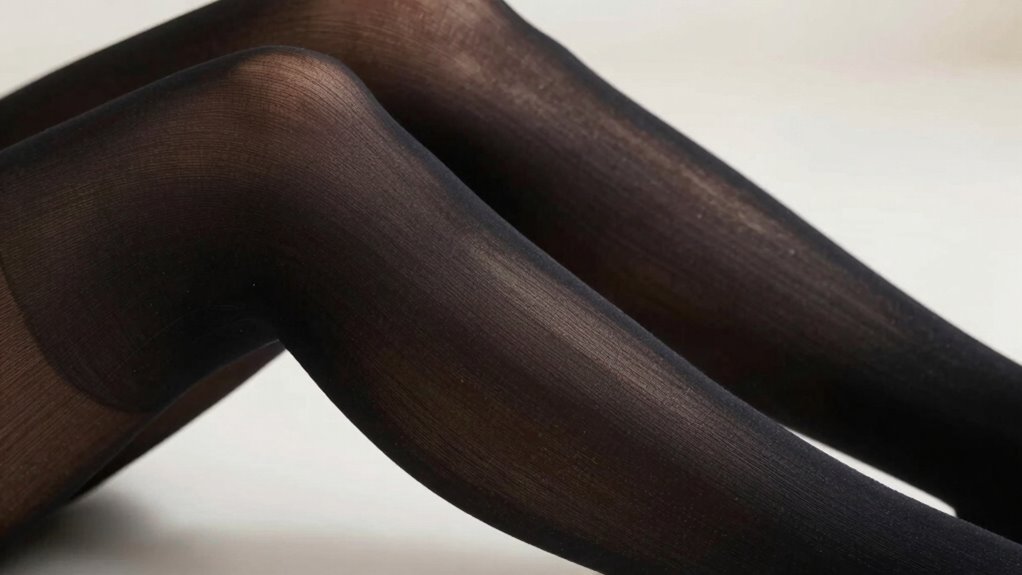
If you’ve ever noticed some tights ladder easily while others hold up surprisingly well, you’re not alone. It’s frustrating to spend money on a pair of tights only to see them develop runs after just a few wears. The difference often comes down to fabric durability and how well the tights resist issues like color fading. When you choose tights made from high-quality materials, they tend to last longer and resist laddering. Cheaper tights, on the other hand, often use thinner or lower-grade fibers that are more prone to snagging and tearing. These materials might be inexpensive, but they compromise on strength, making it easier for ladders to form. When you’re shopping, pay attention to the fabric composition—nylon blends with a good amount of spandex or elastane generally offer better durability. These fibers stretch and recover, reducing the chances of runs expanding and causing ladders.
Color fading is another factor that can impact the lifespan of your tights. Over time, especially after multiple washes or prolonged wear, the colors can dull or fade, making the tights look worn out even if they haven’t laddered yet. Faded tights are more prone to damage because the fibers become weaker. When the dye quality is poor or the fabric isn’t treated properly during manufacturing, the color can start to peel or wash out, leaving the material more vulnerable to snags. To extend the life of your tights, always follow the care instructions carefully—use gentle cycles, cold water, and avoid harsh detergents. This helps preserve both the fabric’s integrity and its color. Additionally, selecting tights with reinforced fibers can further reduce the risk of laddering and enhance durability. Investing in tights with properly finished seams can also help prevent weak points that often lead to ladders.
You might also notice that some tights are more resistant to laddering because they have a tighter weave or reinforced toe and heel areas. These design features add extra strength to the fabric, making it less likely to develop runs. Cheaper tights often skip these reinforcements, which is why they tend to ladder more quickly. Furthermore, the quality of manufacturing processes can significantly influence how well tights hold up over time. Additionally, how you handle your tights matters. Avoid pulling them on too aggressively or wearing jewelry that could catch on the fabric. Even the best fabric can be compromised if you’re not gentle during wear and care.
Ultimately, the reason some tights ladder more easily is a combination of fabric durability, how well they resist color fading, and how carefully you handle them. Investing in high-quality tights with reinforced areas and paying attention to proper washing can drastically improve their lifespan. Remember, it’s not just about style—choosing the right tights means fewer ladders, longer wear, and better value for your money.
Frequently Asked Questions
Do Different Fabrics Affect How Easily Tights Ladder?
Yes, fabric composition and texture variations affect how easily tights ladder. Tights made from nylon blends are usually more prone to laddering because they’re lightweight and less durable, especially if they have a smooth or slippery texture. Thicker or textured fabrics like cotton or wool tend to resist laddering better. So, choosing tights with stronger fabric composition and textured surfaces can help prevent ladders and extend their lifespan.
Can Washing Methods Influence Tights Durability?
Washing your tights is like caring for delicate garden plants—you need gentle hands. Using proper washing techniques, like cold water and avoiding harsh detergents, helps maintain their integrity. Fabric composition plays a role too; nylon blends may be more resilient than lace. By treating your tights with care during laundry, you prolong their life and prevent laddering, ensuring they stay smooth and flawless longer.
Are There Specific Brands Known for Less Laddering?
Certain brands are known for better tights longevity and less laddering, thanks to their quality materials and craftsmanship. Brands like Wolford, Falke, and Hue have built strong reputations for producing durable tights that resist laddering. When you choose these brands, you’re investing in tights with a higher chance of lasting longer, reducing frustration. Always check reviews and brand reputation to guarantee you’re selecting tights that meet your durability expectations.
How Does Body Movement Impact Tights Laddering?
Your body movement can make tights ladder more easily because of elasticity wear and movement friction. When you walk, sit, or stretch, constant friction weakens the elastic fibers, causing runs. Bending and stretching increase tension in the fabric, creating tiny snags that turn into ladders. To limit this, choose tights with high-quality elastics and avoid excessive movement or rough surfaces, which put stress on the fabric and accelerate laddering.
Is There a Recommended Way to Prevent Tights From Laddering?
To prevent tights from laddering, you should handle them gently and avoid sharp objects or rough surfaces. Follow fashion trends by choosing high-quality tights designed for durability. When putting on tights, use lotion on your legs to reduce friction, and always step into them carefully. Proper storage also helps, so fold or hang them neatly. Staying mindful of tights fashion tips guarantees your tights stay intact and look great longer.
Conclusion
So, next time your tights ladder unexpectedly, remember it’s not just bad luck. It’s often about the fibers, the denier, or even how you care for them—little details you might overlook. Funny enough, I once found a tiny snag on a new pair, only to discover I’d left them near a rough zipper. Sometimes, it’s these small coincidences that make all the difference, reminding you that even tights have their quirks.