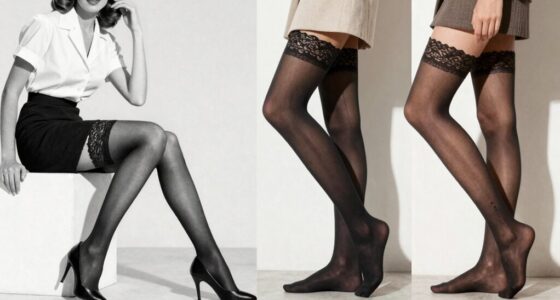

1950s hosiery ads vividly showcase a glamorous vision of femininity, using bold visuals and aspirational messages. You’ll notice women with styled hair, flawless legs, and confident poses, all emphasizing stockings as symbols of elegance and sophistication. Bright colors and striking images evoke desire and social status, while slogans reinforce the idea that wearing hosiery enhances beauty and confidence. If you keep exploring, you’ll discover how these ads shaped cultural ideals of glamour during that era.
Key Takeaways
- 1950s hosiery ads emphasized glamour, femininity, and confidence through idealized images of women with styled hair and flawless legs.
- Visual elements featured striking photography and illustrations, often highlighting the sheen and fine ribbing of stockings.
- Bright colors like red, pinks, and nude shades were used to evoke elegance and appeal to diverse tastes.
- Slogans such as “The Perfect Sheer” linked hosiery to sophistication and modern womanhood.
- Ads reflected 1950s cultural ideals, portraying stockings as symbols of beauty, sensuality, and social aspiration.
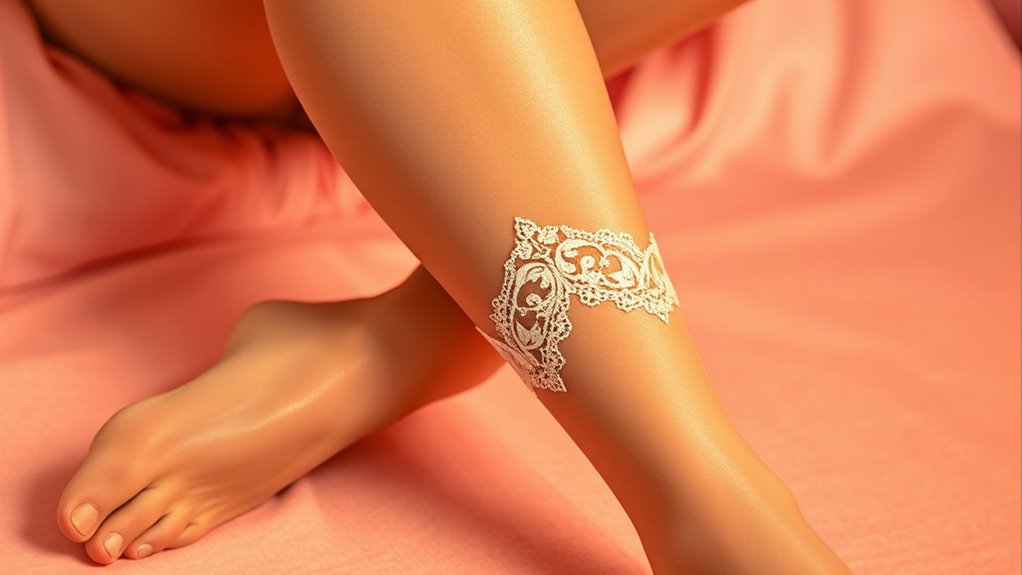
During the 1950s, hosiery ads became a staple of American advertising, capturing the era’s fascination with glamour and femininity. You’d notice how these advertisements didn’t just sell stockings—they sold an idealized image of womanhood, elegance, and sophistication. The visuals are eye-catching, often featuring women with perfectly styled hair, immaculate makeup, and figures that fit the era’s standards of beauty. The ads are designed to draw your attention immediately, often using bold headlines and striking illustrations or photographs. They evoke a sense of aspiration—you’re encouraged to see hosiery as a key component of a glamorous lifestyle.
In the 1950s, hosiery ads projected glamour, elegance, and the idealized femininity of the era.
The images are carefully curated to emphasize smooth, flawless legs. You’ll see women posing confidently, often with a slight arch in their legs or a graceful tilt of the hips, accentuating the hosiery’s sleek lines. The stockings themselves are presented as more than just clothing; they’re a symbol of sophistication and femininity. Their sheer, delicate appearance suggests both sensuality and refinement. Many ads highlight the quality of the material—describing the softness, durability, and color range—so you’re convinced that these stockings are worth investing in. The language used is often aspirational, promising that wearing these stockings will elevate your look and boost your confidence.
Color plays a significant role in these advertisements. Black and white photography was common early on, but as color printing became more accessible, vibrant hues started to appear. Bright red, pastel pinks, and classic nude shades dominate, each chosen to appeal to different tastes and occasions. These colors also serve to make the hosiery stand out, reinforcing its role as a fashionable accessory. The backgrounds are minimal, often just plain or softly blurred, so your focus remains on the woman and the stockings she wears. Sometimes, the ads feature close-up shots, highlighting the fine ribbing or the sheen of the fabric, helping you imagine how it might feel against your skin. Additionally, the use of aspirational language further entices consumers to buy into the glamorous lifestyle associated with fashionable hosiery.
The typography is bold yet elegant, often framing the image with catchy slogans like “The Perfect Sheer” or “Elegance You Can Wear.” These phrases are meant to persuade you that hosiery isn’t just a necessity but a vital part of a polished, feminine appearance. Overall, these ads craft a visual narrative that connects stockings with modern femininity, glamour, and social sophistication. You’re not just buying hosiery; you’re buying into an ideal—a symbol of beauty, grace, and confidence that was central to the 1950s’ cultural image.

TVRtyle Women’s 10 Denier Vintage Thigh High See Through Non-stretch RHT Silk Stocking 928 (Medium)
Colors: Black
As an affiliate, we earn on qualifying purchases.
As an affiliate, we earn on qualifying purchases.
Frequently Asked Questions
How Did Hosiery Advertising Influence Women’s Fashion Choices in the 1950S?
Hosiery advertising in the 1950s heavily influenced your fashion choices by emphasizing the importance of perfect, polished legs. These ads showcased glamorous images that made you feel confident and stylish, encouraging you to buy sheer, elegant stockings to match your dresses. As a result, you likely prioritized hosiery to complete your look, believing it was essential for looking fashionable and sophisticated, shaping your wardrobe and beauty standards of the era.
What Were the Most Popular Hosiery Brands Promoted During the 1950S?
You’ll find that brands like Seamless, Kayser, and Hanes dominated the 1950s hosiery market. These companies promoted their products through vibrant ads, emphasizing quality, durability, and style. Their marketing campaigns influenced your fashion choices by highlighting the importance of perfectly matching hosiery with dresses and accessories. As a result, these brands became household names, shaping the way women of that era viewed and selected their hosiery to complement their fashionable wardrobe.
How Did Ad Imagery Change Throughout the Decade?
You might think ads stayed fancy forever, but during the 1950s, imagery shifted from glamorous pin-up style to more wholesome, family-friendly scenes. Instead of just showing perfect legs, ads began featuring women in everyday situations, emphasizing modesty and practicality. Bright colors and cheerful settings replaced sultry poses, making hosiery seem like a simple, essential part of modern life, not just a secret behind closed curtains.
Were There Regional Differences in Hosiery Advertising Styles?
Yes, regional differences in hosiery advertising styles existed across the 1950s. In the South, ads often emphasized traditional values and modesty, featuring softer colors and conservative imagery. Meanwhile, in urban areas, ads leaned toward glamour and sophistication, highlighting fashion-forward styles and bold visuals. You notice these differences as local cultural preferences influenced the imagery, language, and themes used to appeal to regional audiences effectively.
What Role Did Technological Advancements Play in Hosiery Marketing?
Technological advancements were the wind beneath hosiery marketing’s wings, propelling it into a new era of innovation. You see, as new materials and manufacturing techniques emerged, they allowed marketers to flaunt finer, more durable stockings. This shift helped ads highlight sleekness and comfort more convincingly, capturing consumers’ imaginations. You could say technology transformed hosiery from a simple product into a symbol of modern sophistication, making advertising more persuasive and visually appealing.

VOGEL VERE Women's Ultra Thin Thigh High Stockings Cuban Heel Backseam Sheer Stockings with Reinforced Toes Vintage-Inspired Medium Black
Ultra – thin and Sheer Design: These women's thigh – high stockings feature an ultra – thin and…
As an affiliate, we earn on qualifying purchases.
As an affiliate, we earn on qualifying purchases.
Conclusion
By examining 1950s hosiery ads, you see how marketing used glamour and aspiration to entice consumers. For example, imagine a woman confidently showcasing her legs in a vintage ad, embodying elegance and modernity. This visual strategy not only sold stockings but also shaped societal ideals of femininity. Recognizing these ads’ influence helps you appreciate how advertising history reflects cultural values and desires, making this a fascinating glimpse into mid-century consumerism and style.

Luxallacki Vintage Keyhole Back Seam Hold-up Stockings, Cuban Heel Sheer Thigh-Highs for Retro Glamour (Gray,Medium)
Retro Design, Timeless Appeal: Keyhole back seam, open cutouts, and Cuban heel nod to vintage glamour—perfect for themed…
As an affiliate, we earn on qualifying purchases.
As an affiliate, we earn on qualifying purchases.

L'eggs Everyday Knee High Stockings, Reinforced Toe, 100% Nylon, Nude, One Size (Pack of 10)
STAY-PUT BAND: Designed to keep your stockings securely in place, our stay-put band offers a reliable hold without…
As an affiliate, we earn on qualifying purchases.
As an affiliate, we earn on qualifying purchases.