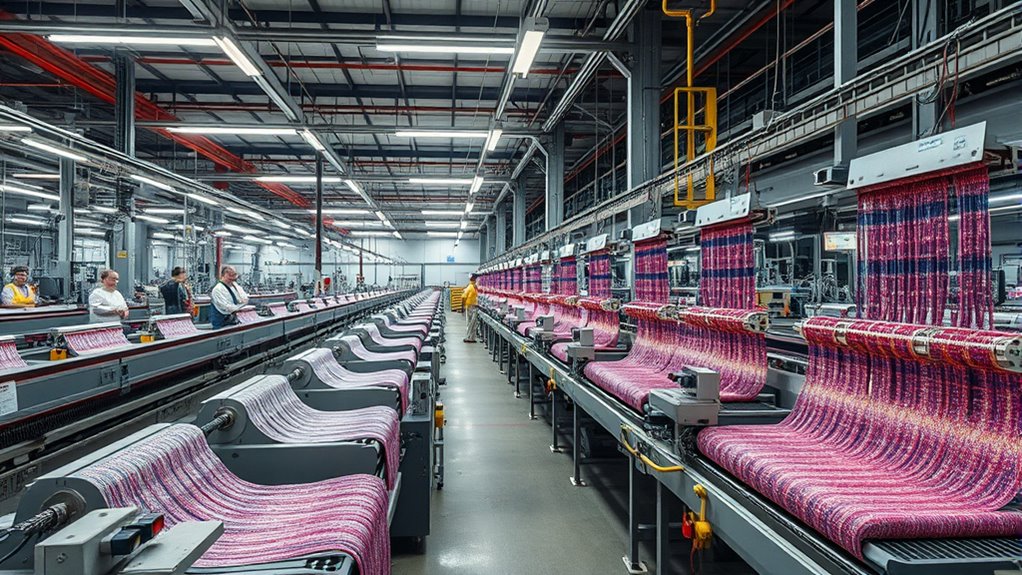

The process from factory to fashion involves sourcing sustainable fibers like recycled nylon and elastane, then spinning them into yarn. Next, automated circular knitting machines produce seamless tubes that are carefully tensioned for quality. These tubes are joined, shaped, dyed with eco-friendly methods, and finished for durability. Final touches include waistbands and quality checks before packaging. If you’re curious about how each step transforms raw materials into stylish tights, there’s more to discover ahead.
Key Takeaways
- Raw materials like recycled nylon and elastane are sourced ethically and sustainably for eco-friendly tights production.
- Advanced circular knitting machines produce seamless fabric efficiently, ensuring high quality and consistent elasticity.
- Dyeing and finishing processes enhance color vibrancy, durability, and environmental resistance while minimizing chemical impact.
- Precision joining, quality control, and inspection ensure durable, comfortable tights that meet industry standards.
- Large-scale factories utilize automation and sustainable practices to produce millions of tights efficiently and environmentally responsibly.
Material Selection and Yarn Production

Material selection is crucial in making tights because it determines their strength, stretch, and overall feel. You mainly use nylon (polyamide) for durability and elastane (spandex or Lycra) for flexibility. The fiber ratio influences opacity, thickness, and how much the tights stretch. These fibers are spun into yarn by twisting nylon and elastane together, creating a strong, elastic thread. Sometimes, the yarn is pre-dyed or treated with finishes like moisture-wicking to boost performance. While natural fibers like silk or cotton are options, they’re less common because they’re more fragile and less suited for high-speed knitting machines. Choosing the right blend ensures the tights are comfortable, resilient, and suited to their intended purpose, whether sheer, opaque, or performance-oriented.
The Knitting Process: Creating Seamless Tubes
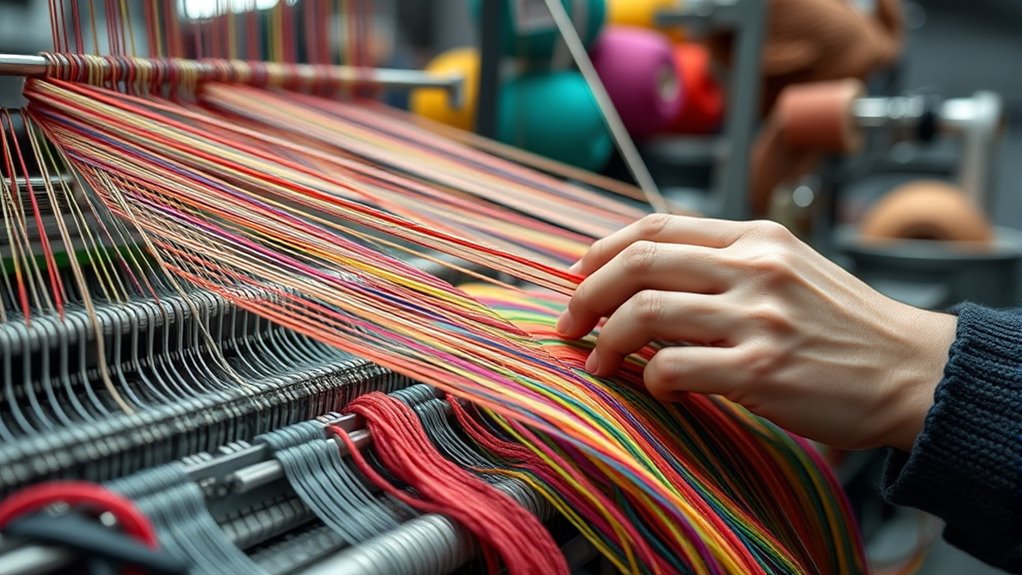
You’ll see that circular knitting machines create seamless tubes by looping yarn into a continuous circle, allowing for quick, efficient production. Controlling yarn tension is vital to guarantee consistent fabric quality and proper elasticity throughout the tube. As the machine works, it forms perfect, seamless tubes that serve as the foundation for the final tights, with patterns and textures adjustable during the process. To achieve the desired aesthetic, designers often select farmhouse-style accessories that complement the overall look.
Circular Knitting Mechanics
Circular knitting machines are designed to produce seamless tubular fabrics by knitting multiple fine yarns, typically between five and eight, in a continuous circular motion. This process allows for efficient, uniform production of leg tubes without seams, ensuring comfort and durability. The machine’s mechanics involve intricate needle movements that loop yarns into a continuous tube, controlled by precise settings for tension and stitch density. Maintaining consistent tension across all yarns is essential for even fabric quality. The table below highlights how yarn count affects fabric characteristics:
| Yarn Count | Fabric Opacity | Stretchability |
|---|---|---|
| Higher | More opaque | Less stretch |
| Lower | Sheer | Greater stretch |
| Mixed | Balanced | Moderate flexibility |
This mechanical precision is critical for producing high-quality tights efficiently.
Yarn Tension Control
Maintaining proper yarn tension during the knitting process is essential for producing even, high-quality seamless tubes. If tension is too tight, the fabric becomes stiff and uneven, while too loose tension results in loose stitches and holes. You control tension using tensioners and guides on the circular knitting machine, which adjust as the machine runs. Automated tension regulators monitor yarn pull and make real-time adjustments to keep tension consistent. Proper tension ensures uniform stitch size, consistent elasticity, and smooth fabric surface. Skilled operators monitor tension throughout production, especially when switching yarns or changing machine speeds. Yarn tension control is critical for achieving optimal fabric quality and minimizing defects during production. Additionally, understanding the knitting process and the role of tension in fabric formation helps manufacturers troubleshoot issues and improve overall efficiency.
Seamless Tube Formation
Seamless tube formation begins with the circular knitting machine, which uses multiple fine threads—typically five to eight—to create a continuous, tubular fabric without seams. You set the machine to knit in a circular pattern, enabling it to produce a seamless tube instantly. As the yarns are fed into the machine, the needles weave them into a tight, elastic fabric that spirals upward, forming a perfect tube. The process is quick—usually taking around 90 seconds per tube—thanks to precise tension control and pattern adjustments. You can modify the knitting pattern to vary the texture or opacity, tailoring the fabric to specific tights styles. This seamless method guarantees comfort, eliminates chafing, and speeds up production, making it the core of modern tights manufacturing.
Joining and Shaping the Leg Tubes

To create a complete pair of tights, manufacturers join two individually knitted leg tubes by cutting and connecting their openings. First, they cut the top of each tube to open the leg sections. Next, they stretch the open edges to prepare for joining. Using a specialized machine, they sew the inner sides together, forming a seamless connection that shapes the legs into one continuous garment. During this process, they often attach labels and branding. To guarantee quality, the joined tubes are inspected for uniformity and tension. Here’s how the process looks:
| Step | Description |
|---|---|
| Cutting openings | Open the top of each leg tube for joining |
| Stretch and align | Prepare edges for seamless sewing |
| Sewing and inspection | Join the tubes, attach labels, and check quality |
Dyeing and Finishing Techniques

When it comes to dyeing and finishing your tights, stabilizing the color is vital for consistent look and feel. You’ll want to contemplate treatments that enhance softness and durability without compromising stretch or comfort. These techniques guarantee your tights stay vibrant and long-lasting through repeated wears and washes. Incorporating proper colorfastness methods can significantly improve the longevity of the dye. Additionally, selecting dyes formulated for vegetable-based pigments can help maintain the vibrancy and safety of the finished product. Using advanced filtration technology in the dyeing process can further ensure that airborne contaminants do not affect color quality and integrity. Employing quality fiber-reactive dyes can also deepen color penetration and improve overall dye stability. Implementing temperature control during dyeing processes can also optimize dye uptake and uniformity across the fabric.
Color Stabilization Methods
Color stabilization in tights relies on specialized dyeing and finishing techniques that lock in hues and prevent fading over time. You’ll find that dyes are carefully selected for their affinity to nylon and elastane fibers, ensuring deep, uniform coloration. During dyeing, heat and chemical fixatives help set the color molecules into the fibers, making them resistant to washing and wear. After dyeing, finishing processes like steaming and stretching help lock in the dye and shape. Additional treatments may include applying sealants or coatings that act as barriers against UV exposure and friction, reducing color loss. Incorporating advanced colorfastness techniques such as UV-resistant coatings and controlled curing processes further enhances the durability of the dye, ensuring your tights maintain their vibrant appearance through repeated wears and washes, providing consistent quality and longevity that consumers expect from premium products. Moreover, employing innovative dyeing methods can significantly improve the overall color stability, making the tights more resistant to environmental factors. Using proper fiber selection also plays a crucial role in achieving optimal color retention and durability. Implementing modern finishing technologies can also improve the uniformity and longevity of color, giving the products a competitive edge in the market. Additionally, understanding the impact of user experience and satisfaction can guide manufacturers to optimize these techniques for better consumer outcomes.
Softness and Durability Treatments
After the dyeing process, manufacturers apply finishing treatments that enhance both softness and durability in tights. These treatments often involve washing with softening agents that relax fibers, making tights feel smoother against your skin. Additionally, heat-setting techniques help stabilize the fabric’s shape and size, reducing stretching or shrinking over time. To improve durability, toughening finishes are applied to resist pilling, tears, and abrasion, extending the lifespan of your tights. Some brands incorporate moisture-wicking or anti-static coatings for added comfort and performance. The tights are then steamed and stretched on heated stands to set their form. Quality control checks follow, ensuring the treatments have effectively improved softness and resilience without compromising the fabric’s appearance or stretchability. Incorporating advanced fabric finishing techniques can further enhance the tights’ overall quality and longevity. Moreover, the use of specialized treatments tailored to specific fabric types can optimize both the softness and durability, providing a better experience for the wearer. Recent research into innovative textile technologies has shown potential for influencing cellular regeneration, which could inspire innovative textile treatments in the future. Additionally, research into sound vibrations has shown potential for influencing cellular regeneration, which could inspire innovative textile treatments in the future. Recent studies also suggest that nanotechnology applications may lead to even more durable and comfortable textile finishes in the coming years.
Adding Elastic Waistbands and Final Assembly
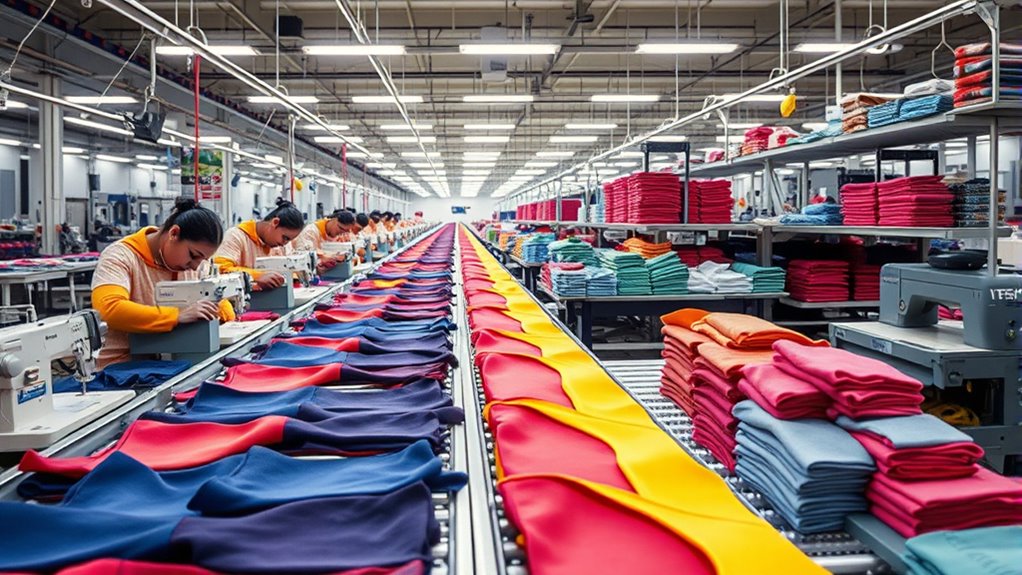
Have you ever wondered how tights stay securely in place on your waist? It’s thanks to the elasticated waistband added during final assembly. You’ll see the stretchy band sewn onto the top of the tights using specialized sewing machines that ensure a snug fit. The elastic is cut to precise lengths, then folded or finished to prevent fraying. Sometimes, a silicone grip or textured lining is added inside the waistband for extra hold. The process involves carefully attaching the band to the fabric, guaranteeing it stretches comfortably without causing discomfort. Proper preparation and assembly techniques are crucial to ensure durability and comfort in the final product. Additionally, understanding fabric properties helps manufacturers select the right materials for elasticity and wear resistance. Understanding narcissistic behaviors can also be helpful when addressing challenges in manufacturing or interpersonal relationships. Afterward, any loose threads are trimmed, and the tights are turned right-side out. This step is quick and automated, allowing factories to produce large quantities efficiently, ready for packaging and distribution.
Quality Control and Inspection Procedures
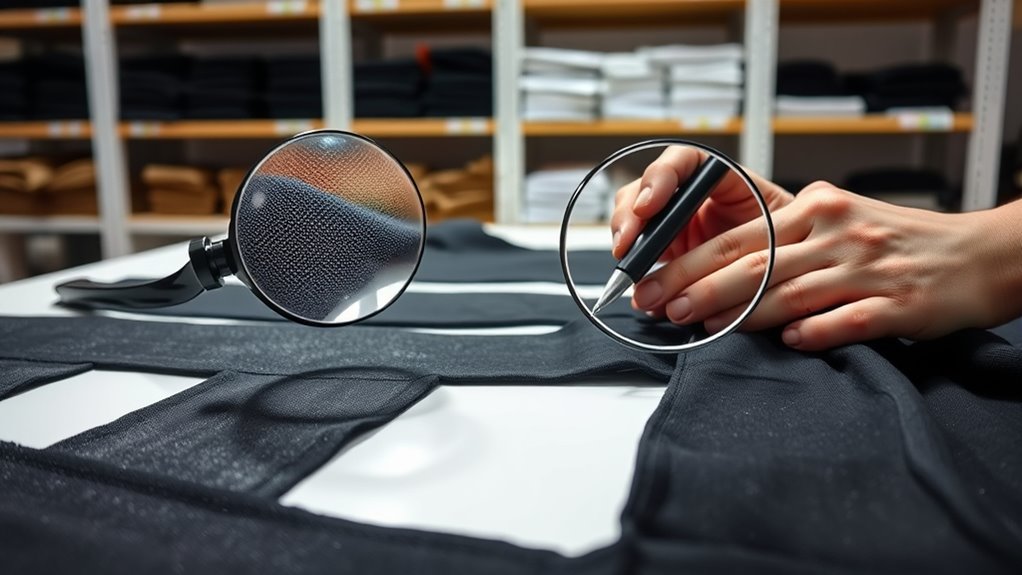
Quality control and inspection procedures are critical steps that guarantee each pair of tights meets the manufacturer’s standards before reaching consumers. You’ll carefully examine tights for holes, tears, or fabric defects, often using automated systems for consistency. Visual inspections check for color evenness, seam quality, and proper finishing. Stretch tests ensure the tights maintain elasticity without tearing or losing shape. You may also use specialized machines to detect weak spots or weak seams that could cause failure. Any tights failing these tests are rejected or sent for rework. This process helps uphold high quality, minimizes returns, and preserves the brand’s reputation. Rigorous inspection ensures that only tights meeting strict standards leave the factory, providing customers with durable, comfortable, and reliable products.
Packaging and Preparing for Distribution

Packaging and preparing tights for distribution involves carefully folding and wrapping each pair to guarantee they stay pristine during transit. You’ll often fold tights into compact shapes, then wrap them in branded paper or sleeves for a polished look. This protects the fabric and makes handling easier. Next, the wrapped tights are placed into protective bags or boxes, ensuring they won’t get damaged or wrinkled. Proper packaging also displays branding and sizing clearly. To emphasize, here’s a comparison of packaging types:
| Packaging Type | Purpose |
|---|---|
| Branded sleeves | Presentation and brand visibility |
| Protective boxes | Damage prevention during shipping |
| Individually sealed | Hygiene and quality assurance |
This process guarantees that tights arrive in perfect condition, ready for retail or customer delivery.
Manufacturing Scale and Industry Insights
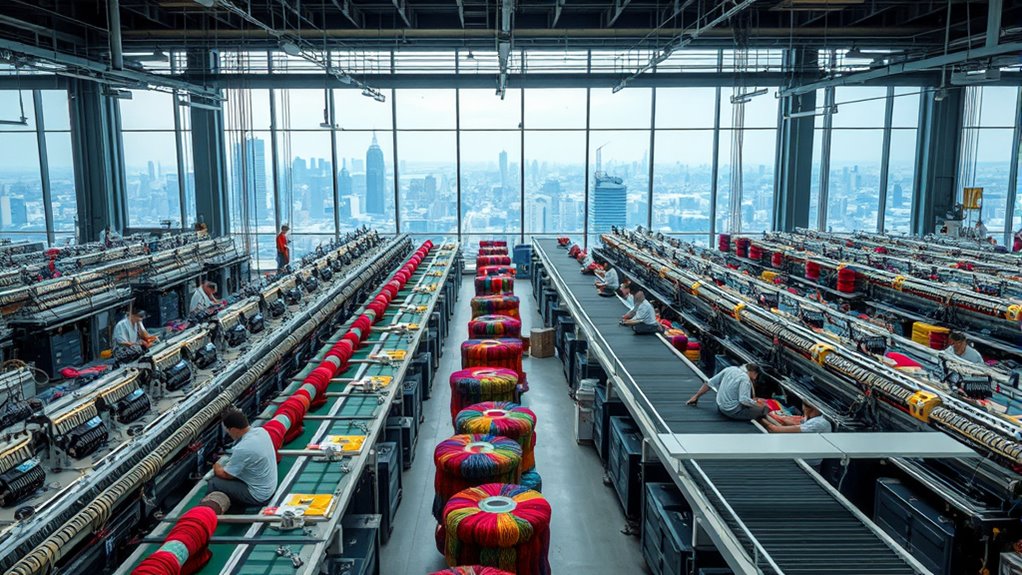
The tights manufacturing industry operates on an impressive scale, with large factories capable of producing up to 180,000 pairs daily. You’ll find that these factories rely on hundreds of machines working simultaneously, from knitting to finishing. To keep pace, companies optimize workflows, automate assembly lines, and maintain high-speed operations. Here’s what makes this scale possible:
- Massive knitting machines produce tubes in around 90 seconds per pair.
- Automated joining and sewing machines assemble legs quickly and precisely.
- High-capacity dyeing and finishing equipment ensure consistent color and quality.
- Large warehouses facilitate quick distribution to meet global demand.
This level of production allows brands to supply retailers worldwide efficiently. It also drives competition, pushing manufacturers to innovate faster, improve quality, and reduce costs to stay ahead in the industry.
Sustainability and Innovation in Tights Production
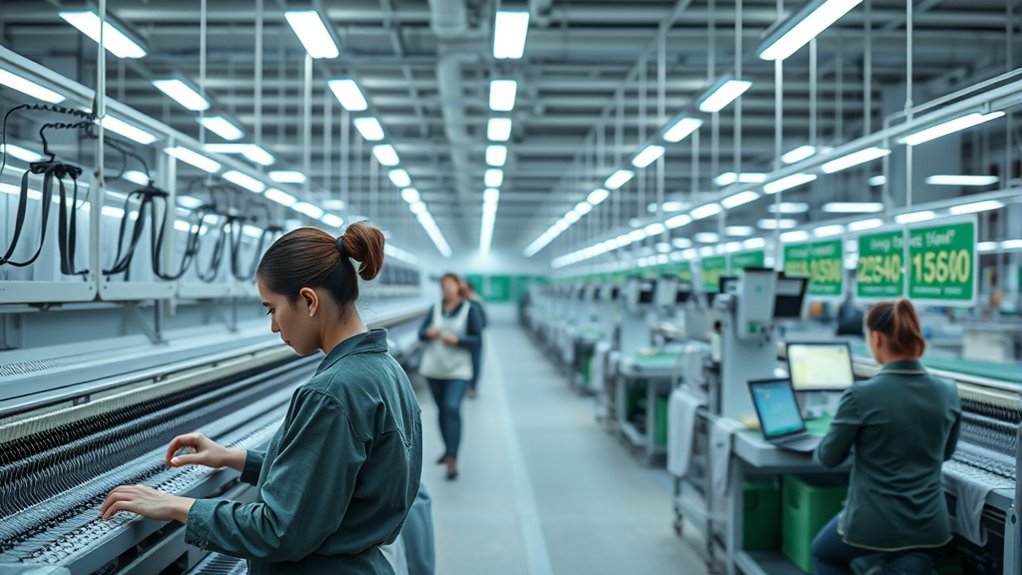
Have you ever wondered how the tights industry is addressing environmental concerns? Many brands are shifting toward sustainable materials like recycled nylon and biodegradable fibers, reducing reliance on petroleum-based products. Innovations include using plant-based dyes and waterless or low-water dyeing techniques to cut water consumption and chemical waste. Some companies are exploring biodegradable tights made from natural fibers or bioengineered yarns that break down more easily after disposal. Additionally, manufacturers are designing longer-lasting tights to combat fast fashion waste. Automation and improved production processes also minimize energy use and material waste, making manufacturing more eco-friendly. While challenges remain, these innovations aim to balance fashion needs with environmental responsibility, helping you enjoy stylish tights without compromising the planet.
Frequently Asked Questions
How Do Manufacturers Ensure Consistent Color Throughout Large Batches?
You ensure consistent color throughout large batches by carefully controlling the dyeing process. You precisely measure and mix dyes before applying them to the fibers, maintaining consistent dye concentrations. You also monitor the dyeing temperature and duration closely, and use automated machines to evenly distribute dye across all tights. After dyeing, you check samples for color uniformity, making adjustments as needed to guarantee a uniform appearance in every batch.
What Technological Innovations Are Used to Improve Production Speed?
You benefit from advanced circular knitting machines that greatly increase production speed. These machines can knit entire leg tubes in about 90 seconds, adjusting tension and pattern automatically. Automated joining, sewing, and cutting systems streamline assembly, reducing manual labor and errors. High-capacity dyeing and finishing equipment also accelerate color stabilization and surface treatments. Together, these innovations enable factories to produce up to 180,000 pairs daily, ensuring rapid, consistent, and high-quality tights output.
How Are Defective Tights Identified During Quality Control?
Your eyes become like hawk’s vision, spotting even the tiniest flaw. During quality control, you carefully examine each pair for holes, tears, or fabric inconsistencies. Automated machines also scan tights for defects, detecting irregularities with precision. You look for uneven dyeing, loose threads, or weak seams. Any tights with imperfections get set aside for repair or recycling, ensuring only perfect pairs reach customers and uphold the brand’s reputation.
What Are the Environmental Impacts of Nylon and Elastane Production?
Nylon and elastane production have significant environmental impacts. You contribute to pollution since nylon is petroleum-based, releasing greenhouse gases during manufacturing. The process consumes a lot of energy and water, and the chemicals used can harm ecosystems if not properly managed. Additionally, these fibers are non-biodegradable, meaning they persist in the environment, creating microplastics that pollute oceans and harm wildlife. Reducing your use or choosing sustainable alternatives helps lessen these impacts.
How Do Brands Differentiate Their Tights in a Competitive Market?
You can differentiate your tights by offering unique designs, innovative textures, or special finishes like moisture-wicking or eco-friendly materials. Brands also stand out through branding, packaging, and targeted marketing that appeals to specific customer preferences, such as sustainability or comfort. Adding features like gussets or adjustable waistbands enhances fit and functionality, making your tights more attractive in a crowded market. Consistent quality and creative collaborations also help build brand loyalty and recognition.
Conclusion
Understanding how tights are made is like opening a finely woven tapestry—each step interlaces craftsmanship and innovation. From selecting materials to final quality checks, every stage shapes the final product’s comfort and style. By appreciating this intricate process, you see how fashion is born from a symphony of skilled hands and advanced techniques. So, the next time you slip into tights, remember you’re wearing a masterpiece spun from industry expertise and creative passion.