In the 1960s, the miniskirt transformed women’s fashion, sparking a hosiery boom as shorter hemlines demanded seamless, stylish legwear. Innovations like spandex and circular knitting made pantyhose more durable, affordable, and comfortable, aligning with the era’s spirit of youth and freedom. Hosiery shifted from a practical item to a symbol of modern femininity and independence. Discover how technology and style choices shaped this vibrant fashion revolution as you explore further.

Get your wardrobe favorites delivered free with Prime
- Fast, free delivery on millions of items
- Prime Video, Amazon Music and more included
- Member-only deals all year
Key Takeaways
- The mini skirt’s popularity increased demand for shorter, seamless pantyhose that complemented modern hemlines and fashion styles.
- Technological advances like spandex and seamless knitting made pantyhose more durable, affordable, and suited for the new fashion trends.
- Women used pantyhose as a form of self-expression and empowerment, aligning with the era’s cultural shift toward individualism.
- The shift from traditional stockings to pantyhose reflected changing social norms and a move towards more practical, versatile legwear.
- The hosiery industry expanded rapidly, especially in Italy, driven by fashion trends and technological innovations in textile manufacturing.
The Birth of Modern Pantyhose and Early Innovations

The development of modern pantyhose began in the early 1950s, driven by innovations aimed at creating a seamless, combined legwear and underwear garment. You might not realize that Allen Gant Sr. developed the first commercial equivalent called “Panti-Legs” around 1953, although it hit the market in 1959. Before that, women relied on over-the-knee stockings held up by garter belts, which weren’t always practical. Ernest G. Rice patented a design in 1956 called “Combination Stockings and Panty,” influencing later versions. Chemstrand introduced “leotard-stockings” in 1958, featuring an opaque panty part. These early innovations laid the groundwork for a new type of hosiery that would soon revolutionize women’s fashion, blending leg coverage with underwear into a single, sleek garment. The rise of fashion innovations like pantyhose reflected broader cultural shifts towards practicality and modernity in women’s clothing, with advances in textile technology playing a key role in their development. Additionally, improvements in manufacturing processes allowed for more durable and affordable products, accelerating their popularity among consumers. Moreover, the integration of new textile fibers contributed to increased comfort and elasticity, making pantyhose even more appealing to a wide range of women.
Textile Advancements and Manufacturing Breakthroughs in the 1960s

In the 1960s, textile innovations revolutionized pantyhose by making them more affordable and comfortable. Advances like new nylon yarns, circular knitting technology, and the integration of spandex boosted durability and fit. These breakthroughs transformed hosiery from basic leg coverings to a key fashion statement of the era. Additionally, ethical hacking methodologies contributed to safeguarding manufacturing processes and intellectual property involved in textile innovations.
Spandex Integration Advances
Spandex integration in the 1960s marked a pivotal breakthrough in textile technology that transformed the hosiery industry. By incorporating spandex, or elastane, manufacturers vastly improved the stretch, comfort, and resilience of pantyhose. This innovation allowed stockings to fit snugly without sagging or losing shape, adapting to a woman’s movements seamlessly. You now experienced hosiery that was more durable and easier to wear, making it appealing to a broader audience. The addition of spandex also enabled new design possibilities, such as textured finishes and more vibrant colors. Moreover, the enhanced fabric durability contributed to the longevity of hosiery products, encouraging consumers to invest in higher-quality garments. This technological leap played a vital role in mainstreaming pantyhose as a fashionable, everyday garment during the vibrant cultural shifts of the 1960s. The integration of synthetic fibers further accelerated the adoption of innovative fabrics, shaping the future of fashion.
Enhanced Textile Manufacturing
Advances in textile manufacturing during the 1960s revolutionized the production of pantyhose by making them more affordable, durable, and diverse in design. You benefit from faster, more efficient knitting techniques, like circular knitting, which produce seamless, uniform hosiery. New nylon yarns, developed by DuPont, offered increased strength and elasticity, allowing for tighter, more comfortable fits. Improved dyeing processes expanded color options and enabled intricate patterns. Manufacturers also experimented with textured finishes and opaque fabrics, broadening style choices. These innovations lowered production costs, meaning you could access high-quality, fashionable hosiery at a lower price. The combination of technological progress and creative textile use transformed pantyhose from a simple necessity into a versatile, trendy staple of 1960s fashion. Additionally, the integration of AI security in manufacturing processes helped ensure quality control and reduce defects during production.
New Knitting Technologies
The 1960s marked a turning point in hosiery manufacturing as new knitting technologies transformed how pantyhose were produced. Circular knitting machines revolutionized production, enabling faster, more uniform fabrics with seamless finishes. These advanced machines allowed manufacturers to create a variety of textures, from sheer to opaque, with greater efficiency. Innovations in nylon yarns, especially the development of stronger, more elastic fibers, improved durability and fit. The introduction of spandex (elastane) in the mid-1960s further enhanced comfort and stretch, making pantyhose more practical and appealing. These technological breakthroughs lowered costs and increased accessibility, allowing pantyhose to become a fashion staple. As a result, manufacturing became more agile, supporting the rapid growth of hosiery styles that suited the emerging miniskirt trend. Additionally, fiber technology advancements in fiber technology contributed to the production of more innovative and comfortable hosiery options, fueling the hosiery boom of the era.
The Cultural Shift: Fashion, Youth, and Changing Norms
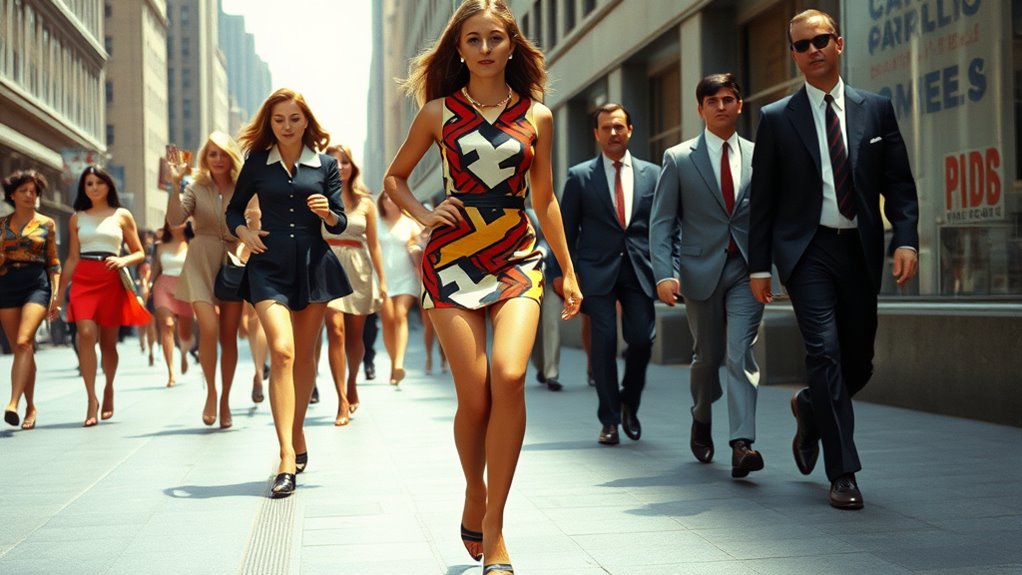
You see how 1960s fashion reflected a youth-driven rebellion against traditional standards. Women embraced modern femininity by challenging long-held norms, using bold styles like miniskirts and pantyhose. This shift marked a move toward freer self-expression and a break from conservative expectations.
Youthful Rebellion in Fashion
How did fashion become a battleground for youth rebellion in the 1960s? You played a part in challenging traditional norms by choosing bold, unconventional styles. The miniskirt, with its daring hemlines, symbolized youthful defiance against conservative standards. You rejected the idea that women’s fashion should be restrictive or modest, instead embracing freedom of expression. Hosiery, once a symbol of modesty, transformed into an emblem of rebellion when paired with these new styles. Pantyhose, with their smooth, sleek look, became a statement piece that complemented your desire for independence and self-expression. By pushing boundaries in clothing choices, you helped redefine femininity, making fashion a powerful tool for youthful resistance and cultural change. Incorporating elements like sound healing science into fashion or self-care routines was also part of this broader movement towards personal empowerment and exploring new ways to express individuality. The shift from traditional hosiery to pantyhose reflected a broader cultural transformation that embraced modernity and personal freedom.
Breaking Traditional Norms
Fashion in the 1960s became a powerful means of challenging longstanding societal norms, with styles that pushed boundaries and redefined femininity. You see, women began rejecting conservative dress codes, opting for shorter skirts, bold colors, and experimental fabrics. Pantyhose played a key role in this shift, offering a sleek, modern alternative to traditional stockings and garters. No longer did hosiery serve just a practical purpose; it became a symbol of independence and youthful rebellion. Wearing pantyhose with mini skirts challenged the old standards of modesty, allowing women to express themselves freely. This break from tradition reflected broader cultural changes—questioning authority, embracing individualism, and redefining what it meant to be fashionable. The 1960s was about more than clothes; it was about rewriting societal expectations. Additionally, the sudden availability and affordability of pantyhose contributed significantly to their widespread adoption, marking a technological breakthrough in hosiery manufacturing, enabling mass production and making them accessible to a broader audience. Furthermore, the rise of youth culture during this era fueled the popularity of such daring fashion statements, creating a ripple effect across society.
Embracing Modern Femininity
The 1960s marked a profound shift in how femininity was expressed, as women embraced new styles that emphasized independence and individuality. You now see fashion as a way to assert your identity, not just conform to traditional roles. Pantyhose became more than practical legwear—they symbolized a modern, liberated femininity. Shorter skirts and bold patterns encouraged you to experiment with your look, making hosiery a statement piece. This era rejected the conservative standards of the past, encouraging you to express confidence and youthful energy. With new textile technologies, pantyhose offered comfort, variety, and a sense of empowerment. You no longer needed to hide behind layers; instead, your hosiery became an extension of your evolving self-image, celebrating a new, vibrant femininity. Fashion evolution played a key role in shaping the era’s cultural identity and empowering women to embrace their personal style.
The Mini Skirt’s Influence on Legwear Preferences
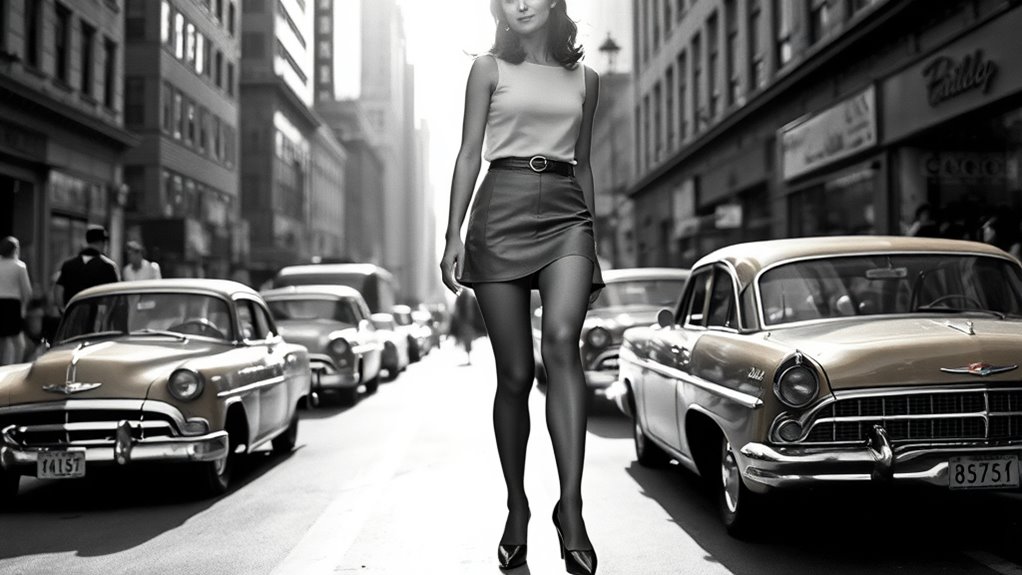
The rise of the mini skirt in the 1960s revolutionized women’s legwear choices by demanding shorter, more stylish alternatives to traditional stockings. Suddenly, longer skirts were replaced with daring hemlines that exposed more leg, making garter belts and stockings impractical. You now preferred seamless, smooth coverage that complemented the bold new fashion. Pantyhose offered that sleek, uniform look, perfect for showcasing your legs without fuss. They provided a clean, polished appearance that matched the energetic, youthful vibe of the era. As the mini skirt became a symbol of liberation and modernity, your legwear evolved from functional to fashionable. Pantyhose became an essential accessory, blending practicality with style, allowing you to embrace the new freedom and confidence that defined 1960s women’s fashion. Incorporating sound design techniques into fashion advertising helped amplify the era’s dynamic spirit and style trends. Additionally, the shift toward modern materials in hosiery contributed to their popularity, offering improved comfort and durability for everyday wear. This period also highlighted the importance of leadership skills in promoting new fashion trends and influencing consumer preferences on a broad scale. Moreover, the development of AI-driven marketing strategies played a role in shaping consumer perceptions and boosting hosiery sales during this transformative decade.
Pantyhose as a Symbol of Liberation and Youthful Femininity

As women embraced the mini skirt’s daring hemlines, pantyhose transformed from a practical garment into a powerful symbol of liberation and youthful femininity. Wearing pantyhose became a statement of independence, challenging traditional norms and embracing modern femininity. It allowed women to express confidence and freedom through fashion choices that highlighted their legs without restrictions. Pantyhose also aligned with the era’s spirit of rebellion and self-expression. Additionally, the rise of pantyhose reflected broader cultural shifts towards self-discovery and personal empowerment during the 1960s.
The Commercial Rise and Industry Growth of Hosiery
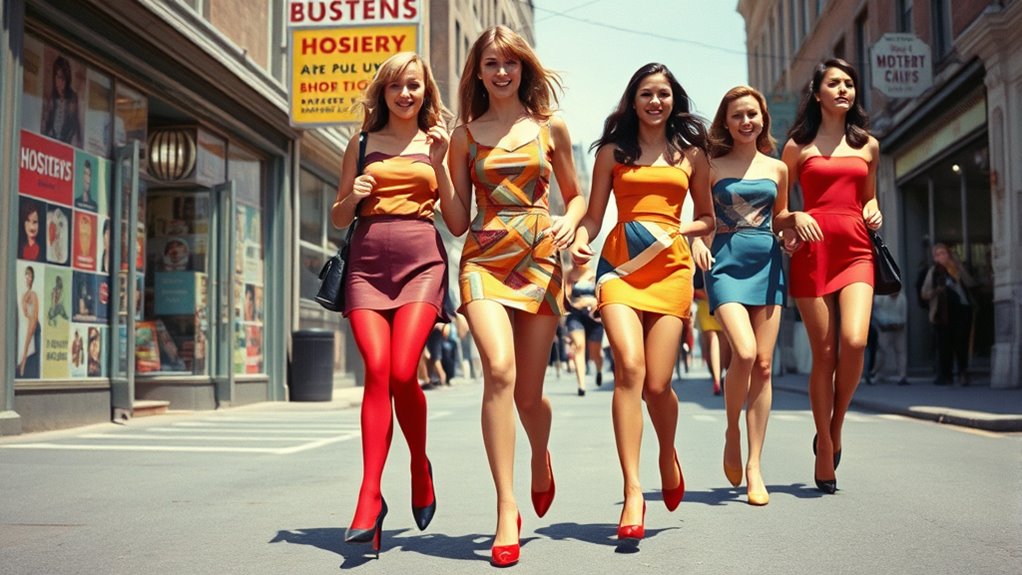
During the 1960s, the hosiery industry experienced rapid growth driven by technological innovations, shifting consumer preferences, and expanding markets. Advances like spandex and improved knitting processes made pantyhose more affordable, durable, and comfortable, broadening their appeal. The mini skirt’s popularity increased demand for seamless, continuous legwear, transforming hosiery from a practical item into a fashion statement. Retail channels expanded, making pantyhose more accessible to women nationwide. Industry hubs, especially in Italy’s Castel Goffredo, thrived, producing large quantities of stylish and innovative hosiery. By the end of the decade, pantyhose sales surpassed stockings in the U.S., establishing itself as a wardrobe staple. The industry’s growth was fueled by a combination of technological progress, evolving consumer tastes, and a booming market enthusiastic for modern, fashionable hosiery options.
Fashion-Forward Features and Technical Improvements in Hosiery

Advancements in hosiery technology during the 1960s transformed pantyhose from simple leg coverings into fashion-forward accessories with innovative features. You now see seamless designs that improve comfort and fit, thanks to new knitting techniques. Hosiery also incorporated shaping bands and specialized construction, like Julie Newmar’s 1974 patent for derriere relief, enhancing silhouette definition. Textile blends of nylon and spandex increased durability, elasticity, and fit, making pantyhose more versatile and stylish. Additionally, a wide array of colors, patterns, and textures emerged, turning hosiery into expressive fashion statements rather than just utility. This era’s innovations not only boosted consumer appeal but also allowed pantyhose to complement bold, youthful styles, elevating them into essential wardrobe pieces.
- Seamless knitting for comfort and fit
- Shaping bands for better silhouette
- Colorful, patterned, textured options
- Blends of nylon and spandex for durability
The Long-Term Impact of 1960s Trends on Hosiery Styles

The bold fashion shifts of the 1960s fundamentally transformed hosiery styles, setting trends that continue to influence the industry today. You see, the mini skirt revolution made sheer, seamless pantyhose a wardrobe essential, shaping how legwear is designed and worn. This era introduced more comfortable, stretchy fabrics like spandex blends, which remain standard. The 1960s also pushed hosiery into the fashion spotlight, inspiring bold colors, patterns, and textured finishes that persist in modern collections. Additionally, the emphasis on practicality combined with style laid the groundwork for innovations like opaque tights and seamless designs. These long-term trends fostered a culture where hosiery is seen as both functional and expressive, ensuring its relevance across decades. Today, contemporary styles still echo the youthful, liberated spirit sparked in the 1960s.
Frequently Asked Questions
How Did Legal Disputes Influence Early Pantyhose Development?
Legal disputes shaped early pantyhose development by delaying production and market entry. You might find that patent battles over designs and manufacturing methods slowed innovation as companies fought for rights. These conflicts pushed manufacturers to improve their technology and seek unique features to avoid infringement. As a result, the disputes fostered a competitive environment, ultimately leading to more advanced, diverse, and accessible pantyhose products that met evolving consumer demands.
What Role Did Technological Innovations Play in Making Pantyhose Affordable?
You see how new knitting techniques and textile innovations coincided with the 1960s, making pantyhose affordable. These advances, like circular knitting and nylon yarns, streamlined production and reduced costs. When spandex and Lycra were introduced, they added durability and stretch, making the hosiery more comfortable and long-lasting. These technological breakthroughs happened just as demand grew, ensuring that pantyhose became an accessible, essential part of fashionable women’s wardrobes.
How Did Societal Attitudes Toward Women Change With the Rise of Pantyhose?
You see, as pantyhose gained popularity, societal attitudes toward women shifted toward greater liberation and self-expression. You might notice that women started embracing more youthful, modern fashion, rejecting conservative norms of earlier decades. Wearing pantyhose became a symbol of confidence, femininity, and independence. It reflected a broader cultural move toward individual choice, empowering women to experiment with their style and challenge traditional expectations about how they should present themselves.
In What Ways Did the Mini Skirt Redefine Hosiery Design?
The mini skirt redefined hosiery design by demanding smoother, more seamless leg coverage that complemented its shorter hemlines. You’ll notice that pantyhose and tights became more form-fitting, opaque, and stylish, moving beyond simple practicality to fashion statements. Designers introduced vibrant colors, patterns, and textures, allowing women to express individuality and boldness. This shift made hosiery an essential accessory that matched the youthful, liberated vibe of the mini skirt era.
How Did Pantyhose Evolve Into a Fashion Statement Beyond Basic Coverage?
You see, pantyhose evolved into a fashion statement by offering a wide variety of colors, patterns, and textures that went beyond simple leg coverage. With new knitting techniques and textile blends, they became an accessory to express your personality and style. Designers introduced seamless, shaping, and patterned options, making pantyhose versatile and fashionable, allowing you to enhance your look while embracing comfort and innovation in your wardrobe.
Conclusion
So, as you’ve seen, the 1960s turned pantyhose into an unstoppable fashion revolution, sparking a legwear craze that transformed your wardrobe forever. Thanks to bold styles, groundbreaking innovations, and a cultural shift, hosiery became the ultimate symbol of freedom and youthful rebellion. Today, that explosive decade’s influence still rules your closet, making pantyhose not just clothing, but a legendary icon of style, liberation, and unstoppable change!
Fall Picks
fall essentials
As an affiliate, we earn on qualifying purchases.