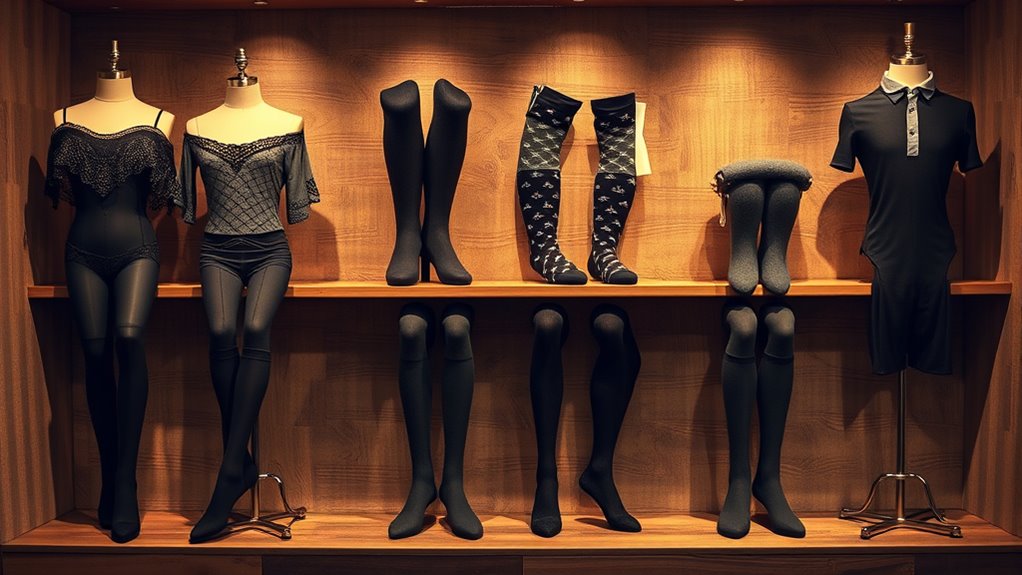

Throughout history, men’s hosiery has evolved from simple animal hide wraps to garments that highlight social status and personal style. In ancient times, they served mainly practical purposes, but by the Middle Ages and Renaissance, they became more elaborate with luxurious fabrics, embroidery, and bright colors symbolizing wealth. Today, hosiery blends fashion and function, reflecting trends and individual taste. If you want to explore how these changes shaped men’s fashion over centuries, there’s more to discover ahead.
Key Takeaways
- Early men’s hosiery consisted of animal hide wraps for practicality and warmth.
- Roman socks indicated social status through material and design.
- Medieval nobility used silk and embroidered stockings to display wealth.
- Renaissance hosiery featured luxurious fabrics, bright colors, and varied lengths as fashion statements.
- Modern men’s hosiery evolved into a blend of comfort, style, and social symbolism.

Throughout history, men’s hosiery has evolved from practical garment to a symbol of status and fashion. In ancient times, men wore basic leggings or wraps made from animal hides or woven fabrics to protect their legs and keep warm. These early pieces served functional purposes more than aesthetic ones. As civilizations advanced, so did the complexity and significance of men’s hosiery. During the Roman Empire, men sported woolen or linen socks, often reaching just below the knee, which were practical for the military and everyday life. These garments were primarily designed for comfort and protection, but the quality of the material and the intricacy of their design also reflected social standing.
Men’s hosiery evolved from simple wraps to symbols of social status through history.
Moving into the Middle Ages, men’s hosiery became more elaborate, especially among the nobility. Wealthier men began wearing finely woven silk or embroidered stockings, often decorated with patterns or embellishments that signaled their social rank. Stockings became a way to display wealth and taste, with vibrant colors and intricate designs that set the wealthy apart from common folk. During this period, hose also started to be seen as part of formal dress, and their length and decoration became a symbol of elegance and sophistication. The use of buttons or garters to hold up stockings became common, further emphasizing their importance as a fashion statement.
The Renaissance era pushed men’s hosiery into more ornate territory. Men’s stockings were now crafted from luxurious fabrics like silk and velvet, often featuring embroidery or embellishments. The length of the hose varied, sometimes extending to the waist, creating a distinct separation from the upper garment. This period also marked the beginning of fashion trends that included brightly colored and patterned stockings, showcasing a man’s taste and wealth. Such hosiery was not just functional but also an extension of personal style, often coordinated with doublets or breeches. The emphasis on appearance and display of social status made hosiery an essential part of a well-dressed man’s wardrobe. Additionally, the development of massing production techniques allowed for more accessible and diverse styles during later periods.
As you trace the evolution of men’s hosiery, you can see how it transitioned from simple functional wear to a key element of men’s fashion and social identity. Each historical period added layers of meaning, from practicality to symbols of wealth and taste. Today, hosiery continues to evolve, blending comfort, style, and innovation, but its rich history reminds you of the enduring importance of this once humble garment.
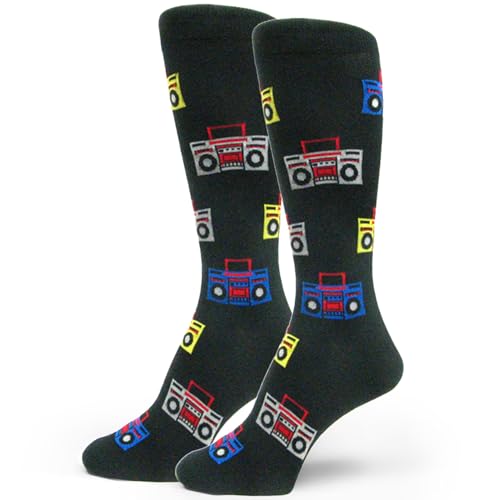
Spotlight Hosiery Vintage Cassette Boom Box Speakers Pattern Dress Socks for Men, Size 10-13, 1PR
Color: Black
As an affiliate, we earn on qualifying purchases.
As an affiliate, we earn on qualifying purchases.
Frequently Asked Questions
How Did Men’s Hosiery Influence Social Status Historically?
You can see that men’s hosiery historically signaled social status, as wealthy men wore fine, luxurious fabrics like silk and embroidered styles to display wealth and power. Common folk wore simpler, practical stockings, highlighting their lower status. By choosing specific materials, colors, and patterns, men communicated their rank and wealth, making hosiery a subtle yet important marker of social hierarchy throughout history.
What Materials Were Most Popular in Men’s Hosiery Across Different Eras?
You’ll find that wool was most popular in early men’s hosiery for its warmth and durability. As fashion evolved, silk became favored for its luxurious feel and status symbol in the Renaissance and beyond. Cotton gained popularity in the 19th century for affordability and comfort, while modern materials like nylon and synthetic blends offer stretch and resilience today. Each era’s choice reflects both technological advances and social distinctions.
When Did Men’s Hosiery Transition From Functional to Fashionable?
Think of men’s hosiery shifting from a workhorse to a runway star, like a caterpillar becoming a butterfly. This transformation happened in the late 19th and early 20th centuries when hosiery started to feature bold colors, patterns, and finer fabrics. You’ll notice men began wearing them not just for warmth but as a style statement, turning functional garments into symbols of fashion and social status.
How Did Military Uniforms Impact Men’s Hosiery Styles?
Military uniforms substantially influenced men’s hosiery styles by introducing practical and durable designs suitable for combat and formal dress. You’d notice that soldiers’ legwear became more structured, often matching uniform colors and fabrics, which then trickled into civilian fashion. As military attire emphasized both function and discipline, hosiery evolved from simple, utilitarian pieces to stylish, coordinated components of formal wear, shaping men’s fashion trends for centuries.
Are There Cultural Differences in Men’s Hosiery Preferences Worldwide?
Yes, cultural differences influence men’s hosiery preferences worldwide. In some countries, like Japan, men favor sleek, minimalist socks that match their outfits, while in European nations, vibrant patterns and high-quality materials are popular. You might notice that traditional dress codes or climate conditions shape choices, with some cultures valuing practicality and others emphasizing fashion. Understanding these differences helps you appreciate how local customs and traditions impact men’s hosiery styles globally.

Uaussi 5 Pairs Mens Silk Sheer Socks OTC Ultra Thin Nylon Dress Sock Daily Casual Stockings Work Business Sox
【COMFORT STRETCH FIT】Free size. Super elastic. These silk socks fit the shape of any foot, giving an excellent…
As an affiliate, we earn on qualifying purchases.
As an affiliate, we earn on qualifying purchases.
Conclusion
So, as you’ve seen, men’s hosiery has a rich, restless history. From regal ribbons to rugged routines, it’s evolved with elegance and endurance. Today, it’s a blend of boldness and comfort, built into every step you take. Embrace the legacy, enjoy the evolution, and wear your hosiery with pride. Because, whether for fashion or function, your journey through centuries of style shows that hosiery isn’t just a habit—it’s a heritage worth holding onto.
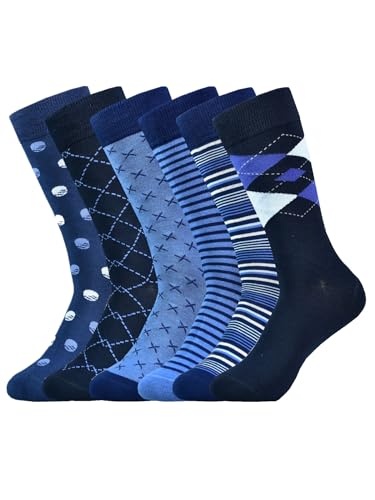
SUKBRGIR Mens Dress Socks Business Casual Pattern,6-Pairs Bamboo Crew Sock for Men Shoe Size 8-13 (US, Digital, 13, Regular, Dark blue)
Premium Quality: These dress socks are crafted with a soft and breathable fabric blend for all-day comfort.
As an affiliate, we earn on qualifying purchases.
As an affiliate, we earn on qualifying purchases.

Colonial Pilgrim Shoe Buckle & Mens White Knee High Socks Set: 1-Pair Pack, Historical Leprechaun & Founding Father Costume Accessories for 18th Century Theme
COMPLETE YOUR AUTHENTIC HISTORICAL LOOK – Step into the past with a perfectly matched set! This bundle includes…
As an affiliate, we earn on qualifying purchases.
As an affiliate, we earn on qualifying purchases.