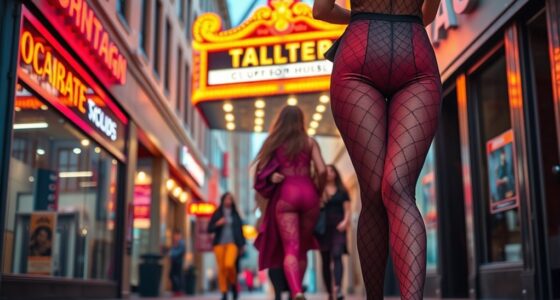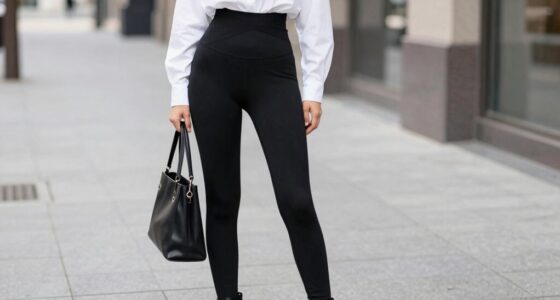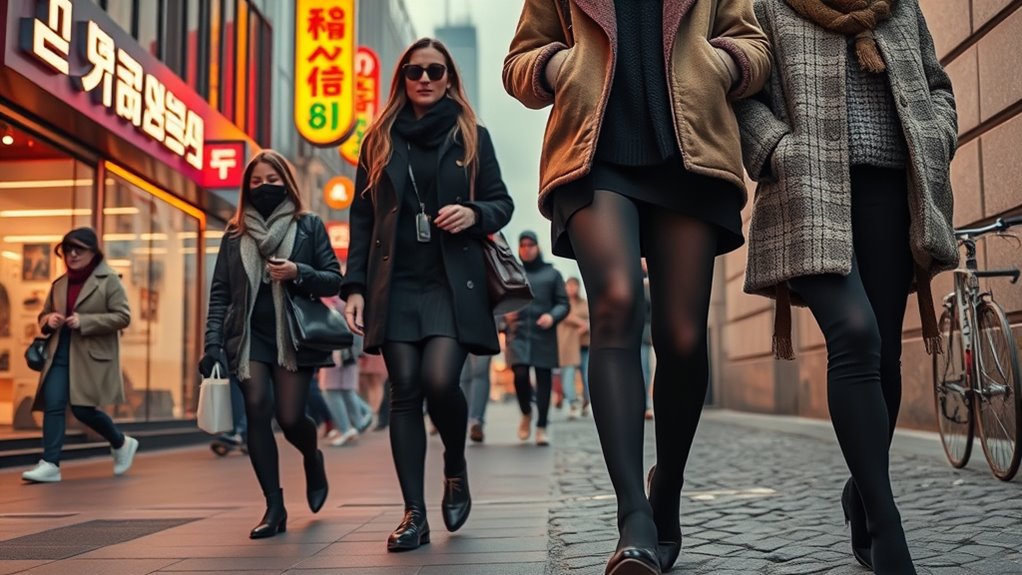

In Seoul, hosiery is bold and expressive, often layered with streetwear to create eye-catching, innovative looks that blend tradition with modernity. Sneakers and oversized silhouettes paired with colorful or patterned tights are common. In Copenhagen, hosiery favors minimalism, choosing neutral tones or subtle textures that complement their understated, sustainable aesthetic. Their focus is on quality and versatility, perfect for adaptable, weather-ready outfits. Want to discover how these styles shape each city’s street fashion? Keep exploring to learn more.

Get your wardrobe favorites delivered free with Prime
- Fast, free delivery on millions of items
- Prime Video, Amazon Music and more included
- Member-only deals all year
Key Takeaways
- Seoul’s street style often incorporates bold, personalized hosiery as part of layered, innovative outfits blending tradition and modernity.
- Copenhagen favors minimalist hosiery choices, emphasizing neutral tones and seamless designs that complement sustainable, tailored looks.
- Seoul’s hosiery integrates high-tech fabrics and vibrant patterns, serving both functional and expressive fashion statements.
- Copenhagen’s hosiery tends to focus on durability and comfort, aligning with its eco-conscious, quality-focused aesthetic.
- Both cities use hosiery to enhance their distinctive styles: Seoul for experimental layering, Copenhagen for understated elegance.

Street style has become a powerful force shaping global fashion, transforming city neighborhoods into runways where everyday people showcase their unique looks. When you walk through Seoul’s vibrant streets, you quickly realize how street style here isn’t just about clothing—it’s a cultural statement. The city’s fashion scene is a seamless blend of tradition and innovation, where high-tech fabrics meet age-old patterns. You’ll notice how locals layer modern streetwear with subtle nods to Korean heritage, like traditional patterns or cultural motifs subtly woven into contemporary designs. Sneakers are almost a uniform, but you’re encouraged to personalize them with bold colors, custom laces, or playful accessories. The mix of sleek minimalism and eye-catching details makes Seoul’s fashion scene lively and unpredictable. People here aren’t afraid to push boundaries, experimenting with oversized silhouettes, asymmetrical cuts, and unexpected textures, all while maintaining an effortless vibe. This dynamic style culture is driven by a tech-savvy youth who use social media to showcase their looks, making Seoul a hub for innovative street fashion that influences the world. Additionally, the high-pressure environment encourages the use of advanced textiles, which enhances both style and functionality.
In Copenhagen, street style takes a different approach, rooted in simplicity and functionality. When you stroll through its streets, you feel the emphasis on quality, comfort, and understated elegance. You’ll notice how Danes favor neutral tones—think beige, gray, and black—paired with clean lines and minimal embellishments. The style here isn’t about making loud statements; it’s about making smart, subtle choices that stand the test of time. You might see someone in a sleek wool coat, tailored trousers, and minimalist sneakers, all perfectly coordinated. Copenhagen’s street style champions sustainability and craftsmanship, often featuring pieces from local designers or vintage shops. The vibe is relaxed but well-thought-out, with an emphasis on layering so that you can adapt to the unpredictable Scandinavian weather. People here tend to dress for the day rather than for show, which creates an authentic and approachable atmosphere. It’s all about quality over quantity, and you see that reflected in the effortless way locals put their outfits together. The style scene in Copenhagen is a reminder that less can be more, emphasizing timelessness over trends.
Frequently Asked Questions
How Do Local Cultures Influence Hosiery Trends in Seoul and Copenhagen?
You’ll notice that local cultures shape hosiery trends in Seoul and Copenhagen differently. In Seoul, fashion is bold and innovative, so you’ll see vibrant, statement hosiery reflecting K-pop influences and streetwear. In Copenhagen, minimalism and practicality dominate, so hosiery tends to be simple, functional, and understated, aligning with Scandinavian design values. Your choice of hosiery in each city reveals a lot about their cultural priorities and fashion philosophies.
What Sustainable Practices Are Prominent in Hosiery Production in Both Cities?
Just like the careful craftsmanship of a Swiss watch, both Seoul and Copenhagen prioritize sustainability in hosiery production. You’ll find practices like using eco-friendly fibers, recycling waste, and reducing water and energy use. Brands in these cities often embrace transparency and ethical sourcing, ensuring their products are kind to the planet. So, whether in Seoul or Copenhagen, sustainability isn’t just a trend — it’s a core part of their hosiery ethos.
How Do Seasonal Changes Affect Street-Style Hosiery Choices?
Seasonal changes greatly influence your hosiery choices, as you adapt to temperature shifts. In colder months, you opt for thicker, layered tights or wool blends to stay warm, while in milder seasons, you choose lighter, sheer fabrics for style and comfort. You might also experiment with vibrant colors or patterns during *interim* seasons. Your wardrobe reflects these changes, balancing practicality and personal style to stay comfortable and trendy year-round.
Are There Notable Differences in Hosiery Pricing Between Seoul and Copenhagen?
You’ll notice that hosiery prices are generally higher in Copenhagen than Seoul. In Copenhagen, quality and designer brands drive up costs, reflecting higher living expenses. Seoul offers more budget-friendly options, with a wide range of affordable hosiery from local and international brands. If you’re shopping in Copenhagen, expect to pay a premium for style and quality, while Seoul’s market caters to more economical choices without sacrificing style.
Which Local Designers or Brands Are Leading Hosiery Innovation in Each City?
You’ll find Seoul’s hosiery scene buzzing with innovation from brands like Mixxo and StyleNanda, who push boundaries with bold patterns and innovative fabrics. Meanwhile, Copenhagen’s leading designers, such as Ganni and Henrik Vibskov, craft sleek, sustainable pieces that blend fashion with function. Both cities ignite creativity, but Seoul’s brands surprise with daring designs, while Copenhagen’s focus on sustainability offers a different kind of allure.
Conclusion
Just like a well-worn pair of tights that tie a look together, Seoul and Copenhagen show how street style reflects city soul. Remember when I saw a Seoul street artist effortlessly blending high fashion with everyday wear? It reminded me that your style, like theirs, is your signature—unique and bold. No matter where you are, your outfit can be your city’s heartbeat, turning simple steps into a runway of self-expression.
Fall Picks
fall essentials
As an affiliate, we earn on qualifying purchases.