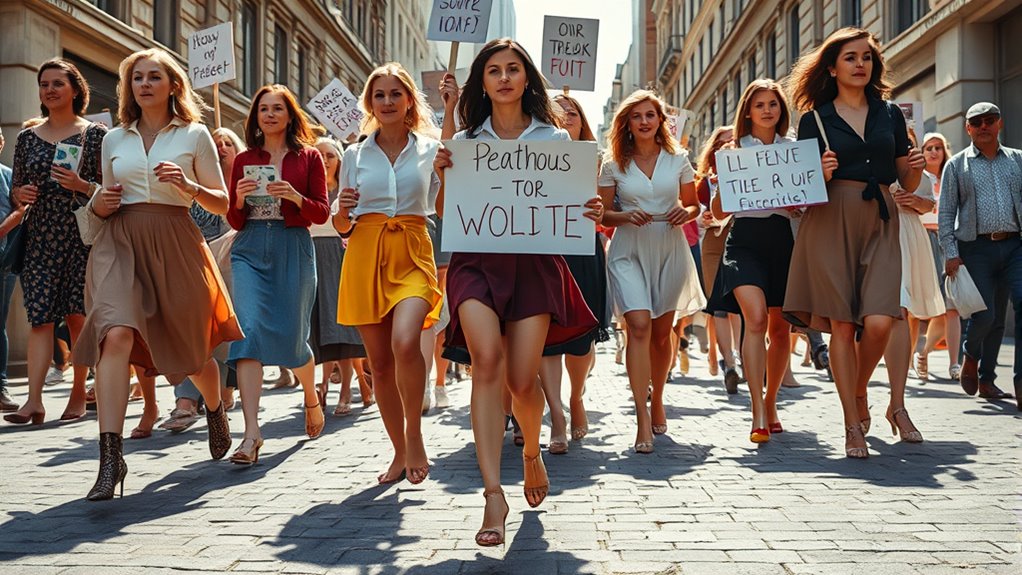

In the 1960s and beyond, women increasingly used ditching pantyhose as a powerful form of protest, challenging societal expectations of femininity and dress codes. By going bare-legged, they made bold statements about personal freedom, bodily autonomy, and resistance to traditional gender roles. Movements like the red stocking protests symbolized their fight for equality and individuality. To discover more about how these acts shaped modern feminism and societal norms, keep exploring this compelling story.

Get your wardrobe favorites delivered free — and shop member deals
- Fast, free delivery on millions of items
- Access to Prime Big Deal Days deals on October 6–7
- Prime Video, Amazon Music and more included
Key Takeaways
- The Pantyhose Rebellion was a movement where women publicly refused to wear hosiery as a form of protest against traditional gender norms and societal expectations.
- It emerged in the 1960s alongside broader cultural shifts advocating for personal freedom, comfort, and gender equality.
- Women used the act of ditching pantyhose as a symbol of bodily autonomy and resistance to restrictive dress codes.
- The movement challenged the association of hosiery with femininity, professionalism, and societal beauty standards.
- Its legacy continues to influence contemporary discussions on gender norms, personal choice, and body positivity.
The Rise of Pantyhose as a Symbol of Femininity

The rise of pantyhose in the mid-20th century marked a significant shift in how femininity was expressed and perceived. When nylon stockings became widely available after their debut in 1939, they quickly symbolized modern womanhood and elegance. Women embraced them as a way to enhance their appearance, creating a sleek, polished look that reinforced societal standards of beauty. Wearing pantyhose became a sign of sophistication and respectability, often associated with professionalism and social status. Advertisements promoted them as essential accessories for achieving the ideal feminine silhouette. As a result, pantyhose moved from a fashion necessity to a cultural symbol—an emblem of modern femininity that women felt pressured to uphold in their daily lives. The popularity of pantyhose also reflected broader cultural norms about gender roles and aesthetics during that era. Additionally, the societal emphasis on appearance standards contributed to the perception that women’s worth was closely tied to their outward presentation. The societal expectations surrounding appearance often led women to view their identity through the lens of beauty ideals, reinforcing the importance placed on external presentation.
The Cultural Shifts of the 1960s and the Rejection of Traditional Underpinnings

During the transformative years of the 1960s, cultural attitudes shifted dramatically as young people challenged longstanding social norms, especially those surrounding femininity and fashion. You began rejecting restrictive underpinnings like girdles and nylon stockings, embracing sleek, modern alternatives. This rebellion symbolized a broader desire for freedom and authenticity. As a result, traditional notions of femininity gave way to a more relaxed, youthful style. The shift was driven by movements that valued self-expression and individuality. The adoption of modern fabrics like nylon reflected the technological advancements influencing fashion choices during this era. Additionally, the practical aspects of easy-to-wear clothing contributed to this cultural transformation, making fashion more accessible and comfortable for the youth. Emphasizing personal empowerment, women and young people alike sought to break free from societal constraints and define their own identities. The increased acceptance of casual attire further supported this shift in societal standards. The rise of women’s liberation movements also played a significant role in empowering women to redefine their personal and cultural identities beyond traditional expectations. The table below highlights key aspects of this cultural transformation:
| Aspect | Change | Impact |
|---|---|---|
| Fashion | Simplification, freedom | Less restrictive clothing |
| Gender Roles | Challenging stereotypes | Increased gender equality |
| Social Norms | Questioned authority | Greater personal autonomy |
| Youth Culture | Embraced modernity | Rejection of past conventions |
| Fashion Symbols | Tights over stockings | Sign of rebellion |
The Red Stocking Movements and Their Bold Acts of Protest

As women challenged societal norms by rejecting traditional fashion, their protests often took bold, visible forms that made headlines. The Red Stocking Movements exemplified this, using striking actions to demand equality. In Denmark, women stripped down during parades, holding signs and dressing as stereotypical female ideals with balloons, wigs, and fake eyelashes to critique gender roles. They organized street demonstrations, captured media attention by occupying union rostrums, and refused to pay full fares on buses, risking arrest and fines. Similarly, Icelandic women marched with bright red stockings and a borrowed Venus statue, demanding equal pay, childcare, and reproductive rights. These bold acts of civil disobedience shook societal expectations, turning fashion symbols like red stockings into powerful tools of protest and change. Incorporating civil disobedience into their strategies, they effectively drew attention to gender inequality and social injustice. Their actions often drew public attention to the broader issues of gender discrimination, challenging societal complacency. Additionally, these movements utilized fashion as activism to make their messages more visible and impactful. Furthermore, the use of visual symbolism helped to amplify their messages and rally support from wider audiences. Embracing various personal development strategies, these activists strengthened their resolve and cohesion in the face of opposition.
How Ditching Hosiery Became a Statement Against Gender Norms

Ditching hosiery became a powerful way for women to challenge traditional gender norms and assert their independence. Wearing bare legs defied the expected polished, conservative image women were supposed to maintain. It was a visible act of rebellion against societal pressures to conform. By rejecting stockings and pantyhose, women signaled they refused to be confined by outdated standards of femininity and propriety. This choice became a statement of self-empowerment, emphasizing comfort, authenticity, and personal freedom. It also questioned the idea that women’s worth depended on their appearance or adherence to strict dress codes. In doing so, women used their clothing choices to push back against gendered expectations, fostering a broader movement for gender equality and personal autonomy.
The Legacy of the Pantyhose Rebellion in Modern Feminist Movements

The pantyhose rebellion has left a lasting mark on modern feminist movements by challenging restrictive beauty standards and promoting body positivity. You see it in how women today reject societal expectations to conform to narrow ideals of femininity. The rebellion inspired movements that emphasize self-acceptance and authenticity, encouraging women to define their beauty on their own terms. It also fueled protests against dress codes and appearance policing in workplaces and schools. By dashing the idea that women must wear pantyhose to be considered professional or attractive, the rebellion helped foster a culture of empowerment and resistance. Its legacy continues to influence feminist discourse, reminding women everywhere that Relationships – Personality Test choice and body positivity matter more than fitting into outdated norms. This shift has contributed to a broader movement towards self-acceptance, encouraging women to embrace their natural appearances without fear of judgment. Moreover, the movement has highlighted the importance of challenging societal expectations, inspiring ongoing dialogues about personal freedom and bodily autonomy.
Frequently Asked Questions
What Inspired Women to Protest by Ditching Pantyhose Specifically?
You’re inspired to ditch pantyhose because they symbolize outdated beauty standards and societal expectations. Women see them as restrictive, uncomfortable, and a sign of needing to conform. By removing pantyhose, you challenge traditional notions of femininity and express independence. It’s a bold statement of rejecting conformity, embracing comfort, and asserting your personal style, aligning with broader movements advocating for gender equality and women’s rights.
How Did These Protests Influence Broader Feminist Movements Worldwide?
Change often starts with small steps, and these protests sparked broader feminist movements worldwide by challenging societal norms and gender expectations. When you see women rejecting traditional symbols like pantyhose, it inspires others to question authority and demand equality. These actions showed that collective resistance, even over seemingly minor issues, can ignite global change, encouraging women everywhere to stand up and rewrite their roles in society.
Were There Any Legal or Policy Changes Resulting From These Hosiery Protests?
You’ll find that the hosiery protests led to meaningful policy changes, especially in Denmark and Iceland. Women’s public acts of defiance highlighted gender inequality, pressuring governments to address issues like equal pay and reproductive rights. These protests helped push for legal reforms, including the legalization of abortion in Iceland in 1975. Your activism showed that collective action can influence legislation and advance women’s rights considerably.
How Did Mainstream Media Portray Women’s Hosiery Protests During That Era?
Like a mirror reflecting society’s expectations, mainstream media often portrayed women’s hosiery protests as rebellious acts challenging tradition. You’d see headlines emphasizing scandal and defiance, sometimes mocking women for rejecting societal norms. While some outlets sensationalized the protests, others highlighted them as bold statements for women’s independence. Overall, media coverage oscillated between framing these actions as shocking disruptions and recognizing them as powerful calls for gender equality.
Are Modern Feminist Movements Still Using Hosiery Symbolism Today?
Yes, modern feminist movements still use hosiery symbolism today. You might see women challenging traditional gender roles by wearing or removing stockings during protests to symbolize breaking free from societal expectations. Activists use hosiery as a visual statement of rebellion against outdated norms, emphasizing women’s autonomy over their bodies. This ongoing symbolism connects past protests to current struggles for gender equality, making hosiery a powerful tool for raising awareness and sparking conversation.
Conclusion
You see, abandoning pantyhose wasn’t just about comfort; it was like smashing a vintage rotary phone—challenging outdated norms. Today, as you walk past a 3D-printed protest poster, remember that rebellion’s spirit still echoes. You’re part of a legacy that says, “We won’t be confined by old-fashioned expectations.” Just like the first vinyl record, this movement’s impact still plays on, reminding you that true freedom often starts with a simple act of defiance.
Fall Picks
fall essentials
As an affiliate, we earn on qualifying purchases.