To prevent snags and protect your tights, store them properly in a soft, breathable container or fold and place them neatly in your drawer, avoiding clutter. Use a DIY hosiery bag for gentle washing, and keep sharp objects away to prevent tears. Reinforce weak spots with clear nail polish, and always remove surface debris with a lint roller or tape before wear. Limit wear to reduce damage—continue your journey to learn more simple yet effective hacks.
Key Takeaways
- Store tights in soft, breathable containers and fold neatly to prevent stretching and tangling.
- Use lint rollers or tape to gently remove surface debris, keeping tights snag-free.
- Choose footwear with smooth soles and avoid sharp-toed shoes to reduce fabric catching.
- Reinforce vulnerable areas with clear nail polish or fabric glue to prevent runs.
- Handle tights carefully, store folded, and inspect regularly for early damage to prolong their lifespan.
Store Tights Properly to Avoid Unnecessary Damage

To keep your tights in good condition, it’s essential to store them properly. Good clothing organization prevents snags and tears, extending their lifespan. Use storage containers specifically designed for hosiery or small accessories. Opt for soft, breathable containers that won’t crush or stretch your tights. Avoid tossing them into cluttered drawers, which can cause unnecessary damage. Instead, fold each pair gently and place them neatly in your chosen container. This method keeps them from tangling or snagging on other items. When you’re organized, it’s easier to find your favorite pairs and keep them in pristine condition. Proper storage not only protects your tights from damage but also saves you time during busy mornings. Keep your hosiery safe and your closet tidy with smart clothing organization.
Use a DIY Sock or Hosiery Bag for Washing
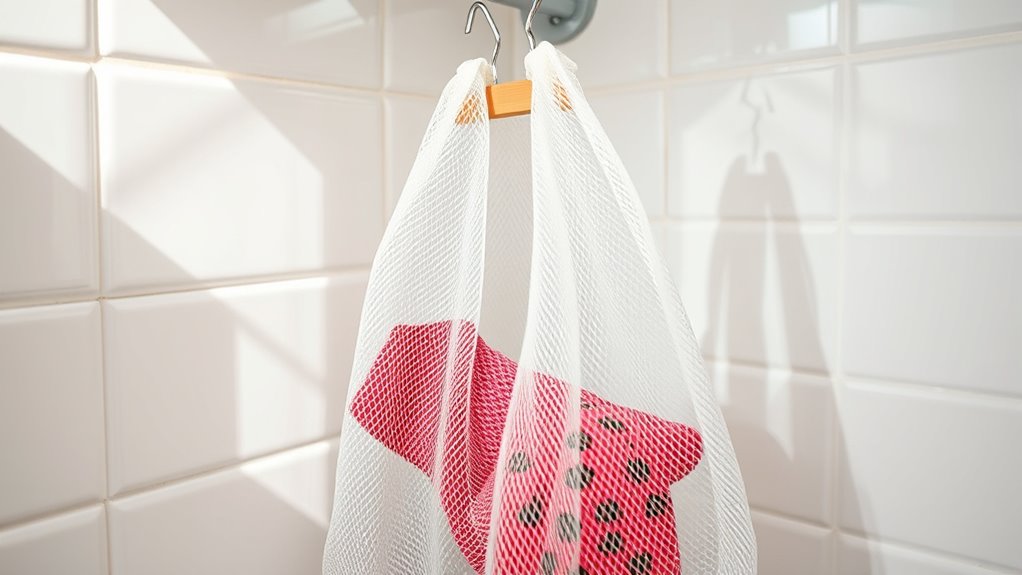
Ever wonder how to keep your tights looking their best after washing? Using a DIY sock or hosiery bag is a simple yet effective sock care trick. Place your tights inside a mesh laundry bag or create one from an old pillowcase to protect delicate fibers. This prevents tangling, stretching, and snagging during the wash cycle. Follow washing tips by choosing a gentle cycle and cold water to minimize damage. Avoid harsh detergents that can weaken fibers and cause runs. After washing, gently squeeze out excess water without wringing. Using a hosiery bag ensures your tights stay smooth and snag-free, extending their lifespan. Incorporating this quick hack into your laundry routine for fresher, longer-lasting tights can also help maintain the optimal angles for pinball machines, which is crucial for maximizing performance and longevity.
Prevent Snags by Choosing the Right Footwear
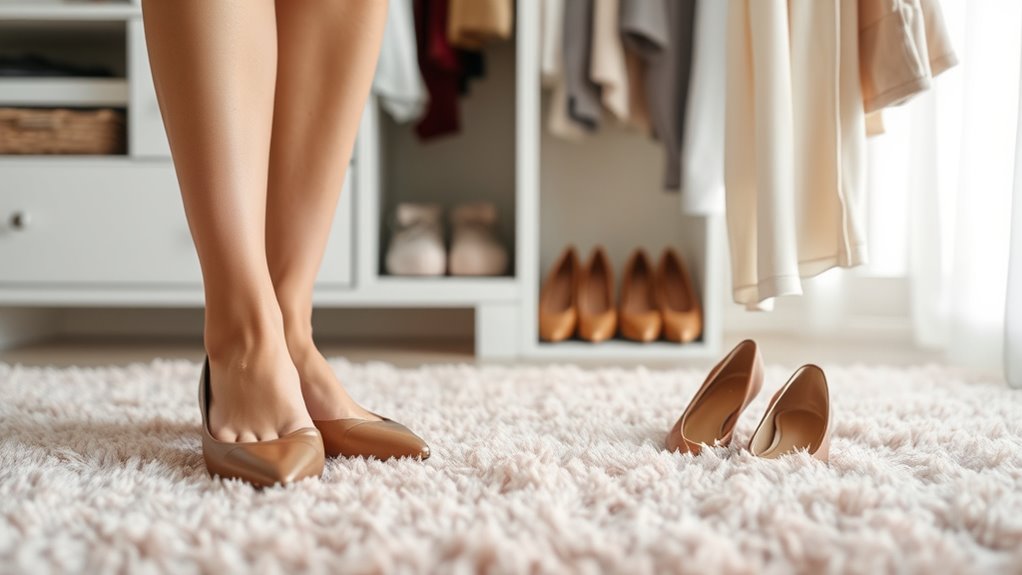
Choosing the right footwear can make a big difference in protecting your tights from snags. Opt for shoes with smooth soles and steer clear of sharp-toed styles that can catch and tear delicate fabric. Closed-toe shoes are usually safer, providing extra coverage and reducing the risk of damage.
Select Smooth-Soled Shoes
Wearing shoes with smooth soles can substantially reduce the risk of snagging your tights. When selecting footwear, prioritize smooth, non-rough soles that glide easily over fabric. This simple shift in footwear selection minimizes friction that causes snags. Regular shoe maintenance also plays a key role—keep your shoes clean and free of rough patches or debris that could catch on tights. Check the soles periodically for wear and tear, replacing shoes when the surface becomes rough or damaged. Opting for smooth-soled shoes, like flats, loafers, or certain sneakers, can make a noticeable difference in protecting your tights. Remember, choosing the right footwear isn’t just about style—it’s about maintaining your tights’ integrity and prolonging their lifespan.
Avoid Sharp-Toed Footwear
Sharp-toed shoes can easily snag your tights if you’re not careful, so it’s important to select footwear that minimizes this risk. Choosing shoes with rounded or blunt toes helps protect your tights from tears and snags. Proper footwear safety involves picking shoes that don’t have pointed edges or rough finishes that can catch fabric. Regular shoe maintenance, like smoothing rough spots and checking for loose embellishments, also reduces snag risks. Additionally, selecting projectors with high color accuracy can enhance your viewing experience, but always be mindful of sharp footwear to keep your tights in top condition.
Opt for Closed-Toe Styles
Opting for closed-toe shoe styles offers a simple way to protect your tights from snags. When storing your footwear, use layered storage to keep shoes separated, preventing rough edges from catching on your tights. Choosing shoes with smooth interiors reduces the risk of fabric snagging. Additionally, consider lightly fabric softening your tights before wearing; this makes the material more supple and less prone to tears. Be mindful of wearing shoes with embellishments or textured surfaces, as these can easily catch and snag your tights. By selecting closed-toe styles and organizing your footwear properly, you minimize unnecessary damage. Incorporate fabric softeners into your laundry routine to keep tights smooth and snag-resistant, ensuring they last longer and stay looking their best. Using proper sizing and fit can also help prevent unnecessary stress on the fabric, reducing the likelihood of tears or snags.
Apply Clear Nail Polish to Reinforce Vulnerable Areas
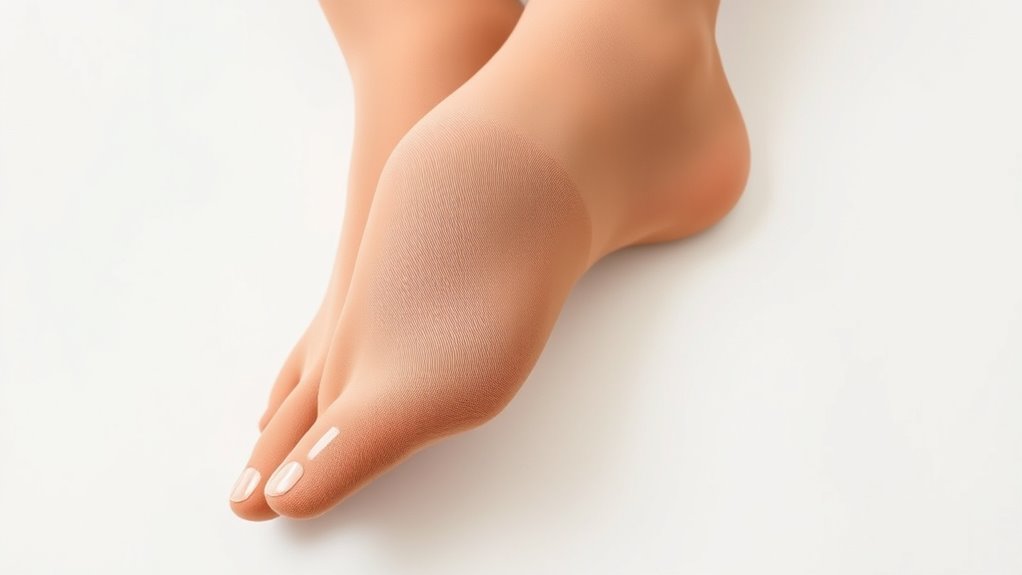
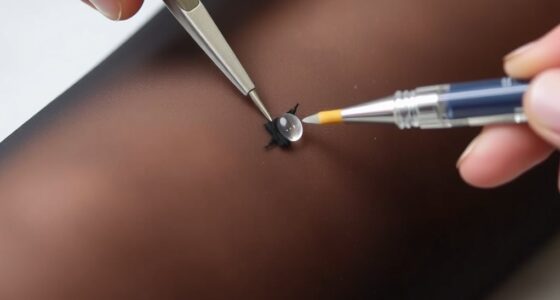
To prevent runs from spreading, applying clear nail polish to vulnerable areas of your tights is a simple yet effective solution. This reinforcement technique creates a protective barrier that stops snags from expanding. Start by identifying weak spots such as runs, holes, or thin areas. Carefully apply a thin layer of clear nail polish over these spots, ensuring even coverage. The polish acts as a sealant, reinforcing the fabric and preventing further tearing. Be sure to let it dry completely before wearing your tights again. This quick fix can extend the life of your hosiery and save you from frequent replacements. Remember, using nail polish as part of your reinforcement techniques is an inexpensive and discreet way to keep your tights snag-free. Additionally, understanding your bedroom environment can help you choose the best materials and techniques for your wardrobe storage to prevent damage.
Keep Sharp Objects Away From Your Tights

Since your tights are delicate, keeping sharp objects away is essential to prevent unexpected tears. Jewelry protection is key—store jewelry separately using designated storage solutions like jewelry boxes or pouches to avoid accidental snags. Avoid tossing your tights near items like scissors, pins, or belt buckles, which can easily catch and cause runs. Consider using compartmentalized drawers or small containers to organize jewelry and other sharp accessories, keeping them separate from your hosiery. When packing your closet, place jewelry and sharp objects in a dedicated spot, away from your tights. This simple step reduces the risk of damage and keeps your tights looking their best longer. Proper storage solutions not only protect your tights but also streamline your closet organization. Using proper storage techniques can further help maintain the quality of your hosiery over time.
Use a Lint Roller or Tape to Remove Surface Debris
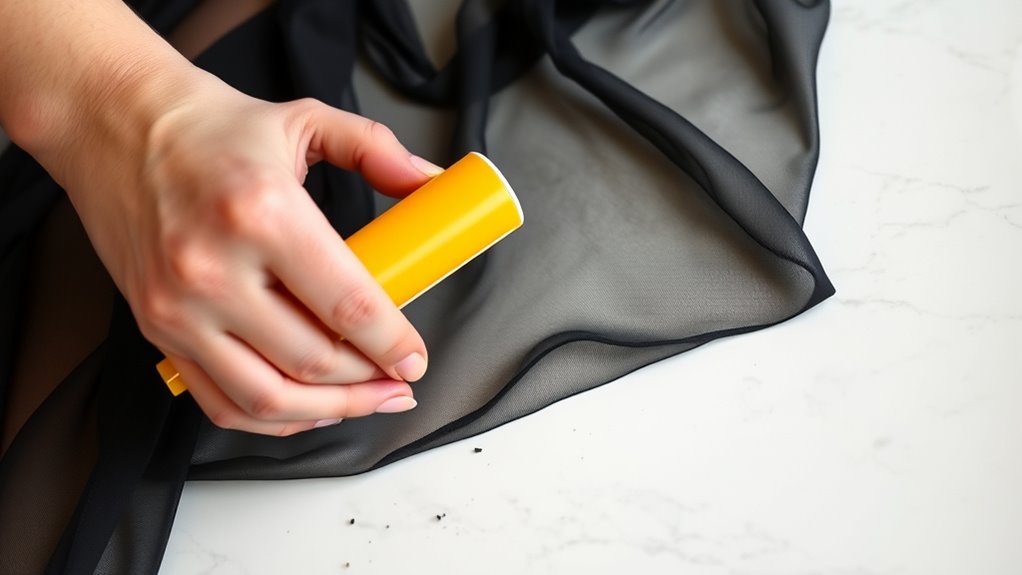
Using a lint roller or tape is an easy way to quickly remove surface debris from your tights. It’s a gentle method that won’t damage delicate fabric while effectively cleaning. This simple step helps keep your tights looking fresh and smooth. Additionally, being aware of AI vulnerabilities can inform you about potential risks in digital security, ensuring your personal information remains protected.
Subheading 1: Easy Debris Removal
Ever wonder how to quickly make your tights look fresh and neat again? Using a lint roller or tape is a simple, effective way to remove surface debris like lint, pet hair, or dust. This method works well across different fabric textures, ensuring your tights stay snag-free. When choosing debris removal tools, consider color coordination; a clear tape or roller blends seamlessly, preventing color transfer. For best results, gently press the roller or tape over the tights, lifting away debris without damaging delicate fibers. Regularly cleaning your tights this way helps maintain their appearance and prolongs their lifespan. Keep a lint roller handy in your closet or laundry area for quick touch-ups, especially before wearing or storing your tights. It’s a fast, fuss-free trick to keep your wardrobe looking polished. Additionally, understanding fabric care can help you select the most suitable methods for cleaning and maintaining your tights effectively.
Subheading 2: Gentle Surface Cleaning
To keep your tights looking their best, it’s important to perform gentle surface cleaning to remove any lingering debris. Use a lint roller or a piece of tape to carefully lift surface dust, lint, or pet hair without damaging delicate fabric patterns. This method preserves the tights’ smooth appearance and prevents snags caused by rough debris. When cleaning, pay attention to color coordination—light-colored tights attract more visible lint, so use a fresh tape or roller for each shade. Avoid harsh scrubbing, which can distort the fabric or cause pilling. Regularly maintaining surface cleanliness keeps your tights looking fresh and snag-free, ensuring they stay in great shape and last longer. Incorporating proper tableware terminology understanding can also help you handle your clothing and accessories more effectively. This simple hack helps protect your investment and keeps your wardrobe seamless.
Rotate and Limit Wearing to Reduce Wear and Tear
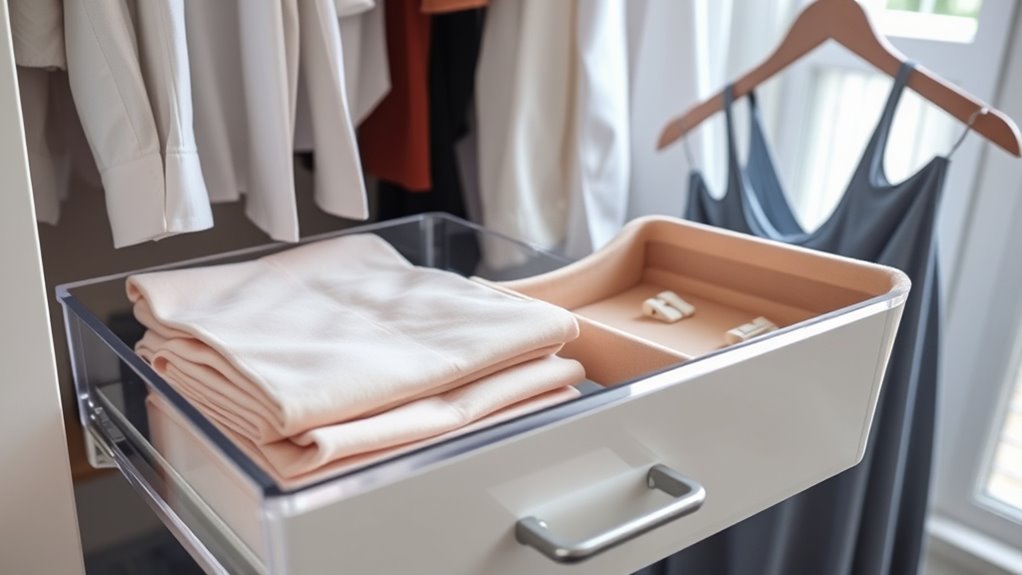
Rotating your tights regularly is one of the simplest ways to extend their lifespan. Proper closet organization makes tights rotation easy, so you avoid wearing the same pair daily. Limit how often you wear each pair to prevent excessive stress on the fabric, reducing tears and snags. By managing your tights rotation, you distribute wear evenly, keeping your collection looking fresh longer. Consider these tips:
- Keep tights in separate, labeled compartments for easy access
- Avoid overstuffing your closet to prevent stretching or snagging
- Schedule days for different pairs to maintain variety and reduce frequent use
- Regularly assess your collection and retire damaged tights promptly
- Using top mattress toppers can improve overall comfort, which can help you handle your wardrobe with more care
Implementing these simple strategies helps protect your tights from unnecessary wear and tear, saving you money and frustration.
Repair Runs and Snags Quickly With Simple Techniques

When you notice a run or snag in your tights, acting quickly can prevent further damage and keep them wearable for longer. Gently smooth the fabric around the snag and use clear nail polish or a fabric glue to seal the edges, stopping it from spreading. For minor snags, a small dab of clear nail polish is often enough to reinforce the threads. Proper fabric care and smart storage solutions, like folding tights instead of hanging, reduce the risk of snags. To help visualize, here’s a quick guide:
| Tip | Explanation |
|---|---|
| Seal with clear polish | Stops runs from expanding |
| Use gentle handling | Prevents additional snags during storage |
| Store flat | Avoids stretching and catching on objects |
| Avoid sharp objects | Protects fabric from tears |
| Regular inspection | Catch issues early for quick repair |
Incorporating mindful storage practices can significantly reduce the likelihood of snags and prolong the life of your tights.
Frequently Asked Questions
How Often Should I Replace My Tights to Prevent Damage?
You should replace your tights every 10 to 15 wears to prevent damage. Regular tights replacement helps avoid holes or snags that happen over time, especially with frequent use. To protect your tights and maximize their lifespan, inspect them for signs of wear after each wear. Damage prevention is key, so don’t hesitate to replace tights promptly when they start showing signs of thinning or small tears.
Are There Specific Fabrics Better for Avoiding Snags?
Think of your tights as delicate dancers—some fabrics perform better than others. Opt for snag-resistant materials like nylon blends or microfiber, which boast superior fabric durability. These fabrics act as armor, warding off snags and tears. Avoid delicate lace or sheer fabrics if you’re worried about snags; instead, choose sturdy, snag-resistant materials that keep your tights looking flawless longer, ensuring your style stays on point without constant repairs.
Can I Use Regular Detergent to Wash Tights Safely?
You can use regular laundry detergents to wash your tights safely, but opt for a gentle, mild formula to prevent damage. Avoid harsh detergents and fabric softeners, as they can weaken the fabric and cause snags. Always turn tights inside out, wash on a delicate cycle, and air dry. These simple steps help preserve the elasticity and prevent snags, keeping your tights looking fresh and snag-free longer.
What Are Some Common Mistakes That Cause Tights to Snag?
You often snag tights due to improper sizing, which causes excessive stretching or tightness that leads to fabric pilling and tears. Be careful when choosing the right size to avoid overstretching. Additionally, rough fabrics or jewelry can catch on delicate tights, causing snags. Always handle tights gently, avoid rough surfaces, and remove jewelry before wearing. Properly sizing and gentle handling help prevent fabric pilling and snagging.
How Do I Store Tights to Prevent Color Bleeding or Fading?
Think of your tights as delicate flowers that need gentle care. To prevent color bleeding and fading, store them in a cool, dark place away from direct sunlight. Use storage solutions like fabric pouches or drawer dividers to keep them separate from rough items. Always wash with cold water and dry flat. Proper storage maximizes color preservation and keeps your tights looking vibrant longer.
Conclusion
By following these simple DIY hacks, you can keep your tights looking their best longer. Think of it as giving your hosiery a fighting chance against the daily grind. With a little care and quick fixes, you’ll avoid the hassle of constant replacements. Remember, a stitch in time saves nine—so treat your tights with love and attention, and you’ll be saving yourself from unnecessary tears and frustration down the road.