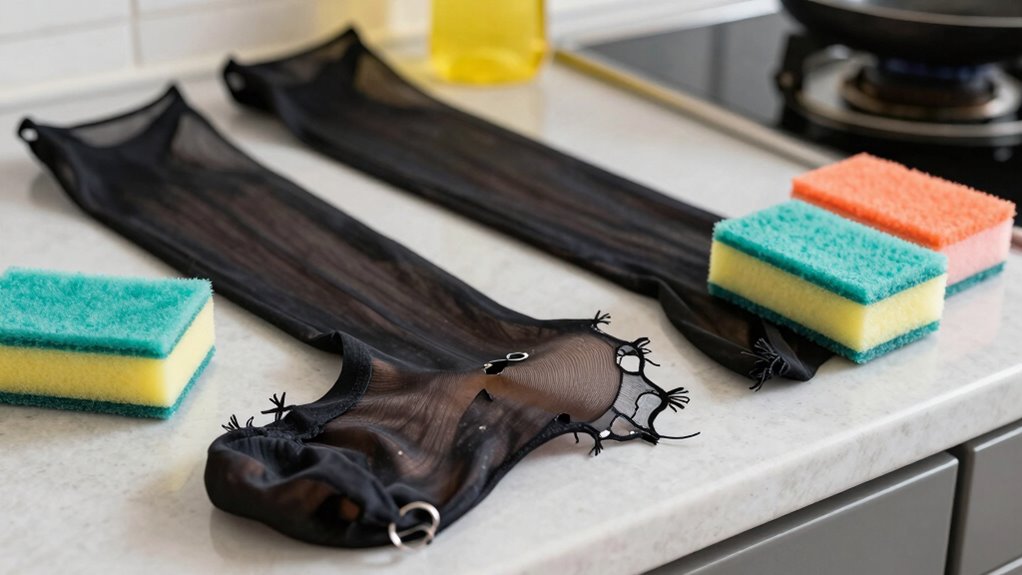

To turn damaged tights into household helpers, cut them into strips or squares for cleaning rags, perfect for dusting and polishing. Use smaller pieces as protective covers for delicate items or to organize cords and small objects with elastic bands. You can also slip fabric over tools or trash bins for added protection. These simple swaps save money and reduce waste. Keep exploring for more creative ideas to make full use of your torn tights.

Get your wardrobe favorites delivered free with Prime
- Fast, free delivery on millions of items
- Prime Video, Amazon Music and more included
- Member-only deals all year
Key Takeaways
- Cut damaged tights into strips or squares for versatile cleaning rags that are reusable and eco-friendly.
- Use small pieces of tights as padding or protective covers for fragile or delicate household items.
- Create elastic bands from tights strips to bundle towels, cords, or garden plants efficiently.
- Slip fabric over tools or small trash bins to serve as protective sleeves or liners, extending their usability.
- Repurpose damaged tights into various household helpers, reducing waste and promoting sustainable living through creative upcycling.
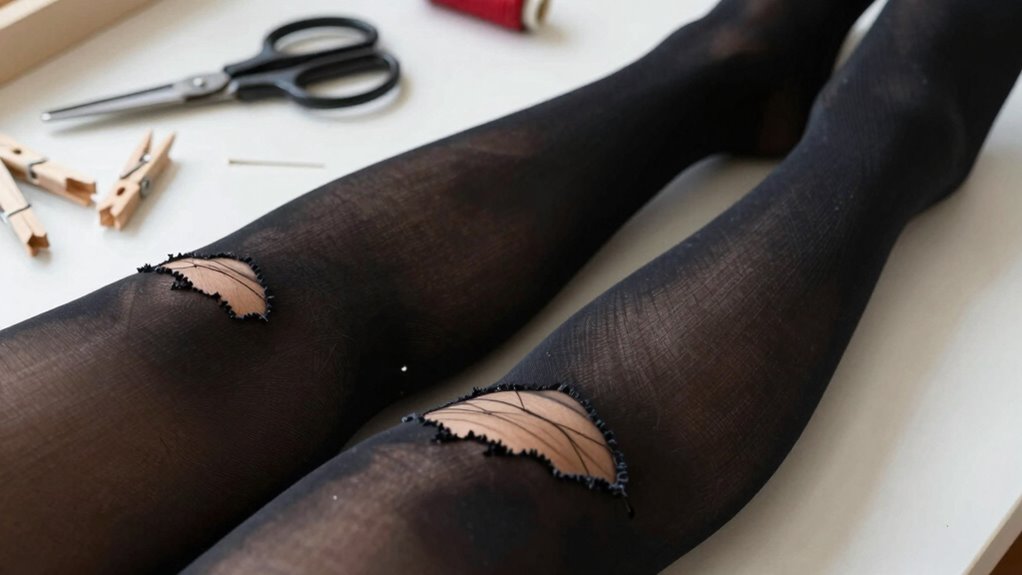
When your favorite pair of tights gets a run or tear, it can be tempting to toss them out. Instead of discarding them, consider exploring upcycling ideas that give your damaged tights a new purpose. With a little creativity, you can transform what seems like trash into useful household helpers, saving money and reducing waste. The key lies in creative repairs that turn those torn tights into versatile tools around your home.
First, think about using the remaining fabric as cleaning rags. Cut the tights into strips or squares, and they become perfect for dusting or wiping down surfaces. Their stretchy, absorbent material makes them ideal for polishing glass, cleaning mirrors, or even wiping down your kitchen counters without leaving streaks. Plus, because tights are made from nylon or similar fibers, they’re durable enough to withstand repeated use. When you’re done, just toss these rag replacements into the laundry for easy reuse.
Another clever upcycling idea involves turning tights into protective covers for fragile items. For example, if you’re storing delicate glassware or ornaments, cut the tights into small pieces and use them as padding. They’re soft enough to prevent scratches but snug enough to hold items securely in boxes. This method works especially well for storing jewelry, small accessories, or even your favorite plant pots. The stretchy fabric can be shaped to fit various objects, making it a flexible and eco-friendly packing solution.
You can also convert tights into practical stretch bands or ties for organizing household items. Cut the fabric into strips, and they become reusable rubber bands that can hold together rolled-up towels, loose cords, or even garden plants. Their elasticity provides a firm grip without damaging surfaces or leaves. These DIY ties are especially handy when you need quick, inexpensive solutions for bundling items.
Finally, damaged tights can serve as protective sleeves for tools or household objects. Slip a piece of fabric over a broomstick, mop handle, or even a paint roller to keep dirt and grime off your hands. They can also be used as liners for small trash bins or to cover sharp edges temporarily. These creative repairs help extend the life of your household tools while reducing waste, making them practical and eco-conscious solutions.
Frequently Asked Questions
Can Damaged Tights Be Used for Cleaning Purposes?
Yes, damaged tights can be used for cleaning purposes. You can repurpose them for household tasks like dusting, polishing, or wiping surfaces. Their stretchy fabric is perfect for fabric recycling and household repurposing, especially for cleaning delicate items or hard-to-reach spots. Simply cut them into suitable sizes, and you’ll have an eco-friendly, cost-effective cleaning tool that reduces waste and makes your chores easier.
What Tools Are Needed to Cut Tights Into Useful Shapes?
They say, “Measure twice, cut once,” and that’s wise when working with tights. You’ll need sharp tools like fabric scissors for gentle cuts or a sharp utility knife for precise shapes. Keep a steady hand and work on a cutting mat or surface. Both tools help you create neat, functional shapes from tights, turning your damaged hosiery into handy household items with ease and accuracy.
How Do I Prevent Tights From Tearing Further During Use?
To prevent tights from tearing further during use, focus on fabric reinforcement and proper tights maintenance. Handle them gently, avoiding overstretching, and consider applying a thin layer of clear nail polish or fabric glue along weak spots for added reinforcement. Always wash tights in cold water and avoid harsh detergents. Wearing gloves when handling rough surfaces can also help protect against accidental tears, keeping your tights in better shape longer.
Are There Safety Concerns When Repurposing Tights?
Yes, there are safety concerns when repurposing tights. You should perform a risk assessment to identify potential hazards, like loose fibers or sharp edges that could cause minor injuries or skin irritation. Always wash the tights thoroughly before reuse, and inspect for tears or fraying. Use scissors carefully to avoid accidental cuts, and keep repurposed items away from small children to prevent choking hazards. Taking these precautions guarantees safe, effective reuse.
Can I Dye or Decorate Tights Before Repurposing Them?
Yes, you can dye or decorate tights before repurposing them. Use dyeing techniques like fabric dye or spray paint to add color, making certain to follow the instructions carefully. For decorative embellishments, sew on beads, ribbons, or patches to personalize your tights. Just make sure the embellishments won’t interfere with their new use, and always let dyed or decorated tights dry completely before repurposing to avoid messes.
Conclusion
Now that you know how to transform your damaged tights into household helpers, you’re turning clutter into clever solutions. Think of your tights as a hidden treasure chest, waiting to be repurposed rather than tossed away. With a little creativity, you’re not just recycling—you’re giving new life to what once seemed useless. So go ahead, embrace this crafty trick and watch your household chores become a breeze, all while keeping waste at bay.
Halloween Picks
halloween
As an affiliate, we earn on qualifying purchases.