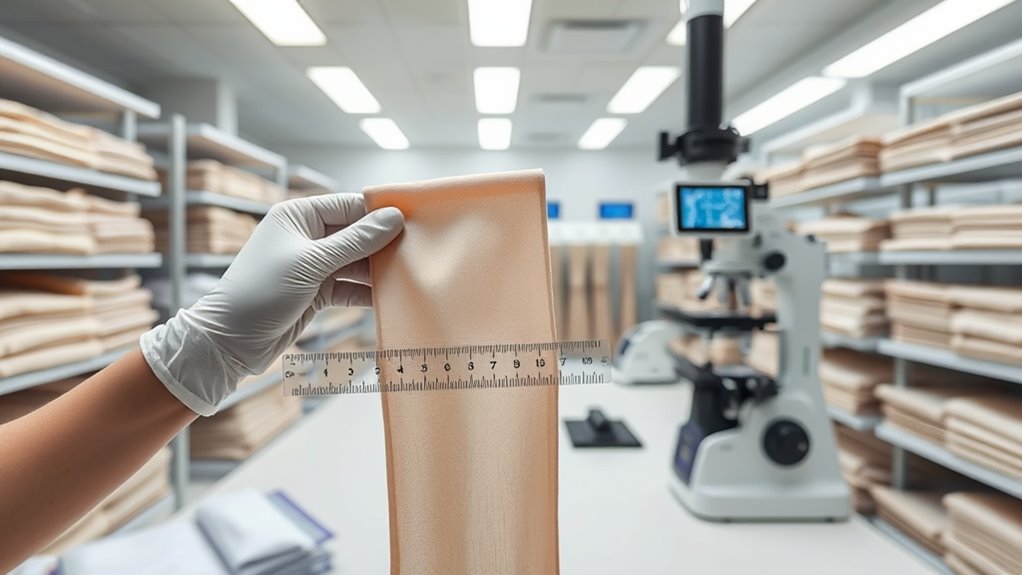
Inside a hosiery QA lab, you’ll see rigorous checks at every stage. You verify raw materials like fibers for strength and uniformity before production. During manufacturing, you conduct visual inspections and random sample tests for defects, stitching, and dye quality. You also perform tensile tests to confirm stretchability, and colorfastness tests to assure the hosiery withstands washing and light exposure. If you’re curious about how each step guarantees quality, keep exploring what happens behind the scenes.
Key Takeaways
- Raw materials undergo fiber composition, strength, and uniformity testing to ensure fabric quality.
- In-process inspections monitor stitching, dyeing, and defect detection during manufacturing.
- Tensile and elasticity tests verify hosiery can stretch comfortably without tearing.
- Colorfastness assessments expose samples to washing, rubbing, and light to check for fading or dye transfer.
- The overall QA process integrates multiple tests to identify defects early and guarantee product durability and appearance.

Ever wondered how hosiery manufacturers guarantee their products meet quality standards? It all begins in the hosiery QA lab, where meticulous testing ensures every pair of socks or tights lives up to expectations. As a consumer, you might not see this behind-the-scenes process, but it’s the backbone of reliable, durable hosiery. When you pick up a new pair, know that rigorous checks have already taken place to verify strength, elasticity, and overall quality.
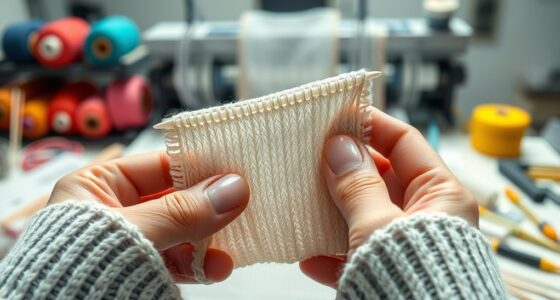
In the QA lab, the first step involves inspecting the raw materials. Manufacturers source high-quality yarns and fibers, but these are not just accepted at face value. Instead, lab technicians perform tests to confirm their composition, stretchability, and resilience. They might use specialized equipment to measure fiber strength or check for uniformity in thickness and texture. This initial scrutiny helps prevent subpar materials from entering production, ensuring that only the best fabrics are woven into your hosiery.
Once the raw materials pass inspection, the manufacturing process begins. But the QA process doesn’t stop there. During production, samples are regularly taken for testing. You could imagine technicians pulling random pairs from the production line, carefully examining them under magnification. They look for even stitching, consistent dyeing, and absence of defects like snags or runs. These visual inspections are essential because small flaws can compromise durability or comfort. If issues are detected, the manufacturing process is adjusted, or defective batches are rejected, maintaining strict quality standards.
Beyond visual checks, tensile testing is a key part of the QA process. Technicians use specialized machines to stretch the hosiery fibers or entire samples, measuring how much they can elongate before breaking. This test simulates real-world wear and ensures the hosiery can withstand stretching during use without tearing. Elasticity is crucial for a comfortable fit, so these measurements help manufacturers verify that their products will perform as expected over time.
Colorfastness tests also play an important role. They involve exposing samples to washing, rubbing, or light to see if the dye transfers, fades, or runs. This guarantees that your hosiery maintains its vibrant appearance after multiple washes. Additionally, durability tests, like repeated washing cycles, are conducted to simulate long-term wear and tear, confirming that the hosiery will hold up in everyday use.
Furthermore, understanding the off-road top speed of the machinery used in production can help optimize manufacturing efficiency and product consistency. All these tests come together to form a thorough quality assurance process. The goal is to catch any defects early, prevent substandard products from reaching consumers, and deliver hosiery that’s comfortable, durable, and visually appealing. So, the next time you slip into a pair of socks or tights, remember that behind the scenes, a dedicated team in the hosiery QA lab worked diligently to guarantee your comfort and satisfaction.

sofsy Italian Stylish Black Diamond Pantyhose – 60 Den Opaque Patterned Tights for Women under Dress | Soft High-Waist, Tear-Resistant – Large
Exclusive Designer Tights Collection: Made in Italy from premium nylon-elastane blends, these patterned tights for women—ranging from lace,...
As an affiliate, we earn on qualifying purchases.
Frequently Asked Questions
What Certifications Are Required for Hosiery QA Laboratories?
You need certifications like ISO 9001 for quality management, ASTM standards for testing procedures, and sometimes OEKO-TEX for safety and eco-friendliness. These certifications guarantee your hosiery QA lab maintains high standards, meets industry requirements, and provides reliable results. Acquiring and maintaining these credentials demonstrates your commitment to product quality and safety, giving clients confidence in your testing processes and helping you stay competitive in the market.
How Often Are Testing Protocols Updated in Hosiery Labs?
Like a trusty compass guiding a sailor, you should update testing protocols in hosiery labs at least once a year or whenever new standards emerge. Regular updates guarantee your procedures stay current with the latest industry requirements and technological advances. Don’t wait for a quality issue to act—stay proactive. Continuous review helps catch potential problems early, keeping your hosiery products safe, reliable, and meeting consumer expectations.
What Environmental Conditions Are Maintained During Hosiery Testing?
During hosiery testing, you maintain controlled environmental conditions like temperature around 20-25°C and humidity at 50-60%. You verify consistent testing by limiting airflow and avoiding direct sunlight, which could affect results. You also monitor ambient conditions regularly with calibrated sensors. This way, you guarantee accurate and reliable test outcomes, ensuring the hosiery meets quality standards before reaching customers.
How Is Customer Feedback Integrated Into Quality Assurance Processes?
You immerse yourself in customer feedback like a treasure hunter searching for gold, ensuring every comment shapes your quality standards. You analyze every detail, from minor discomforts to major defects, and integrate these insights into your testing protocols. By doing so, you continuously refine your hosiery, making it more comfortable, durable, and perfect for your customers. This relentless pursuit of improvement keeps your products ahead of the competition and truly customer-centric.
What Are Common Defects Identified During Hosiery Quality Checks?
You often find common defects like runs, snags, or holes during hosiery quality checks. You also check for uneven dyeing, loose threads, and sizing issues. Sometimes, you notice misweaves or inconsistent patterns. Identifying these defects helps you decide if the hosiery meets quality standards. By catching these problems early, you make certain that only high-quality products reach customers, maintaining your brand’s reputation for durability and comfort.

CALZITALY opaque colour tights, thick tights, microfiber 3D pantyhose, 80 den | S, M, L, XL, XXL, 3XL, 4XL | Italian hosiery (M, Black)
COLORFUL OPAQUE TIGHTS - 80 DEN
As an affiliate, we earn on qualifying purchases.
Conclusion
As you step back from the lab’s bustling heart, you see the delicate threads of quality woven into every pair. The quiet hum of testing machines and the gentle stretch of fabric become symbols of your commitment to excellence. With each careful inspection, you’re not just verifying hosiery—you’re ensuring comfort and confidence for countless wearers. In this intricate dance of precision, your dedication transforms mere fabric into trusted, lasting beauty.

sofsy Silky-Soft Slimming High Waisted Tights | Italian-Made 30 Denier Semi Sheer Pantyhose | Non-Roll Shaping Band Black - Medium
Instant Core-Scuplting Shaping: Our high-waisted shaping panel provides targeted compression that effectively flattens the tummy, smooths the hips,...
As an affiliate, we earn on qualifying purchases.

Hue Women's Super Opaque Tights with Control Top, Black, 2
UPGRADE YOUR WARDROBE: We’ve combined an opaque 90 denier with a lovely touch of color to create super-opaque...
As an affiliate, we earn on qualifying purchases.