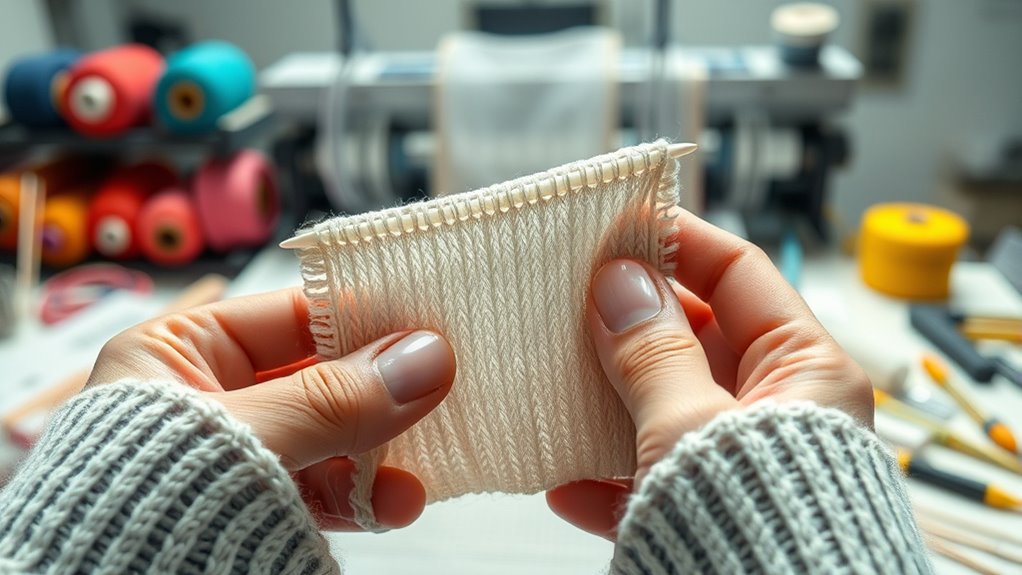

A knit engineer explains that denier measures fiber thickness, with lower denier making fibers finer and creating lightweight, delicate fabrics, while higher denier results in heavier, sturdier materials. Gauge refers to the number of stitches or needles per inch, affecting how tight or loose your knit appears—high gauge produces smooth, fine fabrics, and low gauge creates chunky textures. By understanding both, you can choose the right combination for your project’s look and feel; keep going to discover how to apply this in your work.

Get your wardrobe favorites delivered free with Prime
- Fast, free delivery on millions of items
- Prime Video, Amazon Music and more included
- Member-only deals all year
Key Takeaways
- Denier measures fiber thickness; lower denier means finer, lighter fibers, while higher denier indicates thicker, heavier fibers.
- Gauge refers to stitches per inch; higher gauge results in finer, smoother fabrics, lower gauge creates chunkier textures.
- Combining denier and gauge determines fabric weight, appearance, and durability for specific uses like lightweight or heavy textiles.
- Fine denier with high gauge produces delicate, lightweight fabrics, suitable for fine garments or summer wear.
- Thicker denier with low gauge yields sturdy, textured fabrics ideal for outerwear, blankets, or cozy accessories.
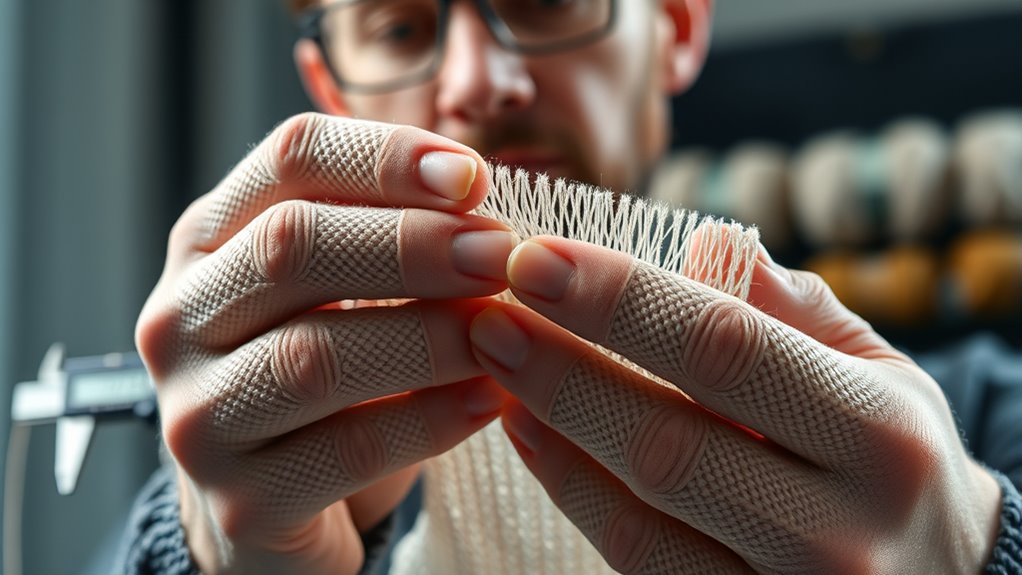
Understanding the terms denier and gauge is essential if you want to make informed decisions about knit fabrics. These two measurements directly influence the fabric’s appearance, feel, and durability. When you hear someone mention a fabric’s denier, they’re talking about the thickness or weight of the individual fibers used in the yarn. A lower denier, like 10 or 20, indicates finer fibers that produce a lightweight, delicate fabric. Conversely, higher denier numbers, such as 70 or 100, mean thicker fibers that result in a heavier, more substantial material. Knowing this helps you select fabrics suited for your project, whether you’re designing lightweight summer wear or sturdy winter apparel. Additionally, fiber composition can influence how the fabric performs and feels, so considering both denier and fiber type is key to choosing the right material.
Gauge, on the other hand, refers to the number of needles per inch in a knitting machine or the number of stitches per inch in hand knitting. It determines how tight or loose the fabric is knitted. A higher gauge, like 14 or 16, indicates more stitches per inch, producing a finer, smoother fabric with a delicate appearance. A lower gauge, such as 8 or 10, results in a chunkier, more textured fabric. When you choose a gauge, you’re influencing the fabric’s drape, stretch, and overall look. For example, a high-gauge knitted fabric will feel soft and lightweight, making it ideal for fine sweaters or hosiery, while a low-gauge fabric creates a thicker, more durable material suitable for outerwear or accessories.
Understanding how denier and gauge work together helps you envision the final product. For instance, a fabric with high denier fibers and a high gauge will be lightweight yet strong, perfect for high-performance sportswear. On the other hand, a low denier with a low gauge might produce a chunky, cozy blanket. If you’re shopping for fabric, pay attention to both measurements because they can dramatically change how the fabric looks and feels. When you know your desired outcome—whether it’s a lightweight dress or a rugged jacket—consider the denier and gauge to ensure you pick the right material.
Frequently Asked Questions
How Does Denier Affect Fabric Durability?
Higher denier generally means a thicker, heavier fiber, which makes your fabric more durable and resistant to wear and tear. If you’re looking for something sturdy, choosing a fabric with a higher denier will give you increased strength and longevity. However, keep in mind that very high denier can also make the fabric less flexible and heavier, so balance your needs accordingly to get the best performance and comfort.
Can Gauge Be Adjusted During Knitting?
Yes, you can adjust gauge during knitting, but it depends on your equipment and technique. If you’re using a machine, changing needle size or tension settings allows you to modify gauge. For hand knitting, selecting different needle sizes or adjusting tension as you go can alter your gauge. Keep in mind, consistent tension and careful adjustments help maintain uniformity, ensuring your fabric turns out as desired.
What Materials Are Commonly Used With Different Deniers?
You typically use nylon or polyester with high denier for durability and strength, perfect for heavy-duty items like outdoor gear or hosiery. For lightweight, sheer fabrics, you’d choose silk, fine wool, or lightweight cotton with low denier. Wool blends and acrylics also work well for softer, warmer fabrics. Your choice depends on the desired strength, texture, and use, ensuring the material matches the denier for ideal results.
How Do Denier and Gauge Influence Knitting Speed?
Imagine your knitting speed as a race car’s acceleration. Higher denier yarns are like heavier vehicles, requiring more effort and slowing you down. Conversely, a higher gauge means smaller stitches, which can speed up your work but demands more precision. So, denier and gauge directly influence your pace: thicker yarns and lower gauges slow you, while lighter yarns and higher gauges let you knit faster and more efficiently.
Are There Environmental Impacts Related to Different Denier Fibers?
Yes, different denier fibers have environmental impacts. Lower denier fibers often require less material, reducing resource use and waste. However, producing synthetic fibers with specific denier levels can involve energy-intensive processes that emit greenhouse gases. Natural fibers tend to be more eco-friendly but may require more water and land. By choosing fibers wisely, you can minimize your environmental footprint, balancing durability, sustainability, and production impacts.
Conclusion
Now that you understand denier and gauge, you can choose the right knit for your project. You can decide based on thickness, durability, or appearance. You can compare fibers, analyze patterns, and select materials confidently. You can craft with precision, create with purpose, and innovate with insight. With this knowledge, you can knit smarter, better, and more beautifully. So go ahead—apply what you’ve learned and bring your knitting ideas to life with clarity and confidence.
Fall Picks
fall essentials
As an affiliate, we earn on qualifying purchases.