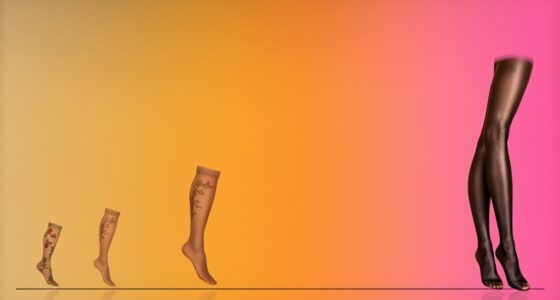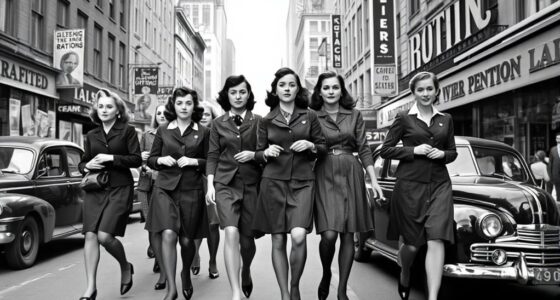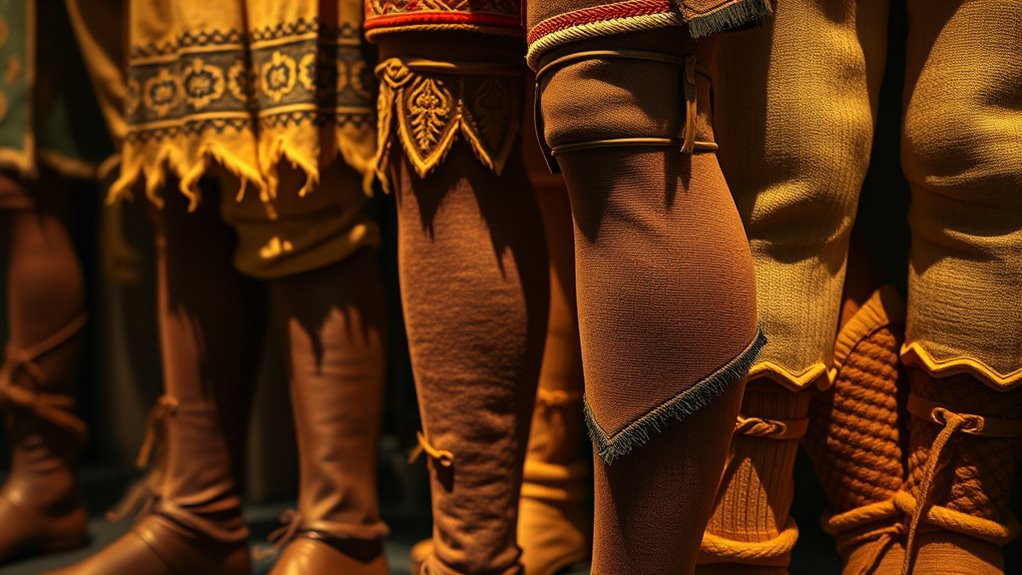

Before tights, people wore simple wraps, breeches, and hose made from wool, linen, or leather. These garments gradually evolved from basic tubes into more fitted and decorated styles, showing social status and fashion trends. Roman soldiers adopted shin guards and tailored legwear for practicality, while medieval society added colorful stockings and embroidered hose to display wealth and identity. To discover how these early styles shaped modern legwear, explore further examples of their cultural and social significance.
Key Takeaways
- Early legwear originated as simple wraps or fig leaves in ancient China and Central Europe for protection and horseback riding.
- Primitive coverings evolved into structured garments like hose, often made from wool, linen, or leather, secured with belts or laces.
- Roman soldiers adopted trousers and shin guards (greaves) for practicality, moving away from traditional tunics.
- Medieval legwear included hose and stockings, initially simple tubes of wool or linen, later decorated and fitted to indicate social status.
- Over time, legwear became more elaborate, patterned, and colorful, serving as social and political symbols before the development of modern tights.

Compression Pantyhose for Women, 20-30 mmHg Footless Medical Compression Stockings, Waist High Opaque Graduated Support Compression Hose Tights for Edema, Varicose Veins, Swelling
HELPS PREVENT & RELIEVE: Our support hose for women & men are ideal for preventing and relieving: fatigue,...
As an affiliate, we earn on qualifying purchases.
Early Origins of Trousers in Ancient China and Central Europe
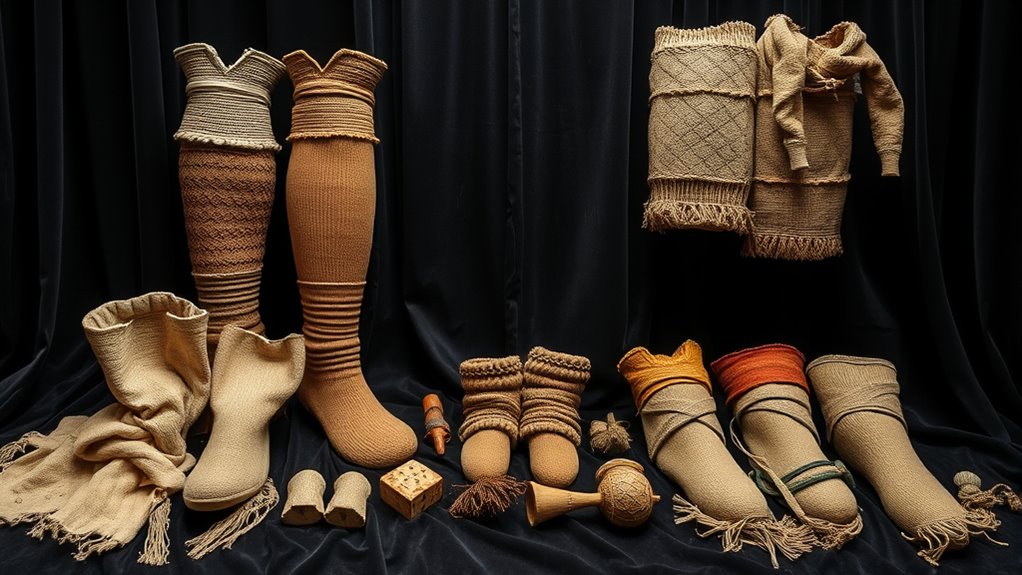
The earliest known trousers originated in ancient China between the 13th and 10th centuries BC, primarily designed for horseback riding and protection. You can see these garments as practical solutions for warriors and travelers, made from natural fibers like wool and linen. They were loose-fitting, allowing ease of movement on horseback, and offered protection against the elements. Across Central Europe, similar trousers appeared, crafted from leather and fur, held up by belts. These early garments progressed from simple wraps or fig leaves to more structured, functional clothing. You might imagine them as essential for survival and mobility, reflecting the needs of nomadic and warrior cultures. Their durability and adaptability laid the groundwork for the evolution of legwear into more sophisticated garments across different regions and eras. Additionally, these early trousers played a significant role in shaping clothing technology and garment design throughout history. The development of tailored, more fitted trousers marked a significant advancement in fashion and utility, influenced by the evolving understanding of spiritual energy and its impact on personal expression and cultural identity.
FITRELL 3 Pairs Compression Socks for Women and Men 20-30mmHg- Circulation and Muscle Support Socks for Travel, Running, Nurse, Knee High, Medical Black+White+Grey Small-Medium
【Size Tips】: Choose according to your CALF size first as for 20-30 mmHg. One size smaller if need...
As an affiliate, we earn on qualifying purchases.
The Transition From Simple Wraps to Structured Garments
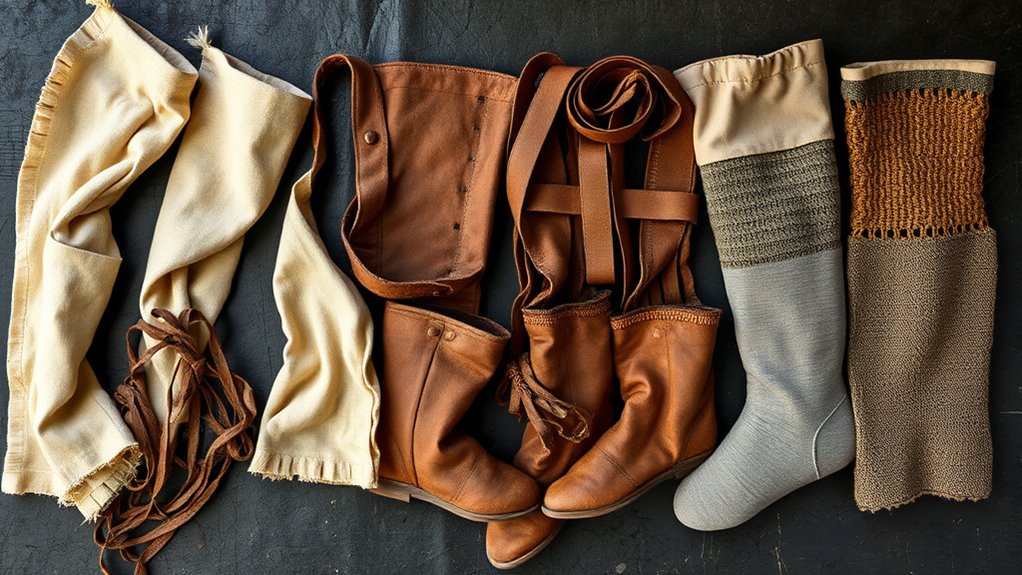
As societies evolved, simple wraps and primitive coverings gave way to more structured and tailored leg garments. You can imagine loose strips of cloth or animal hides transforming into fitted, durable pieces. These early garments became more sophisticated, offering better warmth, protection, and mobility. Picture:
- Carefully cut fabric sewn into snug, individual pieces that contour your legs.
- Tightly laced or fastened sections that stay secure during movement.
- Decorative elements like embroidery or contrasting trims reflecting status.
This shift allowed for improved functionality and social expression. As tailoring techniques advanced, legwear transitioned from basic wraps to structured garments like hose, breeches, and chausses. Materials such as wool, linen, and leather became common, making legwear more resilient, comfortable, and suited to various activities. The development of tailoring techniques and fabric technology further enhanced the fit and durability of medieval and ancient legwear.

IUGA Compression Leggings with Pockets for Women Tummy Control Leggings No Front Seam Workout High Waist Yoga Pants, Black
*PowerTight Collection: Power Through Every Move. Crafted from 69% nylon and 31% spandex, IUGA PowerTight sandwich waistband compression...
As an affiliate, we earn on qualifying purchases.
Roman Attitudes Toward Legwear and Its Adoption by Soldiers

You might notice that Romans initially favored tunics and robes over legwear, viewing trousers as less traditional. As military needs evolved, soldiers began adopting trousers for practicality and protection. This shift reflects changing cultural attitudes, leading to the widespread acceptance and use of trousers among Roman soldiers. Additionally, clothing materials improved over time, making trousers more comfortable and suitable for diverse climates. The development of textile technology played a crucial role in enhancing the durability and flexibility of legwear, further promoting their adoption. Furthermore, the availability of specialized textiles increased the variety and quality of legwear options available to ancient peoples. Advancements in fabric manufacturing also contributed to the increased use of innovative textiles, which improved the comfort and functionality of legwear, encouraging their acceptance in everyday life.
Roman Military Uniforms
Roman soldiers initially wore simple tunics, but over time, legwear became an essential part of their military uniform, reflecting both practicality and discipline. You can imagine them armored up, with:
- Metal greaves protecting shins during battle
- Leather straps securing their shin guards tightly
- Wool or linen socks worn underneath for comfort and warmth
These additions helped soldiers withstand harsh conditions and intense combat. Leg protection was seen as a sign of readiness, discipline, and professionalism. Greaves, often made of bronze or iron, covered the lower legs, while socks absorbed sweat and prevented chafing. The adoption of legwear was a strategic move, not just for protection but for reinforcing the Roman military’s organized appearance. This focus on uniformity and function underscored the disciplined image Roman legions projected. The durability of military gear also played a role in the longevity and maintenance of their leg protection. Additionally, the materials used in legwear were selected for their weather resistance, ensuring soldiers remained comfortable in diverse climates. The use of standardized equipment further emphasized the importance of uniform appearance and function within the Roman army. Furthermore, the development of legwear reflected the Romans’ emphasis on military discipline and their desire to present a unified front in battle.
Cultural Attitudes Shift
Cultural attitudes toward legwear in ancient Rome evolved from practical necessity to symbols of discipline and social order. Initially, Romans saw leg coverings as functional tools for protection and warmth, mainly for soldiers and laborers. Over time, as Roman society valued discipline and hierarchy, legwear became a way to display status and order. Soldiers adopted trousers and leggings not just for utility but to project strength and unity on the battlefield. Wealthy citizens used colorful, elaborately decorated stockings to showcase social standing. These garments also reflected discipline, with strict dress codes for military and civic life. Eventually, legwear became a symbol of discipline, authority, and social cohesion, illustrating how clothing evolved from basic necessity to an essential aspect of social identity in Roman culture.
Adoption of Trousers
As attitudes toward legwear shifted in Roman society, practicality and discipline motivated the adoption of trousers among soldiers. You can imagine soldiers in rugged, durable garments designed for mobility and protection. These trousers:
- Were made from sturdy wool or leather, ideal for rough terrain.
- Featured reinforced seams and belts to withstand wear.
- Allowed easier riding and running, essential in battle scenarios.
Romans initially favored tunics and robes, but the demands of warfare pushed them toward trousers for efficiency. Soldiers appreciated the freedom of movement and added warmth trousers provided in colder climates. Over time, trousers became a standard part of military attire, symbolizing strength and practicality. Their adoption marked a significant shift from traditional robes to functional legwear suited for rigorous discipline and combat. Additionally, the use of trousers aligned with evolving Roman attitudes toward uniformity and practicality, emphasizing functionality over tradition. This shift reflected a broader trend toward innovative military clothing designed to meet the needs of active combatants, highlighting how clothing evolved to serve both practical and symbolic purposes in Roman society. Moreover, the transition to trousers can be seen as a reflection of changing military strategies that prioritized mobility and efficiency on the battlefield.

Compression Leggings for Women 20-30mmHg - Footles High Waist Compression Tights for Circulation during Pregnancy, Sports, Workout, Running - Black, Medium - A717BL2
IMPROVED CIRCULATION - Experience enhanced blood flow with 20-30 mmHg compression, ideal for daily wear and recovery.
As an affiliate, we earn on qualifying purchases.
The Evolution of Medieval Hose, Stockings, and Their Materials

You’ll see how materials like wool, linen, and leather shaped the development of medieval hose and stockings, reflecting both function and fashion. Different styles and fits emerged over time, from tight chausses to loose-fitting breeches, indicating social status. As you explore, notice how fabric choices and design details signaled wealth, rank, and regional trends. Additionally, the use of traditional textiles influenced the durability and appearance of legwear throughout the medieval period.
Materials and Fabrics
Have you ever wondered what materials kept medieval people warm and protected their legs? They used a variety of fabrics, depending on status and climate. Wool was common for everyday wear—soft, insulating, and readily available. Linen was lightweight and breathable, often used for undergarments and lighter stockings. Wealthier individuals favored finer materials like silk or velvet for their hose and stockings, adding a touch of luxury. Additionally, the development of sound healing science and music therapy has historically influenced cultural practices, sometimes reflected in the intricate embroidery and decorative elements of noble hosiery. Imagine:
- Woolen hose, thick and warm, snugly wrapping legs during cold days
- Smooth linen stockings, cooling and comfortable under tunics
- Silk or velvet, richly colored and embroidered, reserved for nobility
Furthermore, the fabric production methods of the time impacted the durability and appearance of these leg coverings, reflecting both technological advances and social hierarchy. These fabrics shaped not only comfort but also social standing, blending practicality with display.
Styles and Fit
The evolution of legwear styles and fits in medieval times reflects both changing fashion trends and social distinctions. You’ll notice hose started as simple wool or linen tubes reaching just above the knee, secured with belts or girdles. Some featured stirrups or enclosed feet with leather soles, offering practicality. As fashion advanced, hose became more fitted, sometimes padded or decorated, especially among the wealthy. Breeches, loose and practical for riding, gradually transformed into snug, knee-length garments, signaling status. Stockings, often made of fine silk or wool, replaced rougher materials for the upper classes. Bright colors, stripes, and elaborate patterns highlighted social rank. Overall, legwear shifted from purely functional to expressive, reflecting both personal style and societal hierarchy.
Social Status Indicators
How did medieval legwear become a symbol of social status? You notice how the quality, color, and embellishments of hose and stockings reveal wealth and rank. Nobles wear fine, brightly colored wool or silk, often with intricate patterns. Wealthy individuals might adorn their stockings with embroidery, lace, or furs like sable. Think of how these details set the upper class apart:
- Rich fabrics such as silk or finely woven wool, signaling luxury
- Bright dyes and vivid stripes, indicating access to costly pigments
- Decorative elements like embroidery, lace, or exotic furs, showcasing wealth
As styles evolved, so did the message they conveyed. Your choice of legwear reflects status, from simple wool for peasants to ornate, custom-made garments for the aristocracy.
Distinction Between Hose and Breeches in Medieval Fashion
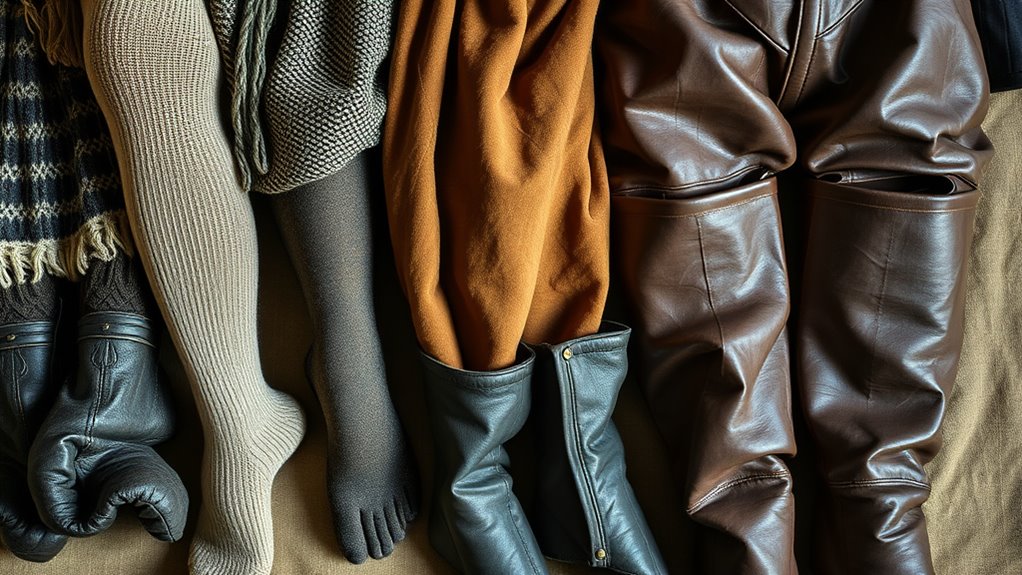
In medieval fashion, hose and breeches served distinct purposes and featured different designs, making it important to recognize their unique characteristics. Hose were long, close-fitting stockings made of wool or linen, often reaching the knee or just above, and secured to a belt or girdle. They sometimes had stirrups or enclosed feet with leather soles. Breeches, on the other hand, were looser-fitting garments, typically worn over hose, designed for riding or labor. By the late medieval period, breeches became shorter and more tailored, often ending at the knee and serving as a sign of social status. While hose emphasized practicality and warmth, breeches reflected fashion and social identity, evolving from simple workwear to symbols of wealth and sophistication.
The Role of Footwear and Its Integration With Legwear
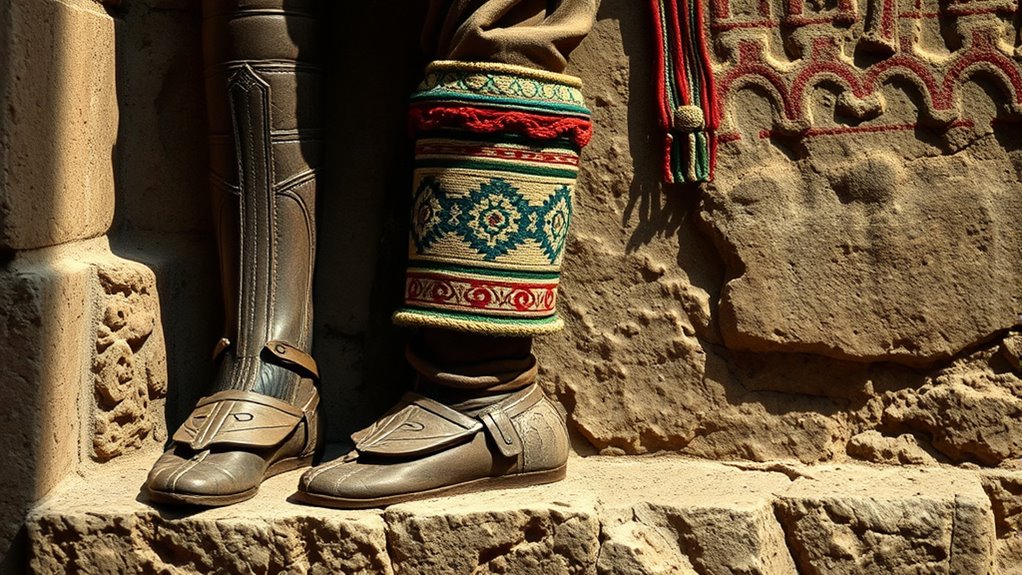
Footwear in medieval and ancient times was designed with a close relationship to legwear, often tailored to work seamlessly together. You’d see leather shoes molded to fit the foot’s shape, with laces or buckles ensuring a snug fit. Boots, often mid-calf or knee-high, offered protection and warmth, especially for riding or outdoor work. The integration of footwear with legwear was practical and deliberate, creating a cohesive look and function.
Imagine:
- Leather soles attached directly to hose or chausses, allowing for comfortable, barefoot-like wear
- Stiffened tips with wood or bone reinforcing durability and style
- Hose and footwear matching in color and fabric, forming a unified appearance
This integration emphasized practicality, status, and a sense of completeness in medieval attire.
Style Trends and Social Significance of Medieval Legwear
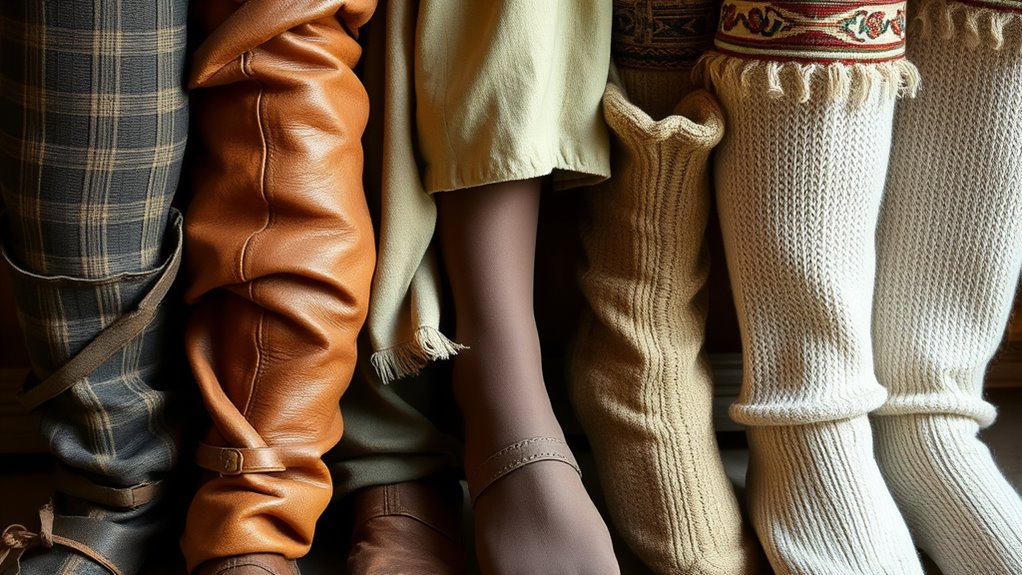
Did medieval legwear serve merely a functional purpose, or did it also act as a symbol of social status? It clearly did both. Brightly colored hose and elaborately decorated breeches signaled wealth and influence, while simple, undyed leggings indicated lower social standing. Fashion trends like long-toed shoes and striped stockings became status symbols, emphasizing elegance or wealth. Nobility and royalty often wore luxurious furs and intricate embroidery to showcase their power. In contrast, common folk wore practical, modest garments suited for labor. Legwear also reflected regional and cultural identities, with different styles and materials representing specific communities. Over time, legwear transitioned from mere warmth and protection to a way for individuals to display their social rank, wealth, and fashion sense.
Materials, Colors, and Decorations in Historical Legwear
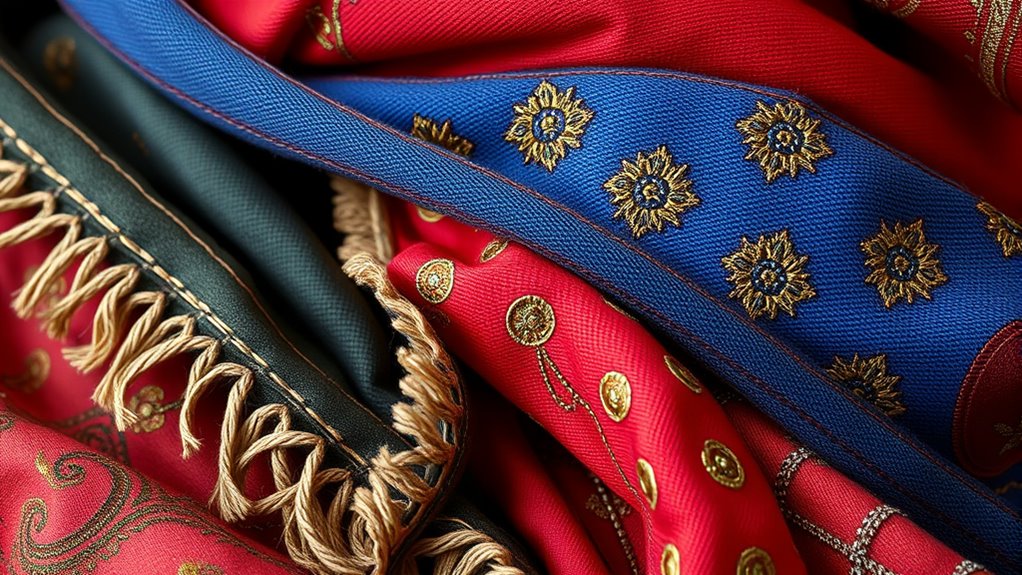
Materials, colors, and decorations in medieval legwear played a crucial role in expressing social status and regional identity. You’d see rich fabrics like silk and velvet adorned with embroidery or gold thread, reserved for the wealthy. On the other hand, common folk wore simpler wool or linen, often undyed or in earthy tones. Decorations ranged from elaborate patterns to embroidered motifs that signaled rank. Imagine:
- Vibrant dyes like kermes and indigo creating deep reds and blues.
- Embroidered floral or heraldic designs embellishing the fabric.
- Precious furs, such as sable or lynx, trimming the edges for nobility.
These choices weren’t just aesthetic—they marked social standing, regional origins, and personal taste, turning legwear into a statement of identity.
The Shift From Practicality to Personal and Social Identity
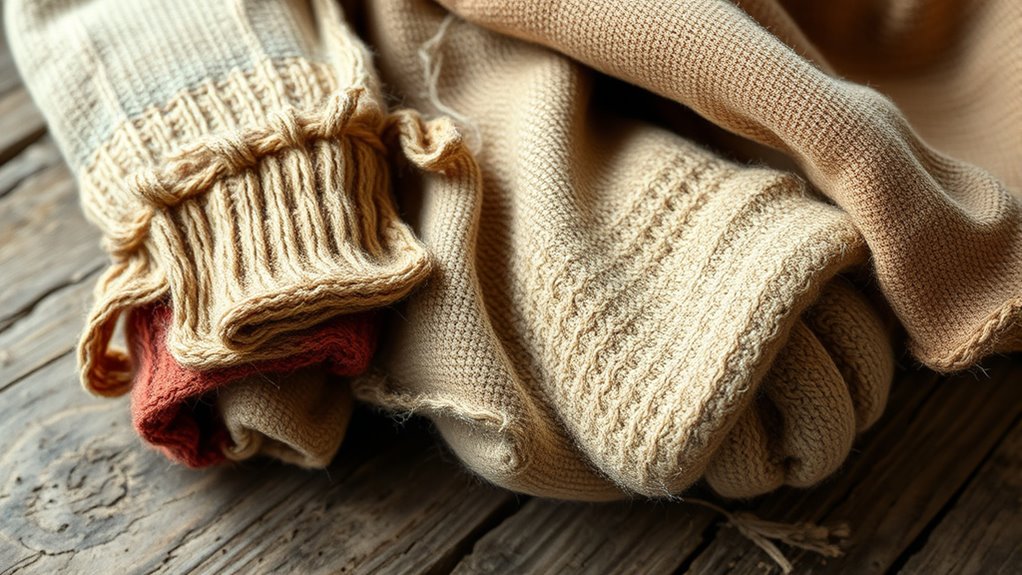
As medieval societies evolved, legwear shifted from simple functional garments into powerful symbols of personal and social identity. You’d notice that colors, patterns, and styles became ways to display wealth, status, or allegiance. Nobles wore elaborately decorated hose, often in bright hues and fine fabrics, to stand out. Sumptuary laws regulated who could wear certain colors or materials, reinforcing social hierarchies. Tight-fitting chausses and fashionable points indicated wealth and fashion consciousness. Styles like long toes or patterned leggings conveyed sophistication or belonging to a particular group. Over time, legwear moved beyond practicality, allowing you to express your identity, status, or even political loyalty through your choice of garments, making legwear a crucial part of medieval self-presentation.
Frequently Asked Questions
How Did Early Legwear Influence Modern Trousers and Tights?
Your understanding of early legwear shows how it laid the foundation for modern trousers and tights. The shift from loose-fitting garments like hose and breeches to snug, tailored trousers reflects evolving fashion and practicality. The use of natural fibers, added embellishments, and emphasis on fit influenced today’s designs. Tights owe their origins to these earlier, fitted leg coverings, blending comfort, style, and social status much like their medieval predecessors.
Were There Regional Differences in Medieval Legwear Styles?
Yes, regional differences shaped medieval legwear styles. In Northern Europe, people favored woolen hose and sturdy breeches for warmth and practicality, while in Italy and France, more elaborate, colorful, and embroidered hose indicated social status. In Spain, leather and fur were popular, especially among the nobility. These variations reflected local climates, available materials, and cultural influences, making legwear a clear marker of regional identity and social distinction during medieval times.
Did Legwear Have Any Symbolic or Cultural Significance?
You’ll find that legwear often held symbolic or cultural meaning, representing social status, wealth, or even regional identity. Bright colors, elaborate designs, and luxurious materials signaled wealth and nobility, while simpler styles indicated practicality or lower status. In some cultures, specific patterns or furs conveyed tribal affiliation or rank. So, when you wear certain legwear, you’re not just dressing practically—you’re also expressing identity, heritage, and social standing.
How Did Technological Advances Change Legwear Production?
You’ll be amazed to learn that technological advances revolutionized legwear production, making garments more durable and accessible. For example, the introduction of knitting in the 16th century allowed for seamless, better-fitting stockings, increasing comfort and style. You now benefit from mass production techniques, which lowered costs and expanded variety. Innovations like sewing machines and new dyeing methods continue to shape legwear, turning it into a fashion statement rather than just a practical necessity.
What Were the Practical Differences Between Hose and Breeches?
Hose are long, close-fitting stockings made of wool or linen, designed to cover the legs entirely and often secured with laces or straps. Breeches are loose, knee-length garments worn over hose, providing more comfort and mobility, especially for riding or labor. The practical difference lies in hose offering snug warmth and protection, while breeches prioritize ease of movement and practicality, becoming more refined as fashion and social status evolved.
Conclusion
So, next time you slip into your tights or jeans, remember—you’re wearing a tiny piece of history that’s survived armies, emperors, and centuries of fashion chaos. From ancient wraps to medieval masterpieces, legwear has shaped social status, battles, and style. You’re walking in the footsteps of warriors, kings, and rebels—wearing more than just fabric; you’re carrying a legacy that’s lasted thousands of years. Who knew your legs had such a legendary past?