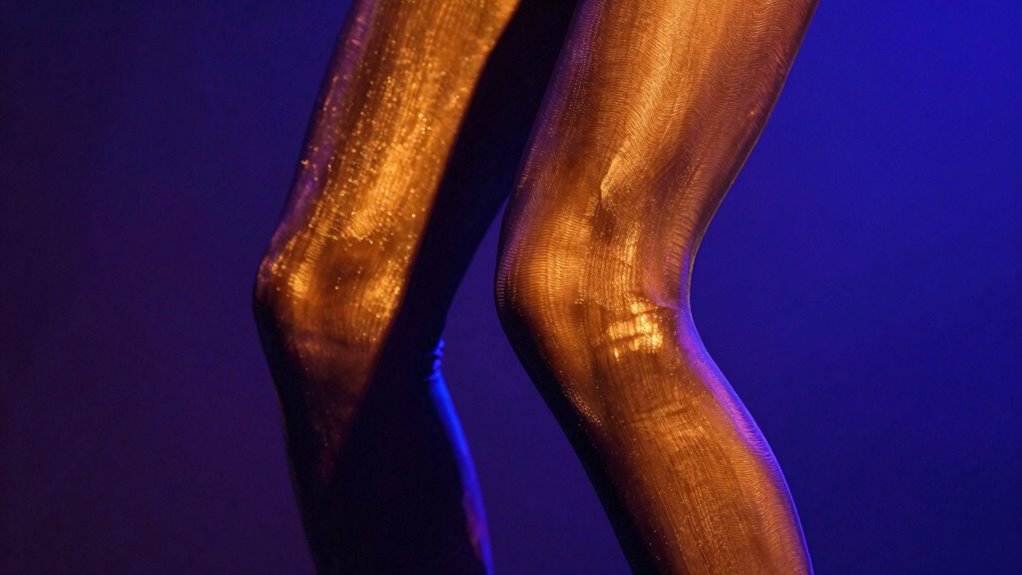

Stage lighting can considerably change how your tights look by highlighting their reflective qualities and altering their colors. Warm lighting makes shiny tights appear golden or glowing, while cooler light emphasizes a sleek, metallic look. The angle of the light can also enhance or diminish their shine and texture. Understanding how lighting interacts with fabric properties helps you optimize your costume. Keep exploring to discover how different lighting setups can create stunning visual effects with your tights.

Get your wardrobe favorites delivered free with Prime
- Fast, free delivery on millions of items
- Prime Video, Amazon Music and more included
- Member-only deals all year
Key Takeaways
- Lighting temperature (warm or cool) influences whether shiny tights appear golden or metallic.
- The angle of light alters how reflective or matte tights look on stage.
- Brightness and intensity of stage lighting enhance or diminish fabric sheen and texture.
- Directional lighting creates shadows and highlights that emphasize fabric properties.
- Fabric texture interacts with lighting to produce visual effects, affecting overall costume appearance.
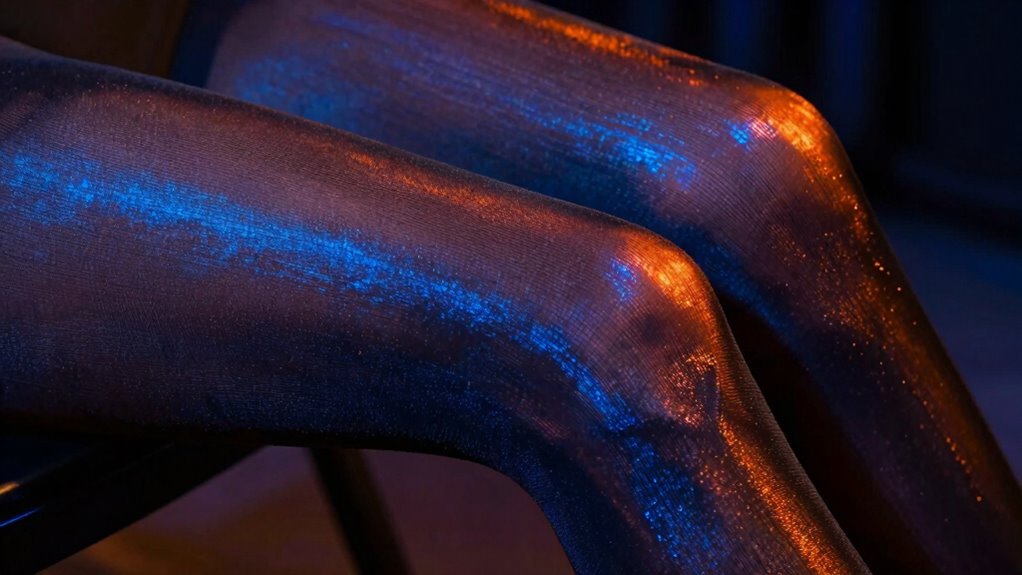
Fabric reflection plays a vital role in how tights appear under different lighting conditions. When you wear tights made from shiny or satin-like materials, their reflective qualities become more prominent under certain lights. Under warm lighting, these fabrics may take on a golden or glowing quality, emphasizing their sheen. Conversely, under cooler lighting, the same tights might look more metallic or sleek, thanks to their reflective surface. Matte tights, on the other hand, absorb light rather than reflect it, so they tend to look more consistent regardless of the lighting’s color temperature. Still, even matte fabrics aren’t immune to lighting effects; subtle shadows and highlights can change depending on the direction and intensity of the stage lights. Recognizing how lighting conditions influence fabric appearance can help performers make more strategic costume choices. Additionally, understanding fabric properties can assist performers in selecting tights that enhance their overall stage presence. Knowing about lighting angles can also be crucial, as the angle of illumination can dramatically alter how fabric reflects light on stage. Being aware of these lighting effects allows performers to optimize their costume choices for various stage environments. Furthermore, considering how fabric texture interacts with stage lighting can help create dynamic visual effects that enhance the performance.
As an affiliate, we earn on qualifying purchases.
Frequently Asked Questions
How Does Lighting Color Affect the Perceived Texture of Tights?
Lighting color markedly influences how you perceive the texture of tights. Warmer color temperatures, like amber or red, tend to soften the appearance, making the tights look smoother and more matte. Cooler tones, such as blue or white, enhance the texture perception, highlighting details and giving a more realistic or shiny look. By adjusting lighting, you can manipulate the perceived texture, emphasizing or diminishing the tights’ surface qualities.
Do Different Stage Lights Impact the Durability of Tights?
Different stage lights don’t directly impact the durability of your tights, but they can influence how your tights look and feel. Bright, intense lighting may cause fabric stretch over time if you’re constantly adjusting positions, and it can also affect color vibrancy, making colors appear more vivid or faded. While lighting doesn’t weaken the fabric itself, it’s a good idea to choose high-quality tights to maintain their appearance and elasticity during performances.
Can Stage Lighting Cause Tights to Fade or Deteriorate Faster?
Stage lighting can cause tights to fade or deteriorate faster, especially with prolonged exposure. The tightening effects of intense lights can strain the fabric, leading to quicker wear, while the heat and UV rays may accelerate color fading. You might notice your tights losing their vibrancy or becoming more fragile over time. To protect your tights, avoid direct, intense lighting and opt for softer, less damaging light sources whenever possible.
How Do Tights Look Under LED Versus Traditional Stage Lighting?
You might notice tights under LED lighting appear more vivid and vibrant, thanks to the brighter, more consistent spotlight shimmer. In contrast, traditional stage lighting often creates a softer, warmer hue, enhancing backlit contrast but possibly dulling colors. LED lights tend to highlight details and color intensity, while traditional lighting offers a more natural, subtle look. The difference influences how your tights are perceived on stage, affecting overall visual impact.
Are Certain Tights Materials Better Suited for Stage Lighting Effects?
Certain tights materials are better suited for stage lighting effects because of their stage compatibility. For instance, nylon and spandex blends offer excellent stretch and reflect light well, enhancing visibility under various lighting conditions. Matte finishes reduce glare, while shiny or metallic tights catch and reflect light dramatically, perfect for stage effects. Selecting tights made from breathable, durable materials guarantees comfort and longevity during performances, making them ideal for dynamic stage lighting setups.
As an affiliate, we earn on qualifying purchases.
Conclusion
As you step into the spotlight, remember that stage lighting is like a painter’s brush, transforming your tights into a canvas of shimmering hues and shadows. It’s not just about visibility but about creating an illusion that whispers your story. When you understand how lighting plays with color and texture, you’ll feel like a chameleon, effortlessly changing your look to match the mood. Embrace this magic, and let your tights tell their own enchanting tale under the stage lights.
As an affiliate, we earn on qualifying purchases.
As an affiliate, we earn on qualifying purchases.
Fall Picks
fall essentials
As an affiliate, we earn on qualifying purchases.