

In many religious dress codes, wearing tights or stockings is a key way to show modesty and respect. You’re encouraged to choose opaque, full-coverage hosiery, often in neutral colors, to make certain your legs are properly covered according to community standards. Styles like seamless tights or seamed stockings can add elegance while adhering to modest guidelines. Understanding these nuances helps you reflect your faith and cultural values—if you keep exploring, you’ll discover more about how hosiery fits into your faith-based attire.
Key Takeaways
- Modesty in religious dress emphasizes full leg coverage, often achieved with opaque tights or stockings, reflecting humility and communal standards.
- Sheer or transparent hosiery is generally discouraged in faith-based dress codes, favoring opaque styles to ensure modesty.
- Hosiery styles and colors are chosen to reinforce cultural identity, respect, and adherence to traditional modest dress guidelines.
- Wearing modest hosiery demonstrates reverence, modesty, and alignment with faith principles during religious gatherings and daily practice.
- Proper hosiery selections symbolize femininity, elegance, and respectability while upholding community values of modesty and dignity.
The Halachic Perspective on Leg Coverings and Hosiery

The Halachic perspective on leg coverings and hosiery emphasizes both textual sources and community practices. You are expected to base your actions on Torah and Talmudic texts, not just customs. Covering the legs is considered necessary where it aligns with communal standards, but halachic authority often stresses that practice should reflect textual grounding. Sheer pantyhose generally don’t meet modesty requirements because they reveal skin. Opaque tights are more acceptable since they hide the legs, though some communities require visible stockings, like seamed styles, to clearly demonstrate coverage. Additionally, halacha encourages adherence to practices rooted in textual sources, guiding you to ensure your leg covering aligns with both religious law and your community’s expectations, emphasizing modesty and proper intent. The choice of appropriate hosiery can influence whether a dress code is maintained in accordance with halachic standards, especially considering the community standards for modest dress. Modesty guidelines are also shaped by interpretations of textual sources and evolving communal customs to maintain proper decorum. Recognizing the importance of attention in practice, it is essential to consistently evaluate and align your attire with these principles to uphold modesty standards effectively.
Cultural and Religious Standards in Christian Communities
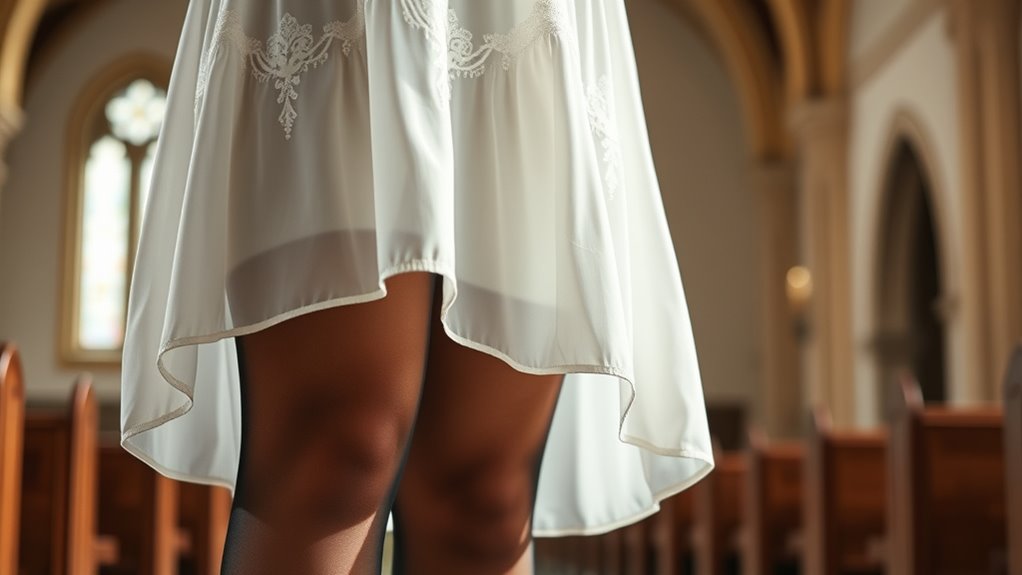
Cultural and religious standards in Christian communities shape expectations around modest dress, especially concerning hosiery and leg coverage. Many churches view showing bare knees as inappropriate, regardless of tights or leggings. Dress codes vary widely: some emphasize full coverage, while others are more lenient. Catholic schools often ban tight or revealing hosiery like fishnets, promoting modesty through opaque tights. Overall attire should avoid midriff, cleavage, or short skirts, influencing hosiery choices for girls. Additionally, incorporating mindfulness techniques can help individuals maintain respectful dress practices aligned with their community standards. Recognizing the importance of dress code adherence can support individuals in aligning their wardrobe choices with their faith and cultural expectations, especially when considering appropriate hosiery options that meet these standards.
The Symbolism of Hosiery in Modesty and Femininity

Hosiery often signals femininity and elegance, serving as a visual marker of a woman’s modesty and respectability. It reflects cultural ideals of proper attire and reinforces traditional notions of beauty and decorum. By choosing certain styles and colors, you express your identity and uphold the values associated with faith and tradition. Additionally, the symbolism of hosiery can vary across different cultures, often embodying notions of chastity and social status. In some traditions, the types of yoga practices emphasize humility and spiritual discipline, paralleling the modesty conveyed through hosiery. The nutritional value of juices related to traditional diets can also influence cultural standards of modest dress, blending health-conscious choices with spiritual modesty. Furthermore, understanding the cultural significance of dress helps in appreciating how modest attire, including hosiery, plays a role in societal identity. Recognizing the benefits of modest dress can deepen appreciation for how clothing choices reflect broader cultural and spiritual values.
Signaling Femininity and Elegance
Signaling femininity and elegance through hosiery has long served as a subtle yet powerful expression of modesty and refined taste. When you choose sheer or opaque tights, you communicate a polished appearance that balances beauty with decorum. Classic styles, like seamed stockings or neutral colors, evoke timeless sophistication, reinforcing your femininity without drawing undue attention. Hosiery enhances the overall harmony of your outfit, elevating simple dresses or skirts into symbols of grace. It subtly highlights your femininity while respecting modesty standards. Wearing the right hosiery signals your awareness of tradition and taste, conveying confidence and dignity. In this way, hosiery becomes more than just a clothing choice; it’s an elegant gesture that aligns your appearance with your values and identity. Additionally, the choice of hosiery can be influenced by electric bike horsepower, reflecting an awareness of performance and quality that complements a refined and modest wardrobe. Understanding artistic expression can also inspire more thoughtful styling choices that honor personal and cultural values. Incorporating quality materials can further elevate the comfort and elegance of your hosiery, ensuring it complements your overall look. Moreover, recognizing city dynamics can help you select hosiery styles that suit different settings and occasions, ensuring your modesty and elegance are maintained everywhere you go. Embracing personality traits such as confidence and grace can further elevate your overall presentation, reinforcing your personal identity through fashion.
Symbols of Modesty and Respect
Wearing hosiery often goes beyond aesthetics, serving as a powerful symbol of modesty and respect in many faith communities. It signals your understanding of humility and your commitment to uphold communal values. Opaque tights and seamed stockings, for example, are not just fashion choices—they represent a conscious effort to cover and preserve modesty. In some traditions, hosiery emphasizes the importance of maintaining a respectful appearance, especially during religious gatherings or rites. The act of choosing modest hosiery shows your reverence for faith and the shared standards of behavior. It’s a visual affirmation that you honor the principles of humility and propriety, reinforcing your role within your faith community and demonstrating your respect for its values. Additionally, color temperature adjustments can help create an appropriate and respectful visual presentation during religious events.
Cultural Identity and Tradition
In many cultures and religious communities, hosiery has long served as a powerful symbol of modesty and femininity, embodying deeper values of humility and respect. You may find that the styles, colors, and coverage of tights and stockings reflect longstanding traditions. Traditional colors like black, beige, or navy often signify humility and modesty, aligning with cultural values. Specific styles, such as seamed stockings, serve as visual markers of adherence to community standards. Hosiery choices often symbolize belonging, reinforcing cultural identity within faith communities. Fashion evolutions, like opaque tights replacing traditional stockings, demonstrate adaptation while maintaining cultural symbolism. Additionally, the types of hosiery available today showcase a range of options that allow individuals to express their faith and cultural identity while embracing modern fashion trends. Recognizing the cultural significance of attire in these communities highlights how clothing choices serve as expressions of faith and personal identity. Furthermore, understanding the role of clothing in religious practices helps to appreciate the deeper meanings behind modest dress codes.
Variations in Dress Codes: From Traditional to Modern Attire
You’ll notice that dress codes range from strict traditional standards to more relaxed modern styles, reflecting different community values. Some groups prioritize classic modesty rules, while others adapt fashion trends to stay current. This variability influences how tights and stockings are worn and accepted across diverse settings.
Traditional Attire Expectations
Traditional attire expectations have historically emphasized modesty, with specific guidelines varying across communities and eras. You’re expected to adhere to certain standards that reflect faith and humility. These include:
- Covering legs fully, often with opaque tights or stockings, especially in formal or religious settings.
- Choosing hosiery colors that are subdued, such as black, brown, or beige, avoiding flashy or bright shades.
- Using stockings with seams or patterns that clearly show leg coverage to meet community standards.
- Ensuring hosiery fits snugly without being overly tight or revealing, maintaining an appearance of modesty and respect.
These expectations aim to uphold a sense of decorum rooted in tradition, emphasizing the importance of leg covering as part of a modest, faith-aligned wardrobe.
Modern Fashion Influences
Modern fashion trends continue to reshape how dress codes are interpreted, blending longstanding modesty standards with contemporary styles. You might notice that tights and stockings now come in a wider array of fabrics, colors, and patterns, making it challenging to maintain traditional modesty guidelines. Fashion influences from mainstream culture often emphasize tight fits, sheer fabrics, and bold designs, which can clash with religious expectations. Yet, many communities adapt by choosing opaque tights or seamless stockings that align with modern aesthetics while respecting modesty. The popularity of leggings, bodysuits, and sheer hosiery has sparked debates about whether these styles uphold or undermine traditional standards. As you navigate this landscape, balancing faith-based modesty with current fashion trends requires thoughtful choices and community awareness.
Community Standards Variability
Community standards for dress codes regarding hosiery vary widely, reflecting a spectrum from strict traditional interpretations to more relaxed modern approaches. Some communities enforce rigid rules, such as requiring opaque stockings or specific styles like seamed stockings. Others prioritize overall modesty, focusing on skirt length rather than hosiery details.
- Certain religious groups strictly prohibit sheer or revealing hosiery, emphasizing opaque, plain styles.
- Modern communities may accept tights with patterns or colors, as long as coverage is sufficient.
- Some schools or congregations enforce uniform standards, banning fashionable or tight-fitting hosiery.
- Cultural influences often shape expectations, with some communities emphasizing tradition and others encouraging contemporary fashion.
This variability illustrates how dress codes adapt to cultural, religious, and social norms, balancing modesty with evolving fashion trends.
The Role of Hosiery Style and Color in Religious Modesty

Hosiery style and color play a crucial role in maintaining modesty according to religious standards, as they signal respect for faith and decorum. You’re encouraged to choose opaque, neutral shades like black, navy, or beige that blend seamlessly with your clothing, avoiding flashy or sheer options that reveal skin. The style of hosiery also matters: plain or seamed stockings emphasize coverage, while fishnets or tight patterns draw unwanted attention. To help you visualize, consider this table:
| Style | Color |
|---|---|
| Opaque tights | Black, navy, beige |
| Sheer pantyhose | Transparent, skin-tone |
| Seamed stockings | Classic black or neutral |
| Patterned hosiery | Avoided in modest settings |
Sticking to simple, understated styles and colors supports your effort to uphold modesty and respect within your faith community.
Contemporary Debates on Hosiery Necessity and Modesty Markers

Debates about whether hosiery is necessary for maintaining modesty often center on the idea that clothing length and coverage might suffice without additional leg coverings. You’ll find communities where long skirts alone are considered enough, while others see hosiery as a crucial marker. To understand the complexity, consider these points:
- Some believe tights can replace stockings, especially as fashion evolves.
- Others argue hosiery ensures consistent coverage, regardless of skirt length.
- Communities differ on transparency; sheer tights may be acceptable or seen as revealing.
- Fabric choice and fit influence whether hosiery aligns with modesty standards or not.
These debates reflect ongoing tensions between tradition, fashion, and evolving perceptions of modesty in contemporary society.
Health, Social Implications, and Perceptions of Hosiery Use

Wearing hosiery often carries more than just aesthetic or modesty implications; it can influence health perceptions and social interactions. Many believe that tights and stockings improve circulation and protect against chafing, though medical evidence is limited. Socially, hosiery signals respectability and adherence to community norms, reinforcing your connection to faith and tradition. In religious settings, wearing stockings or tights shows your commitment to modesty and can foster a sense of belonging. Conversely, some view hosiery as unnecessary if other modesty standards are met, sparking debates about health benefits versus fashion trends. Overall, hosiery’s role extends beyond appearance, shaping perceptions of propriety, health, and social cohesion within faith communities.
Practical Considerations: Choosing Hosiery to Align With Faith Standards

When selecting hosiery to meet faith-based modesty standards, it’s essential to take into account both the specific requirements of your community and the practical aspects of the garments themselves. First, consider opacity; opt for opaque tights or stockings that fully conceal the legs, especially in communities emphasizing coverage. Second, pay attention to color; choose neutral, subdued shades like beige, brown, or black, avoiding flashy or bright tones. Third, evaluate style; select plain or seamed stockings to clearly signal coverage, steering clear of fishnets or patterns. Fourth, ensure fit; tights should be snug but comfortable, avoiding excessive tightness that draws attention. Balancing these factors helps you meet modesty standards effectively while maintaining comfort and appropriateness.
Frequently Asked Questions
Are There Specific Halachic Sources That Mandate or Prohibit Tights for Women?
You should know that halachic sources don’t explicitly mandate or prohibit tights for women. Instead, they focus on covering the legs appropriately, often emphasizing custom and community standards. Sheer tights generally don’t fulfill modesty requirements because they reveal skin, while opaque tights are more acceptable if they hide the leg. Some communities require seamed stockings to clearly show leg coverage, but overall, the decision depends on local practice and interpretation.
How Do Christian Dress Codes Define Acceptable Hosiery Styles for Religious Events?
Acceptable hosiery styles in Christian dress codes are like a well-choreographed dance—each movement precise and respectful. You should wear modest, non-tight stockings or tights that fully cover your legs, avoiding sheer or fishnet styles. Solid, opaque colors like black, navy, or brown are preferred, and patterns or embellishments are generally discouraged. The goal is to maintain humility and decorum, ensuring your attire aligns with the event’s reverent atmosphere.
What Are the Cultural Reasons Behind the Preference for Opaque Versus Sheer Stockings?
You prefer opaque stockings over sheer ones because culture often associates opacity with modesty, elegance, and respectability. Opaque tights hide the skin completely, aligning with traditional values of humility and decorum, especially in religious settings. Sheer stockings reveal more skin and can be seen as less modest or inappropriate. This preference reinforces social norms that emphasize covering the legs fully to uphold cultural ideals of propriety and faith-based modesty.
How Have Modern Fashion Trends Influenced Religious Dress Code Standards for Hosiery?
You know what they say—fashion is fleeting, but tradition endures. Modern trends influence religious dress codes by blending contemporary styles with longstanding modesty standards. You might see more opaque tights replacing sheer ones for better coverage, or subtle patterns that respect tradition while embracing current fashion. People adapt styles to feel confident and appropriate without compromising faith-based modesty, showing that even in change, core values remain strong.
Are There Health Benefits Linked to Wearing Modest Hosiery in Faith Communities?
Wearing modest hosiery in faith communities is believed by some to offer health benefits, like improved circulation and skin protection, though scientific evidence isn’t definitive. You might find that hosiery provides comfort, warmth, and prevents chafing, especially during colder months or long gatherings. Additionally, adhering to traditional dress codes can boost your sense of respectability and confidence, reinforcing your faith commitment and social standing within your community.
Conclusion
Ultimately, embracing modesty means balancing beauty, belief, and belief in your wardrobe. By thoughtfully choosing tights and stockings, you affirm faith, foster femininity, and reflect cultural customs. Remember, your dress decisions demonstrate devotion and personal dignity. So, step confidently into your style, showcasing your standards with sincerity and style. Stay steadfast in your faith, and let your hosiery highlight your humility, harmony, and heartfelt devotion.