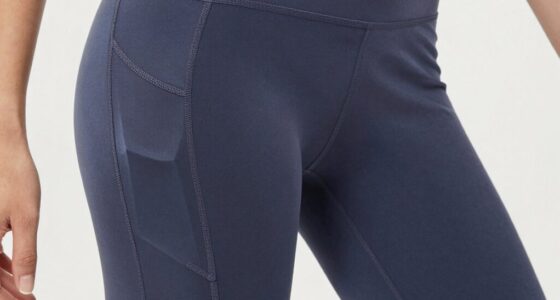
For skiing, choose snug, moisture-wicking tights made from synthetic fibers like polyester or nylon to keep you dry and warm. Avoid cotton, as it traps moisture and causes dampness. Layer lightweight or mid-weight tights for flexibility or insulate with thermal or fleece-lined options for colder days. make certain your base layer fits well under your shell, avoiding tightness that restricts movement. Keep these tips in mind, and you’ll discover more ways to stay comfortable on the slopes.
Key Takeaways
- Choose moisture-wicking synthetic tights like polyester or nylon for effective sweat management.
- Ensure tights fit snugly without restricting movement to maximize warmth and comfort.
- Layer lightweight or mid-weight tights under shells for balanced insulation and mobility.
- Avoid cotton tights, as they retain moisture and reduce warmth during skiing.
- Select tights with spandex or elastane for flexibility and a close fit under outer shells.
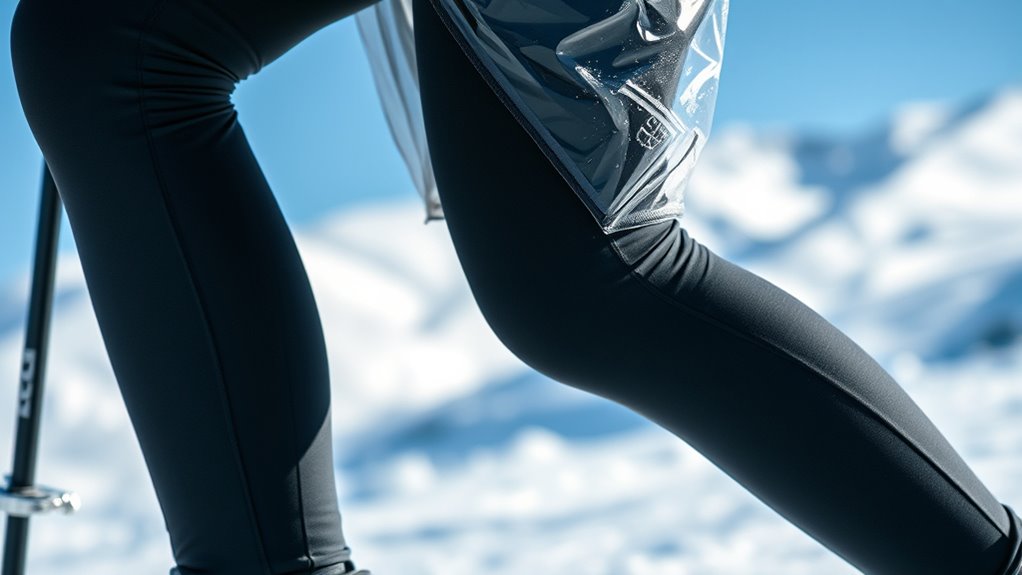
Ever wondered how to stay warm and comfortable on the slopes? The secret often lies in your base-layer strategy, especially when it comes to wearing tights under your ski shell. Your base layer is the foundation of your entire outfit, and choosing the right tights can make all the difference in how you enjoy your day on the mountain. The key is to find tights that wick moisture away from your skin, insulate effectively, and fit snugly without restricting movement. When you layer tights beneath your shell, you’re creating a moisture-management system that keeps you dry and warm, even during intense activity or in cold conditions.
Start by selecting tights made from synthetic fibers like polyester or nylon, which excel at wicking sweat away from your skin. Avoid cotton, as it absorbs moisture and can leave you feeling damp and chilled. Look for tights with a snug fit—loose fabric creates air pockets that reduce insulation, while tight-fitting tights maintain contact with your skin, facilitating moisture transfer and warmth. Many high-performance tights incorporate a bit of spandex or elastane, giving you the flexibility needed for skiing without sacrificing comfort. The fit should be close but not constrictive, allowing blood flow and unrestricted movement, especially when you’re making turns or orchestrating varied terrain.
Another important aspect is the thickness or weight of the tights. Lightweight or mid-weight tights work well for most conditions, providing a good balance of warmth and mobility. If you’re skiing in extremely cold weather, consider layering tights with a thermal or fleece lining for added insulation. However, avoid overly bulky tights, as they can restrict your movement and cause discomfort under your shell. When wearing tights under your shell, make sure your outer layer fits properly over everything—too tight, and it can restrict circulation; too loose, and it may cause bunching or drag. The right fit guarantees your layers work harmoniously to keep you warm and dry. Additionally, incorporating wearable technology into your base layer can provide real-time temperature and activity monitoring to optimize your clothing choices.

Merino Wool Base Layer Mens Bottom Pants 100% Merino Wool Heavyweight, Midweight, Lite Thermal Underwear Long Johns and Socks (X-Large, Black 250)
Midweight: Mens Merino Base Layer Available in: Lightweight 165 g/m², Midweight 250 g/m², Heavyweight 320 g/m². Merino Wool…
As an affiliate, we earn on qualifying purchases.
As an affiliate, we earn on qualifying purchases.
Frequently Asked Questions
How Do I Choose the Right Material for Ski Base Layers?
You should choose a material that offers moisture-wicking, insulation, and breathability. Look for synthetic fabrics like polyester or nylon, which dry quickly and keep you dry. Merino wool is also a great option for warmth and odor resistance. Avoid cotton, as it traps moisture and can leave you cold. Pick a material based on your activity level and weather conditions, ensuring you stay warm, dry, and comfortable on the slopes.
Can I Wear Tights as Standalone Outerwear?
You can wear tights as standalone outerwear, but it depends on the weather. If it’s mild and dry, lightweight tights might keep you comfortable, especially if they’re moisture-wicking. However, for colder or wetter conditions, tights alone won’t provide enough protection or insulation. Consider adding a waterproof or windproof layer over your tights or opting for dedicated outerwear designed for skiing to stay warm and dry.
How Do Base Layers Affect Overall Ski Performance?
Your base layers substantially impact your ski performance by regulating your body temperature and wicking away sweat. When you choose the right tights, they keep you warm without overheating, allowing better mobility and comfort. Proper moisture management prevents chills and fatigue, helping you stay focused and energized on the slopes. Investing in high-quality base layers means you’ll enjoy improved insulation, dryness, and overall performance during your ski day.
Are There Specific Brands Recommended for Ski Tights?
You should look into brands like Smartwool, Icebreaker, and Under Armour for ski tights, as they’re known for quality, warmth, and moisture-wicking capabilities. These brands use advanced materials that keep you dry and comfortable on the slopes. Many skiers find that investing in reputable brands improves performance and comfort, so don’t hesitate to try different options to see which fits your needs best.
How Often Should I Replace My Ski Base Layers?
You should replace your ski base layers when they start to lose elasticity, become thin, or develop persistent odors despite washing. Typically, every 1 to 2 seasons, depending on how often you ski and how well you care for them. If you notice any signs of wear or reduced performance, don’t hesitate to get new ones. Fresh base layers keep you warm, dry, and comfortable on the slopes.

baleaf Fleece Lined Leggings Women Waterproof Thermal Winter Hiking Pants Warm Tights Skiing Running Yoga Travel Gear Black L
Warm & Water Resistant: The fleece lined leggings women is made of soft fleece inner layer traps heat…
As an affiliate, we earn on qualifying purchases.
As an affiliate, we earn on qualifying purchases.
Conclusion
Now, as you zip up your shells and slide into those tights, it’s almost like your gear itself is whispering secrets of comfort and warmth. Sometimes, the best strategies come together when you least expect it—like discovering that tights under shells keeps you surprisingly dry and cozy. So, next time you’re gearing up, remember that the right combination might just be waiting for you to try it, making every run down the slopes feel effortless and perfectly snug.
Merino Wool Base Layer Mens Bottom Pants 100% Merino Wool Heavyweight, Midweight, Lite Thermal Underwear Long Johns and Socks (X-Large, Black 250)
Midweight: Mens Merino Base Layer Available in: Lightweight 165 g/m², Midweight 250 g/m², Heavyweight 320 g/m². Merino Wool…
As an affiliate, we earn on qualifying purchases.
As an affiliate, we earn on qualifying purchases.

Spyder Womens Micro French Terry Base Layer Thermal Long Johns Bottom, Black, Small
Lightweight, insulating, and comfortable for winter activities
As an affiliate, we earn on qualifying purchases.
As an affiliate, we earn on qualifying purchases.